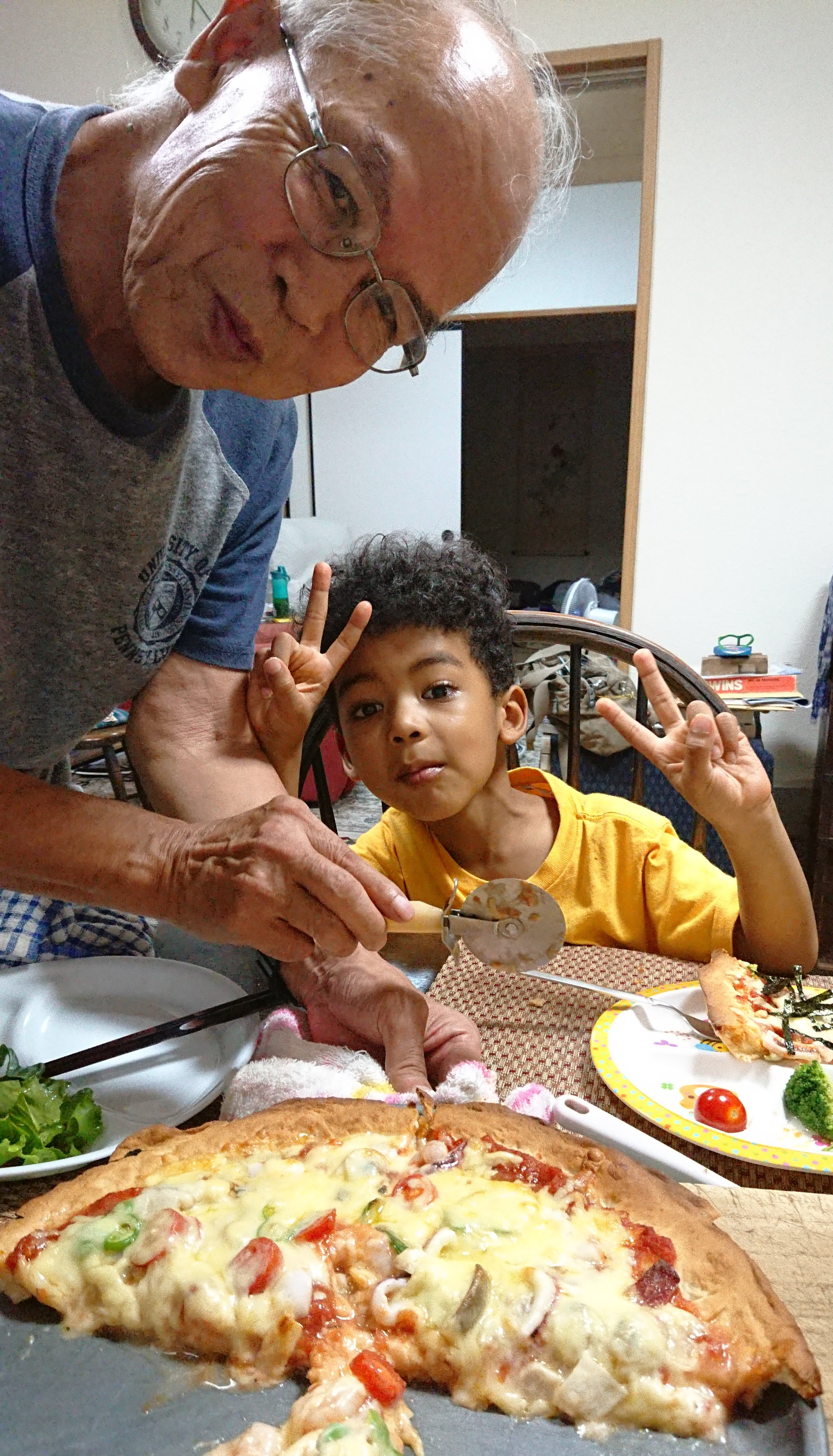
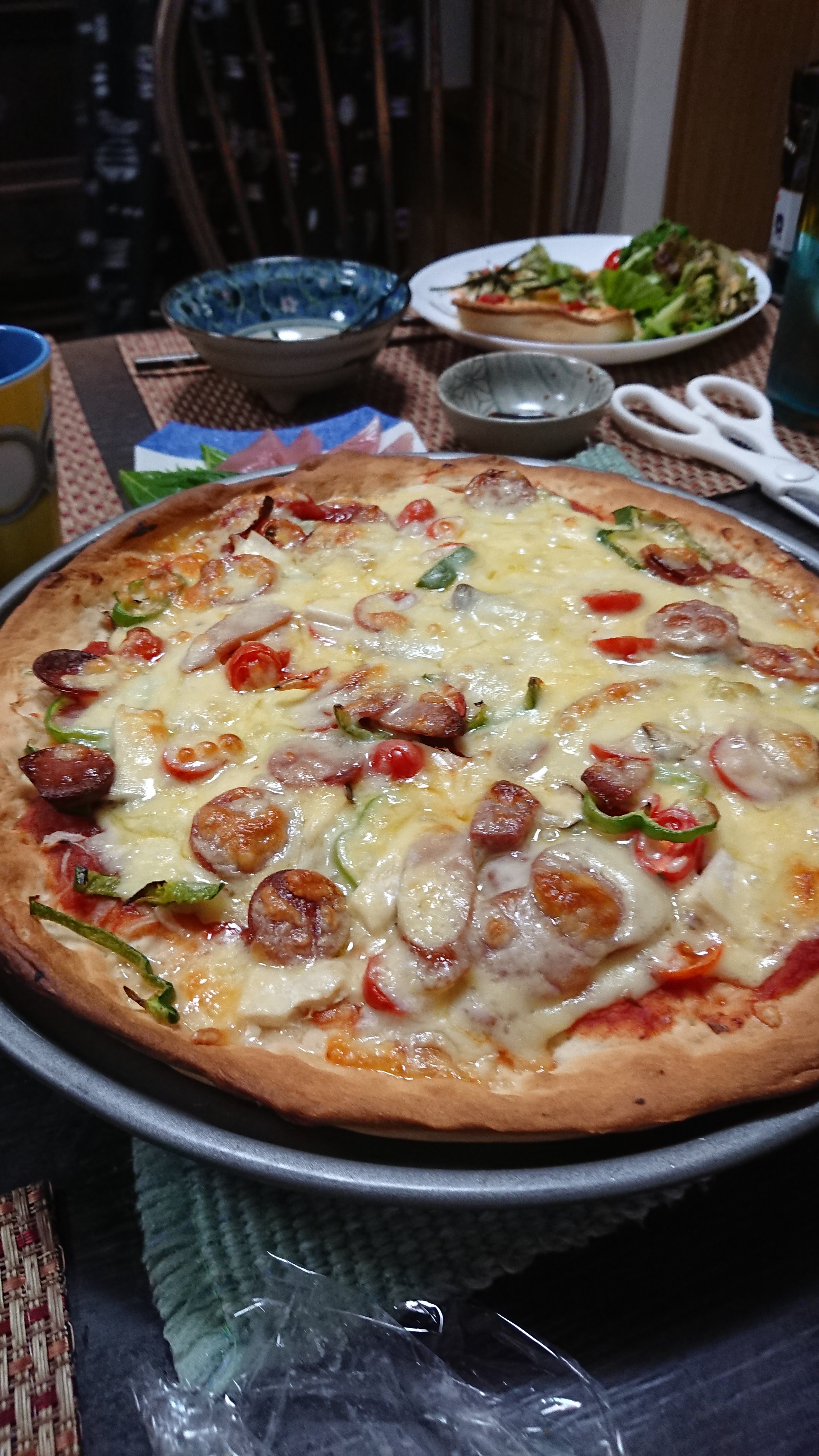
Knead 15 minutes. Let rise 30 minutes. Divide in 2. Let rest covered with a tea towel for 10-15 minutes. Roll out , spread onto 2 pizza pans. If you won’t eat immediately, pre-bake at 190℃ (375°F) for 8-10 minutes.
Top with pizza sauce, and favorite toppings, bake another 10minutes just before eating!
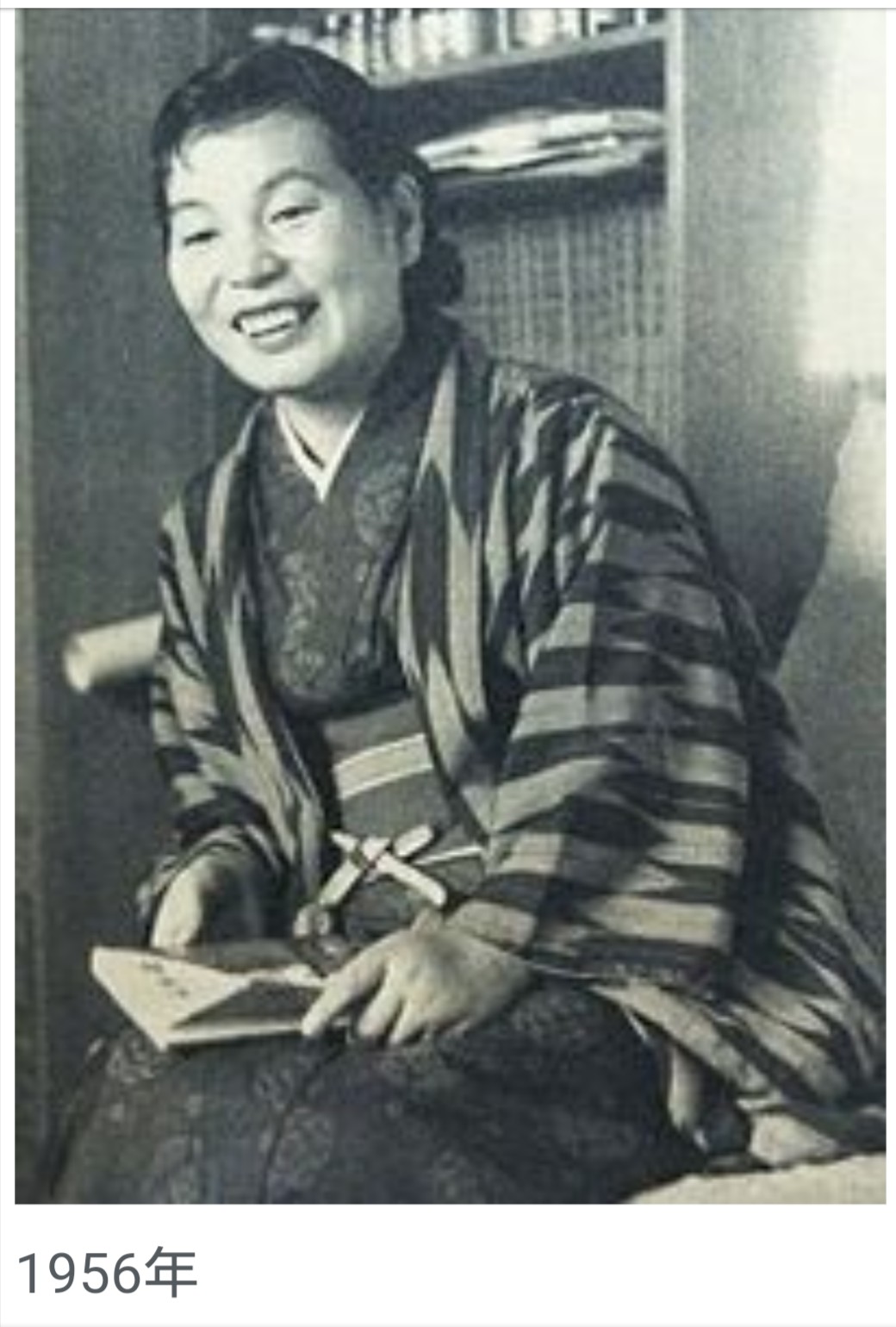
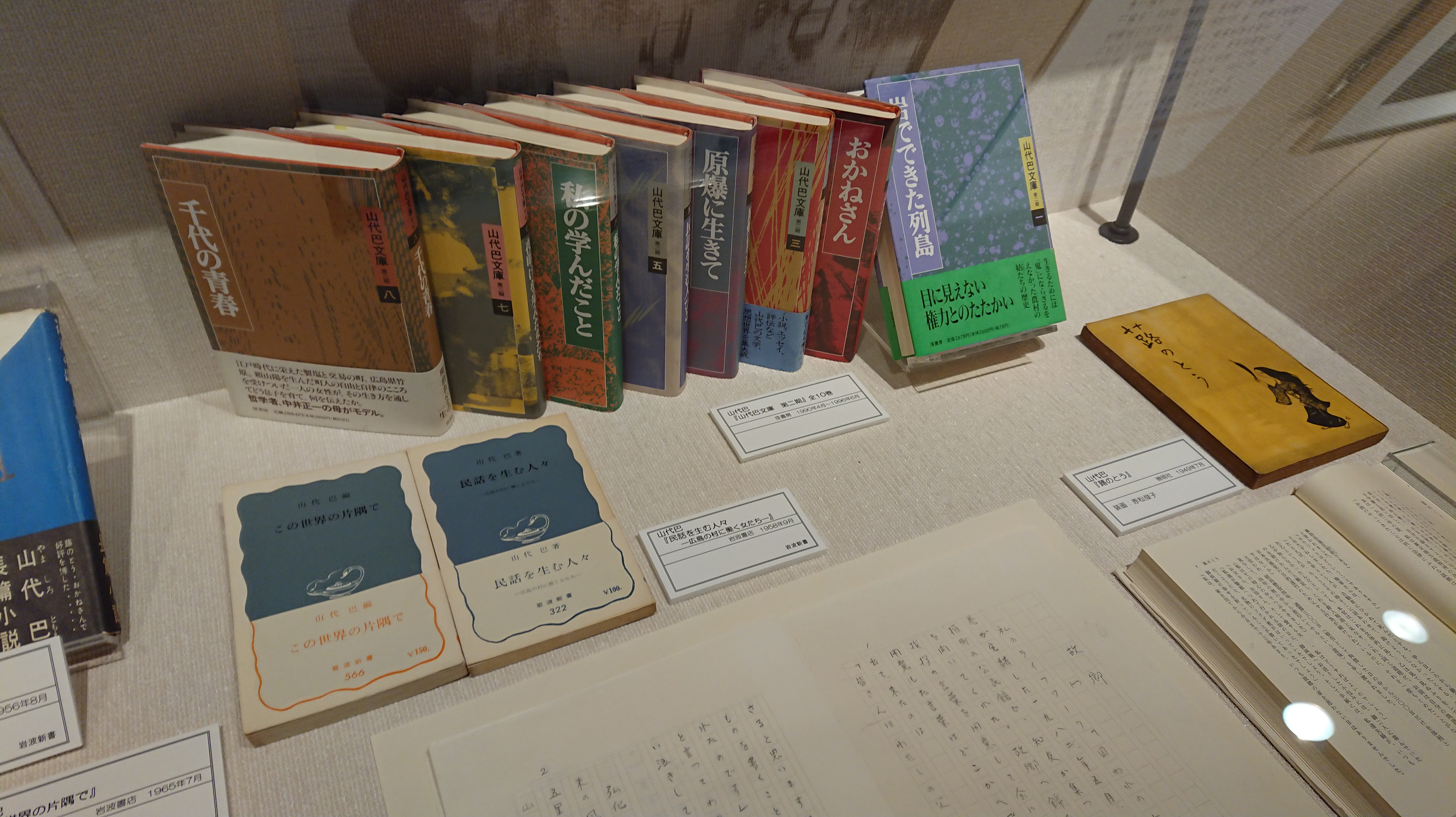
My favorite writer and activist is Yamashiro Tomoe who passed away in 2004. I discovered her when Hiroo recommended I read a novel by her entitled Okanesan. It is about a young woman who leaves her own village to go to another farming village as a second wife to a widowed man with a small daughter. She arrives to find the house in disarray, an idle husband and mean neighbors who do small unkind things to her for no reason.
In depicting life for women in rural areas of mid-twentieth century Japan, Yamashiro raised questions about the status of all women but especially in rural and agricultural areas.
I later discovered that she had been in a women’s prison for her political beliefs from 1940-1944. I am now reading the 10 volume biographical novel she wrote about those years and the women she encountered.( 囚われの女たち)
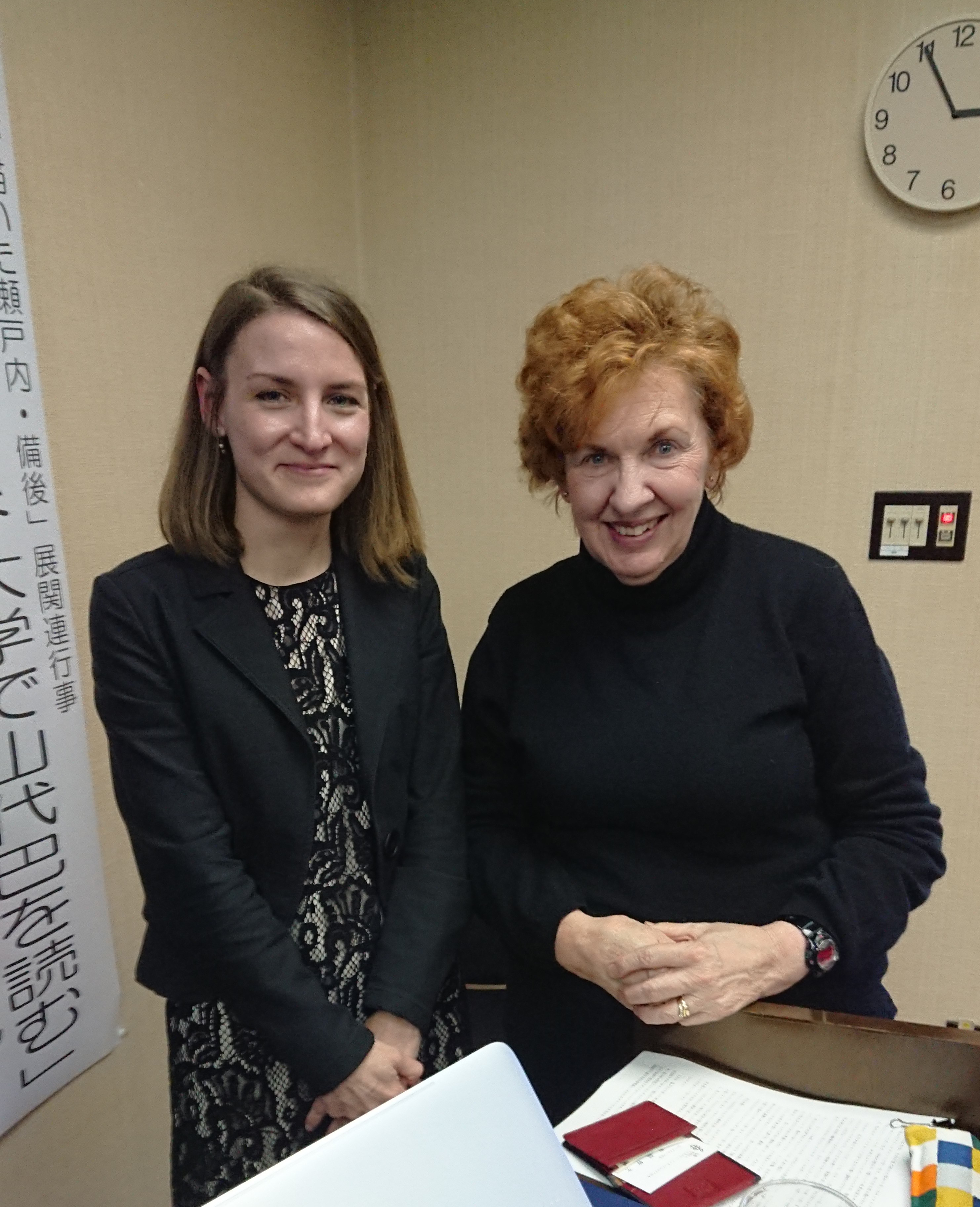
WIth Yamashiro Scholar, Chiara Comastri
Yesterday we went to Fukuyama City to hear a lecture on Yamashiro by Chiara Comastri, a scholar from Oxford University. I was amazed by her command of Japanese which put mine to shame!
She focused on Yamashiro’s postwar activities with women in the farming communities. The stories these women told her of the suffering and difficulties they had undergone became part of Tomoe’s fiction. But her main purpose was to raise the awareness of the women and have a positive impact on their lives.
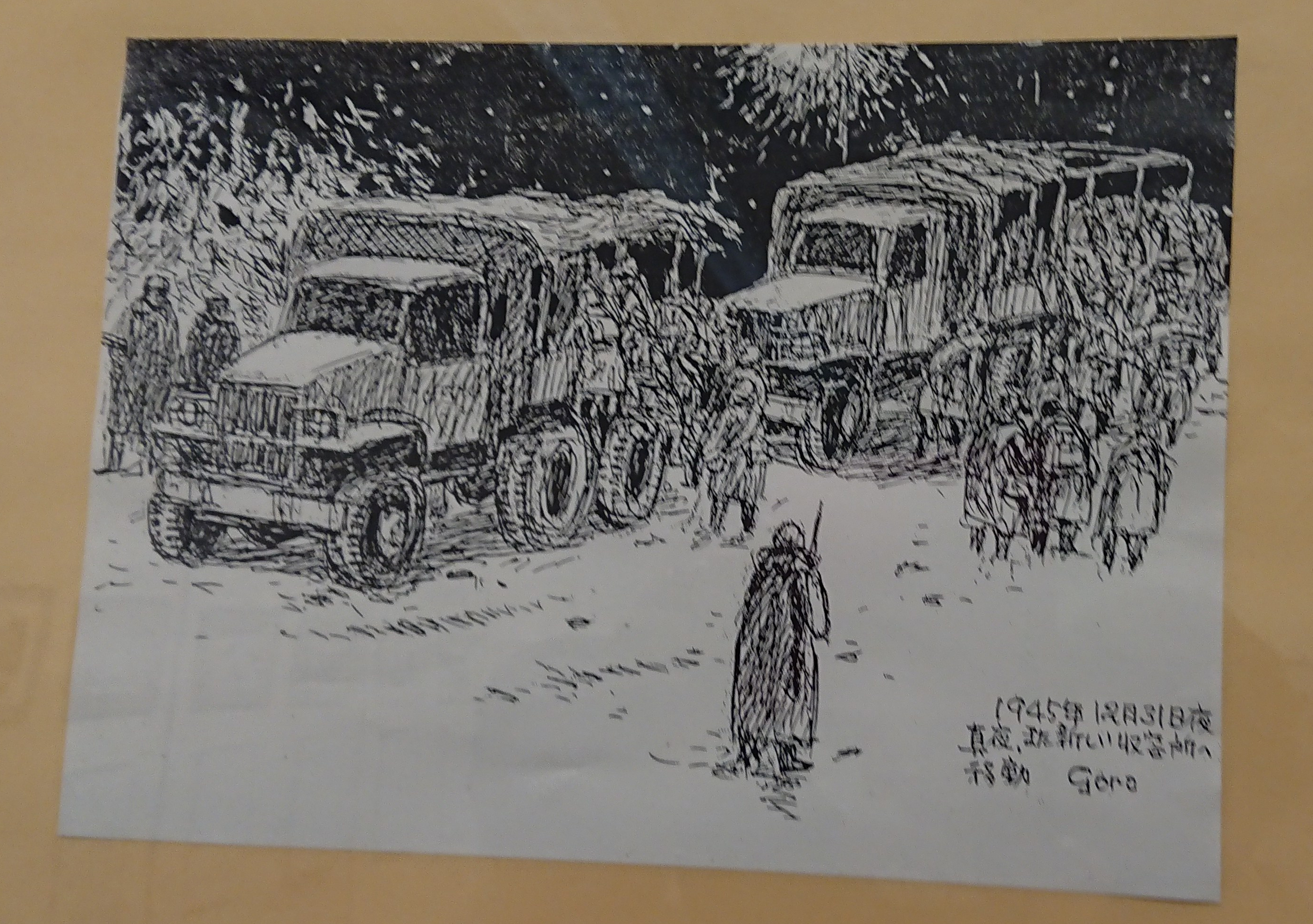
We first visited the Center for Human Rights and Peace which is located next to the Literary Hall. We saw an exhibition of drawings and paintings done by a man from the Fuchu area of Fukuyama while he was in a Siberian labor camp. His name is Shikoku Goro, (四國五郎)
Sketch by Shikoku
Ichikawa Hauko
Oil Painting by Haruko
The staff member on duty, Haruko Ichikawa, gave us a lot of information. We were happy to meet her and she mentioned that she’ll have an exhibition of her paintings next month. She is a very accomplished artist!
We attended the lecture and met the wife of Yamashiro’s biographer Makihara Norio. (牧原憲夫) I hope to keep on reading Tomoe’s work. I learn so much from it. It may take me years to get through this 10 volume set, not to mention her other books!
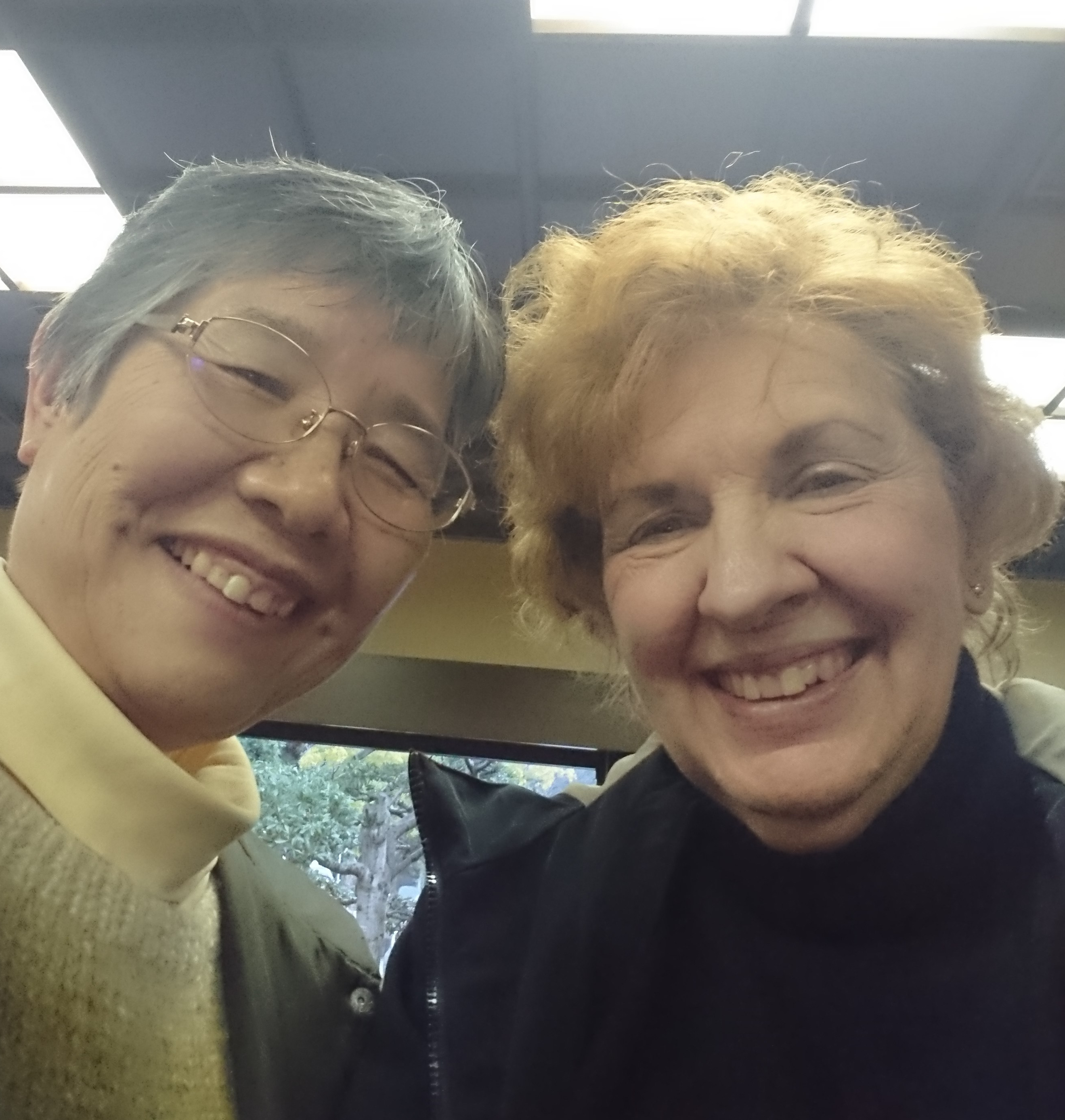
Makihara Norio’s wife, Makise Akiko
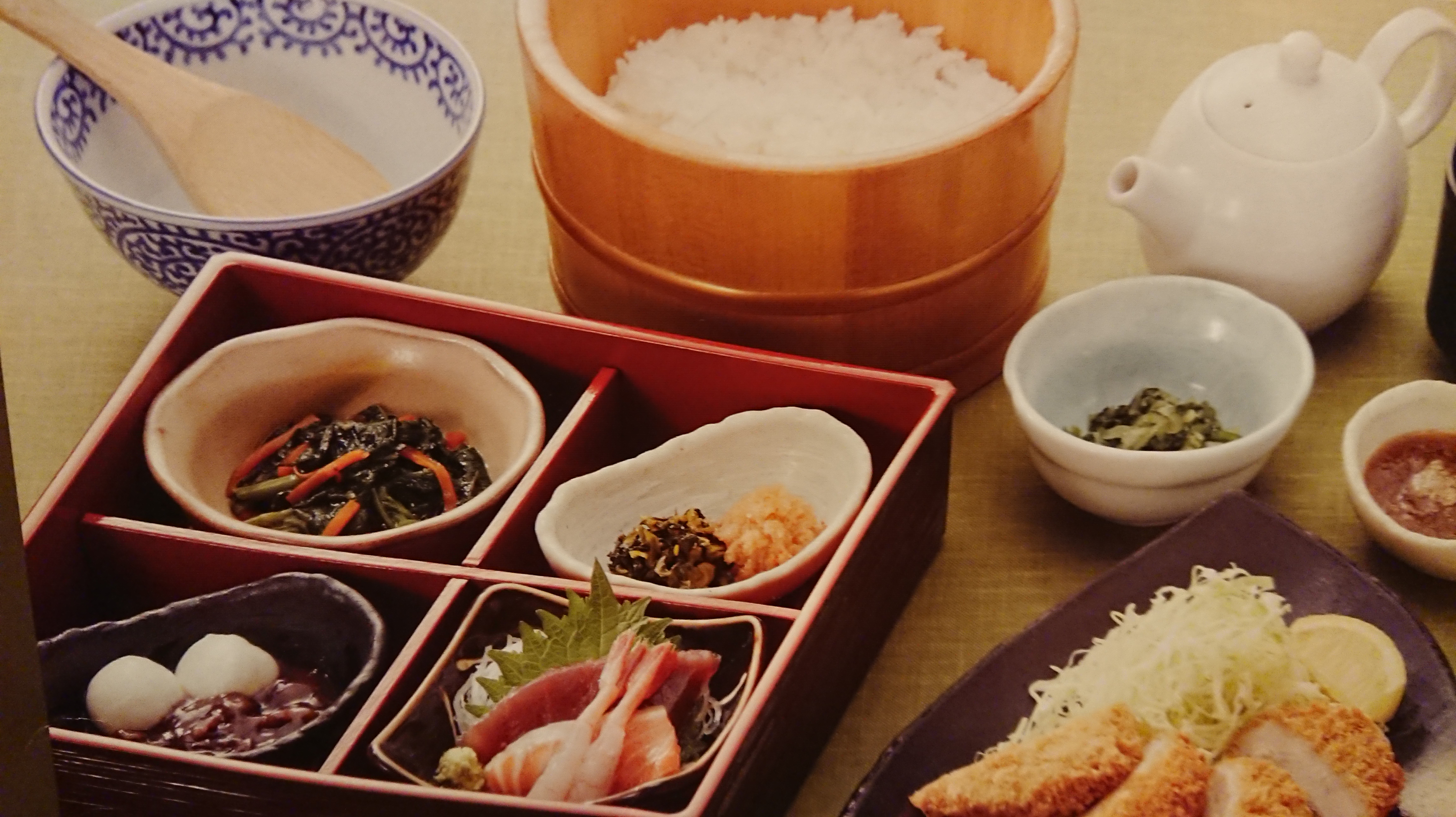
Tonkatsu Pork Cutlet at Hitsuya
We stayed over night at the Vessel Inn near Fukuyama Castle. The train station is literally a stone’s throw away and we ate dinner there at a great restaurant called Hitsuya because they serve all the rice dishes in wooden o-hitsu.
We also visited the History Museum next to the Castle. There is a very good recreation of a early Edo village、Kusado Sengen-cho, ( 草戸千軒町) that was excavated in the middle of the river nearby. It was destroyed by a flood in 1647 and only uncovered in 1930. Referred to as the Asian Pompeii, excavation began in 1961.
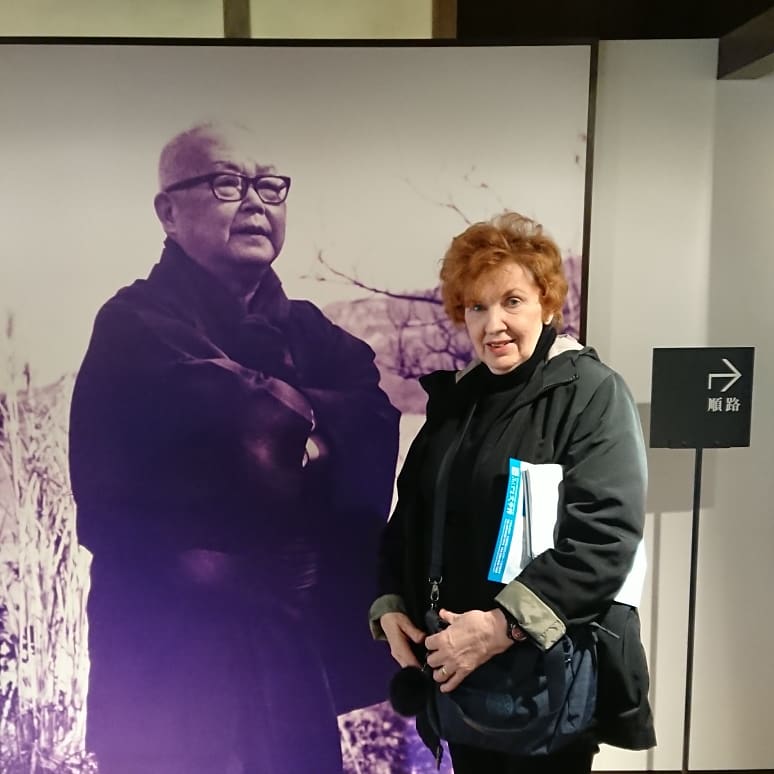
There are many interesting things to see in Fukuyama. The Literary Hall (福山文学館) includes a fine exhibition on Ibuse Masuji(pictured above). He is known for his book about the Atomic bomb in Hiroshima, “Black Rain”.「黒い雨」 The museum is very well organized and I recommend you visit there。
Last year I took a trip with my daughter and grandson. I neglected to write about it at the time but I wanted to upload some pictures and record some memories while they are still in mind.
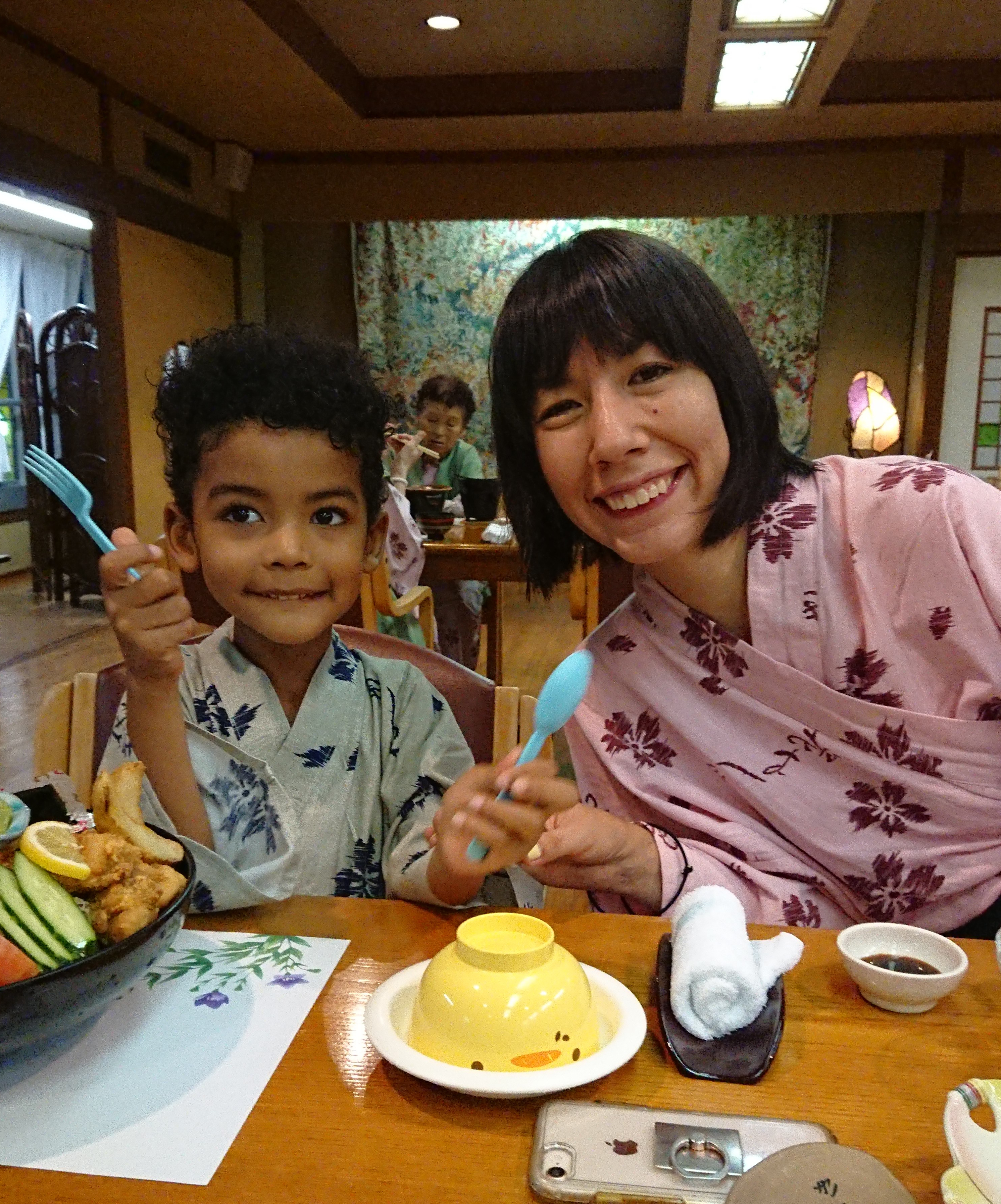
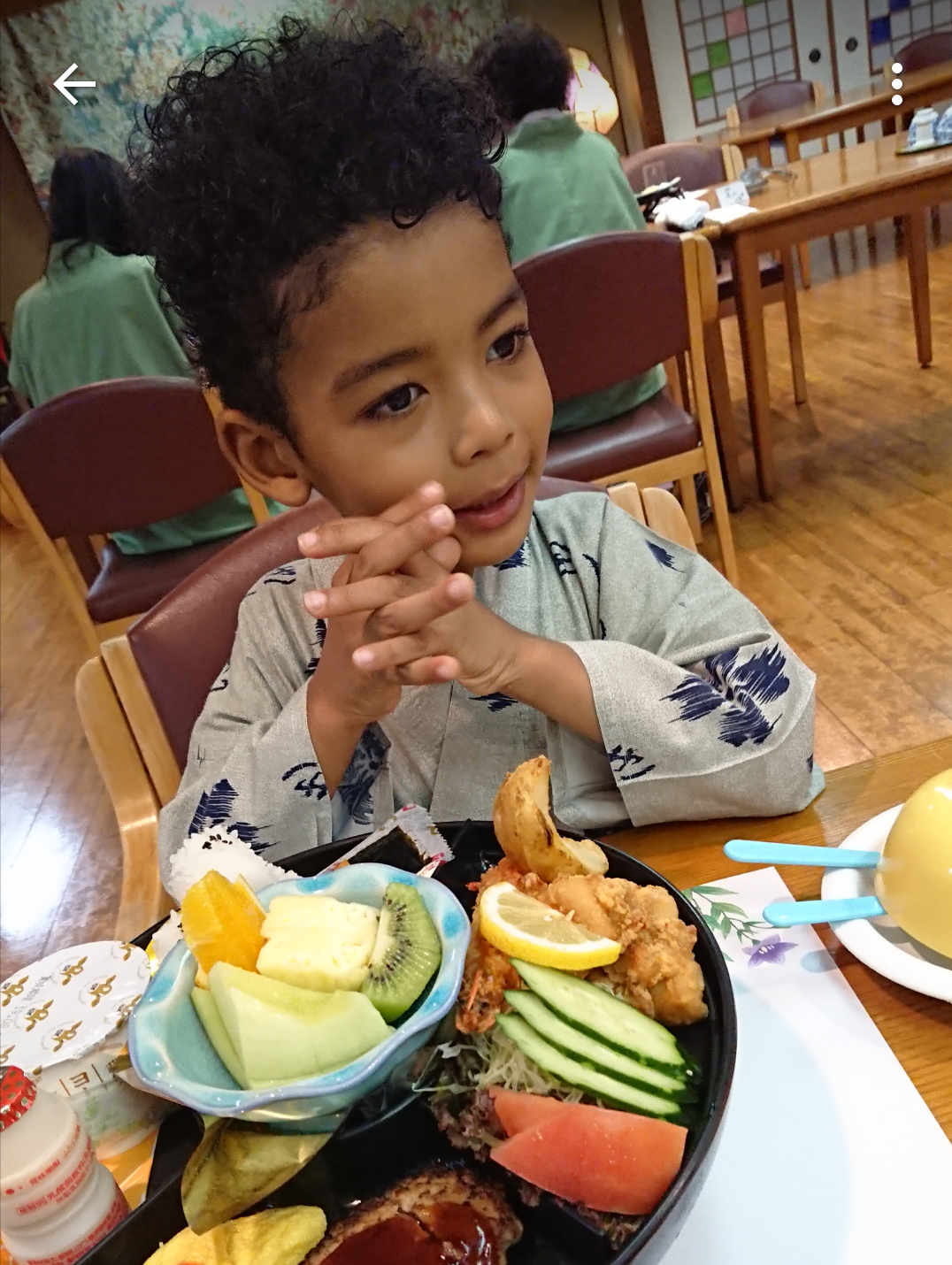
Dinner at the Resort
Japanese people love to visit hot spring resorts and take the hot baths. Often various minerals in the water are a boon to our health. I enjoy the food and scenery more than the bath, but it’s fun to take a trip with grandkids.
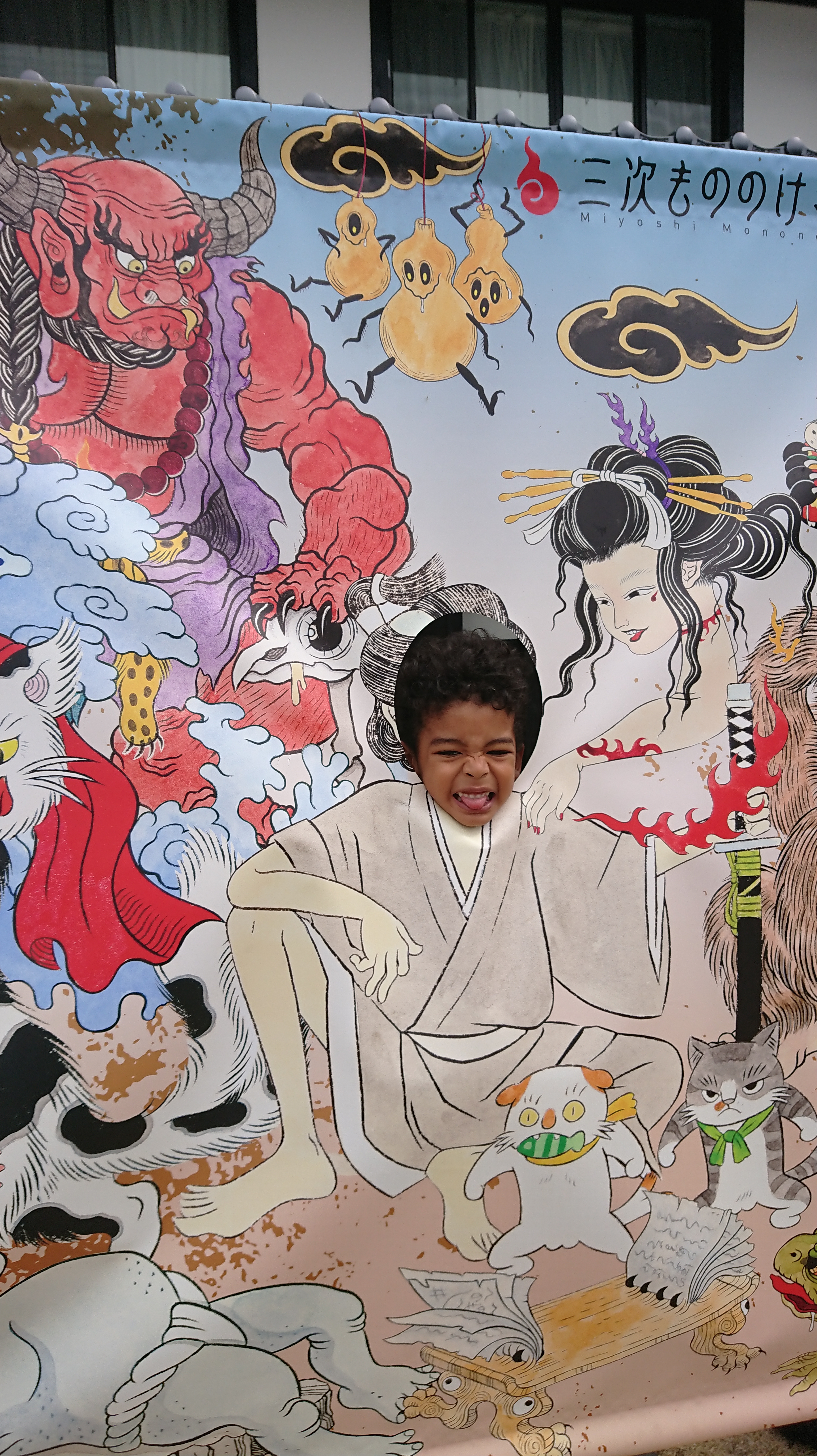
We stopped at the new “Monnonoke Museum” in Miyoshi where we can see exhibits about the yokai (imaginary creatures that inhabit the world around us.) There were some fun things ot do for kids as well as Edo era exhibits of scrolls and objects that portray these yokai.
Eiji becomes a yokai!
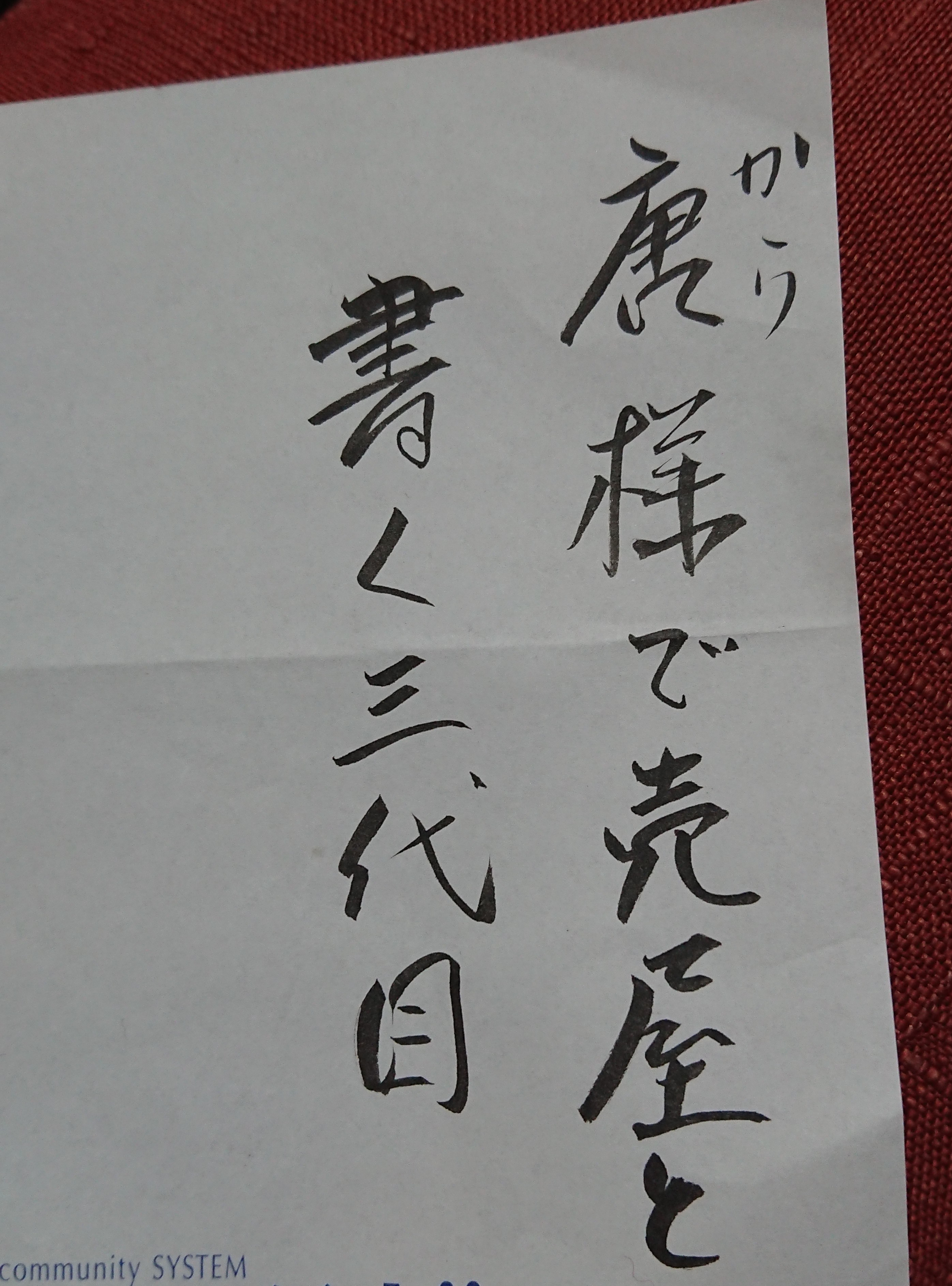
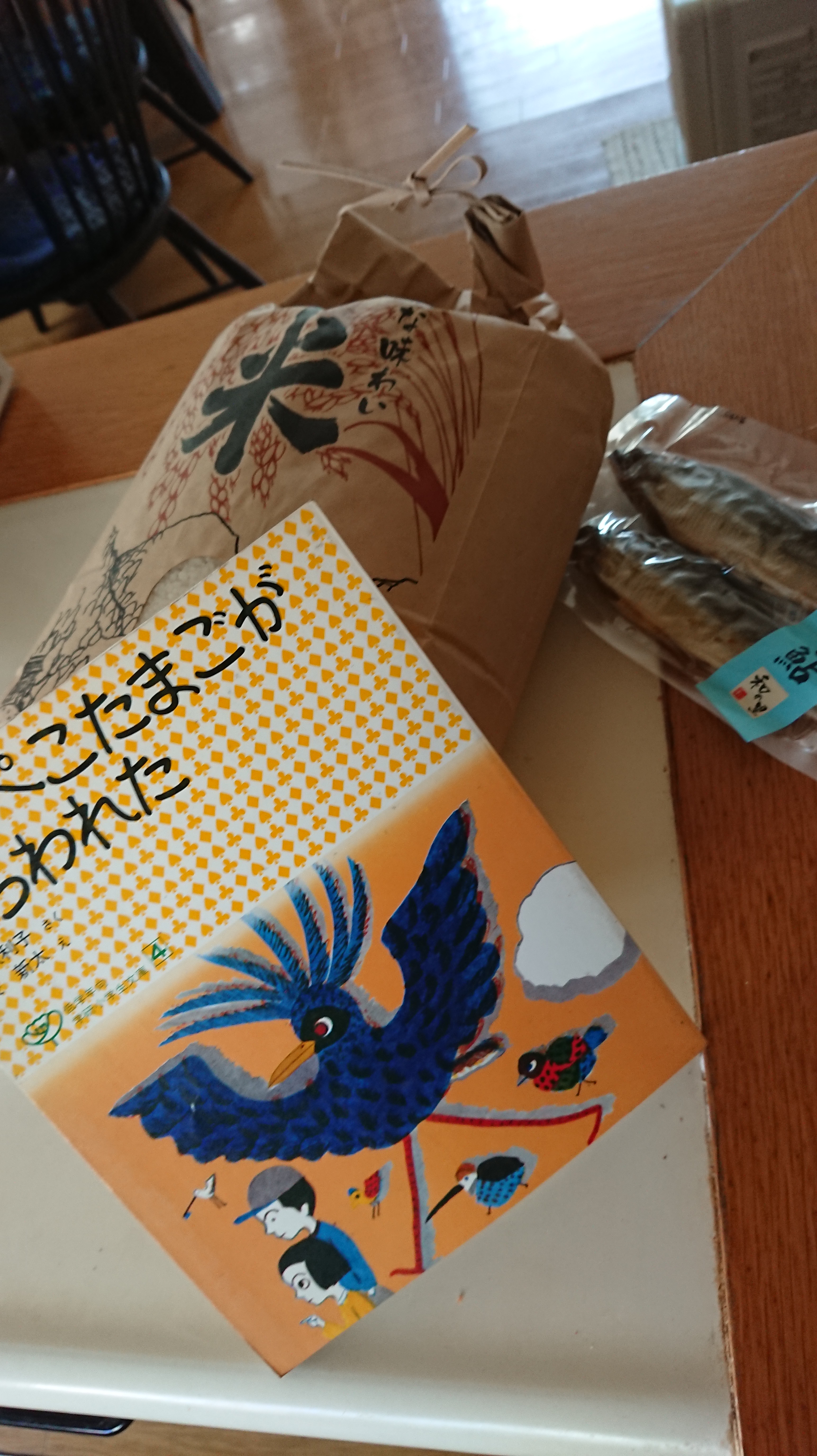
On the way, we stopped at an old hardware store that had been in business for three generations and was full of all kinds of neat junk. We enjoyed looking and bought a few things from the friendly owner, Hanazono-san.
Then we stopped at Maniwa where we had arranged to be taught “kusaki-zome”, natural dying from famous artist Yoko Kano.
I made a small handkerchief and Eri choose to dye a long scarf. Eiji was patient as we worked on it. It was lots of fun and I recommend you visit this shop-gallery in Okayama prefecture!
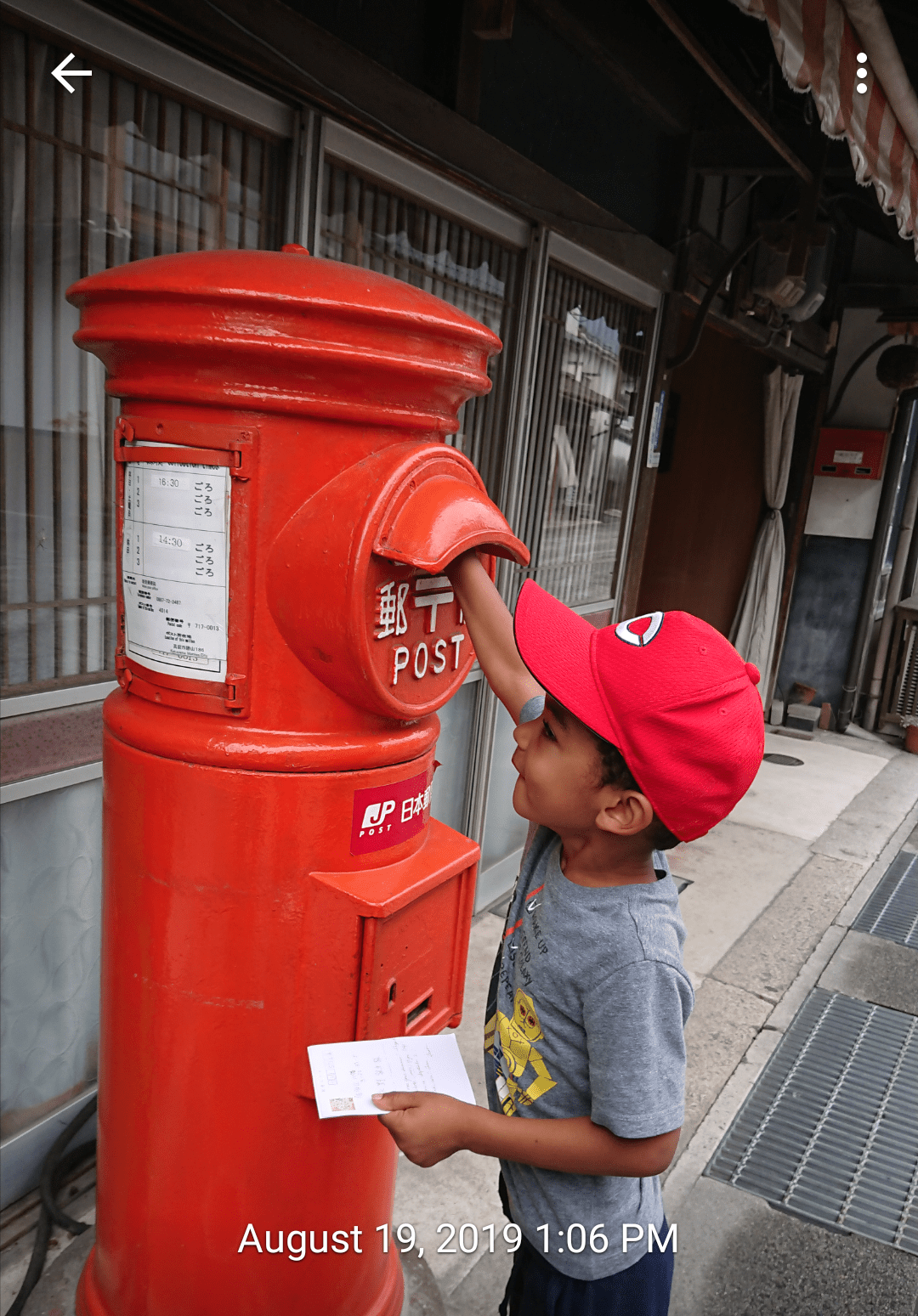
Old-fashioned Postbox
Yoko Kano has put the little old town of Katsuyama on the map since she began creating original noren banners for each shop along the street!
We enjoyed dinner at our inn, Hanayashiki, in Yunotsu Onsen.
The next day it was raining, so we drove straight to Misasa Onsen (hot springs).
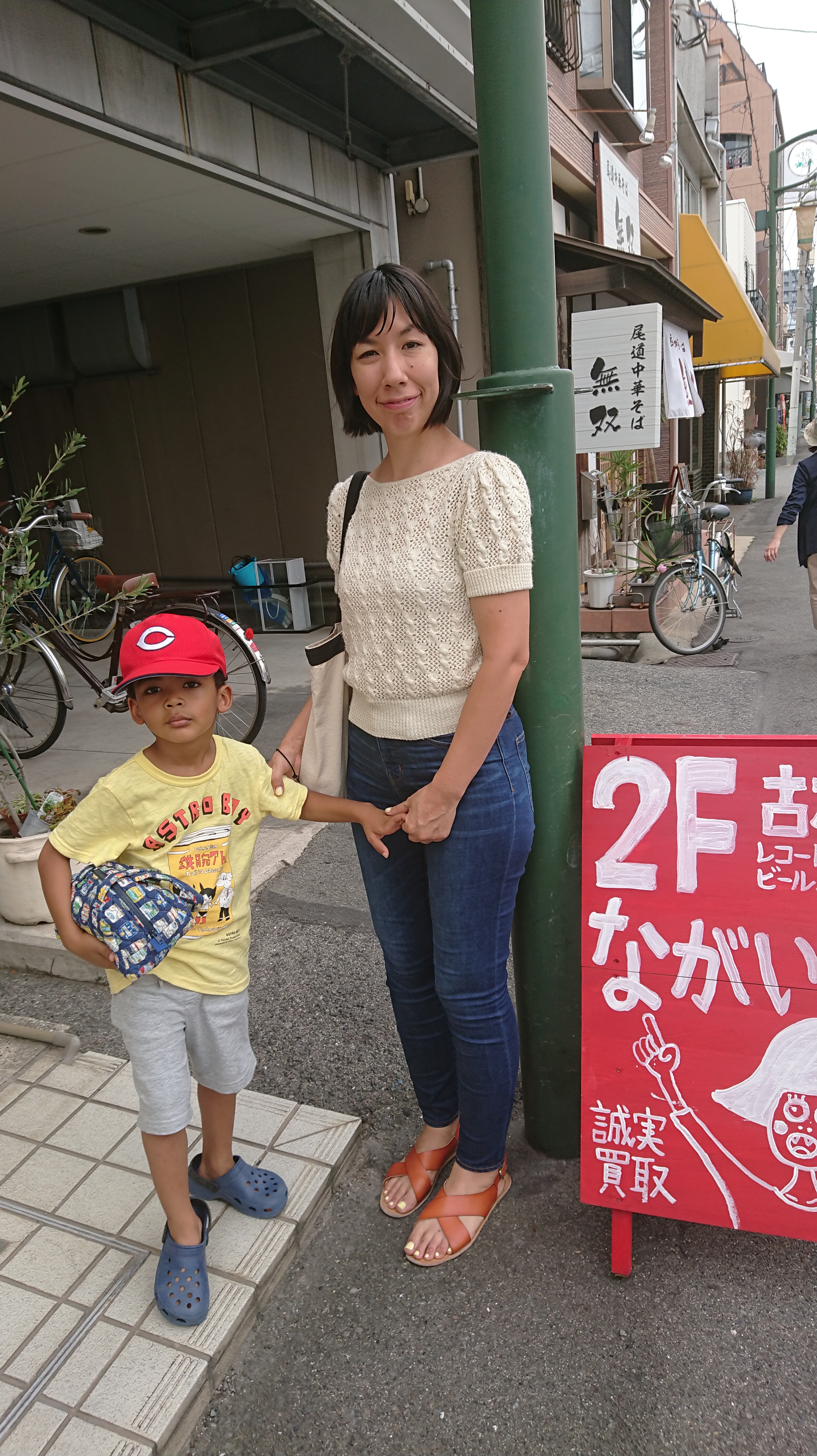
On the way, we were getting hungry and I had a headache, so Eri googled ramen restaurants nearby. We found this great place that makes the soup with “gyu-kotsu” stock! It was really good!
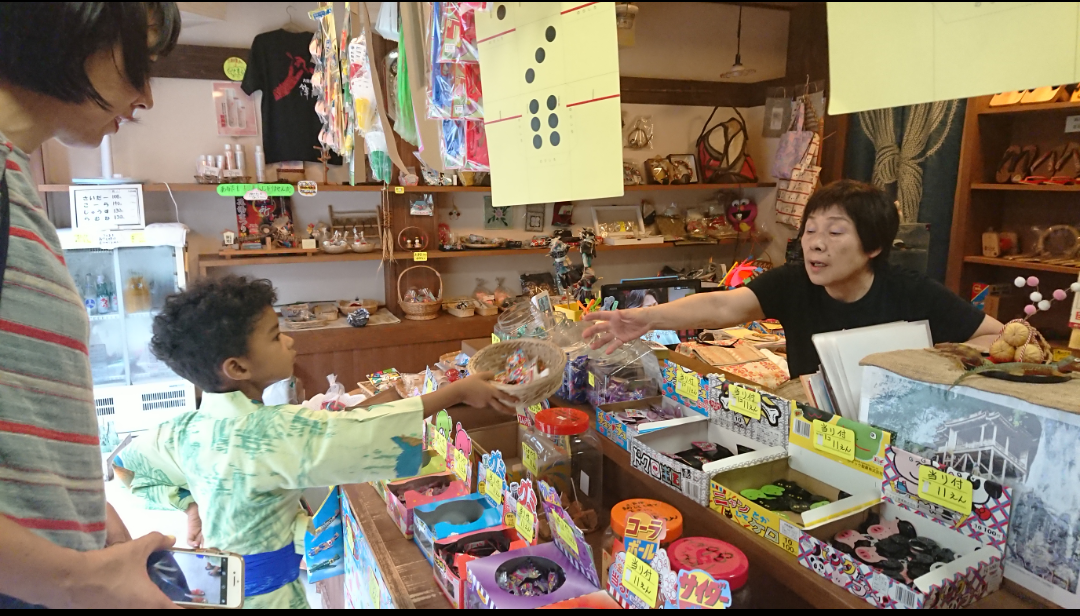
Japanese Penny Candy Shop
There was a street of quaint shops including a shooting gallery and a “dagashi-ya” penny candy store. Eiji chose some candy in a little straw basket.
The last day, we searched for a unique used bookstore in Okayama City. Eri was thrilled to find it and meet the owner!
All in all we had a good time and I’m glad it was sprinkling instead of the usual blazing hot August days!
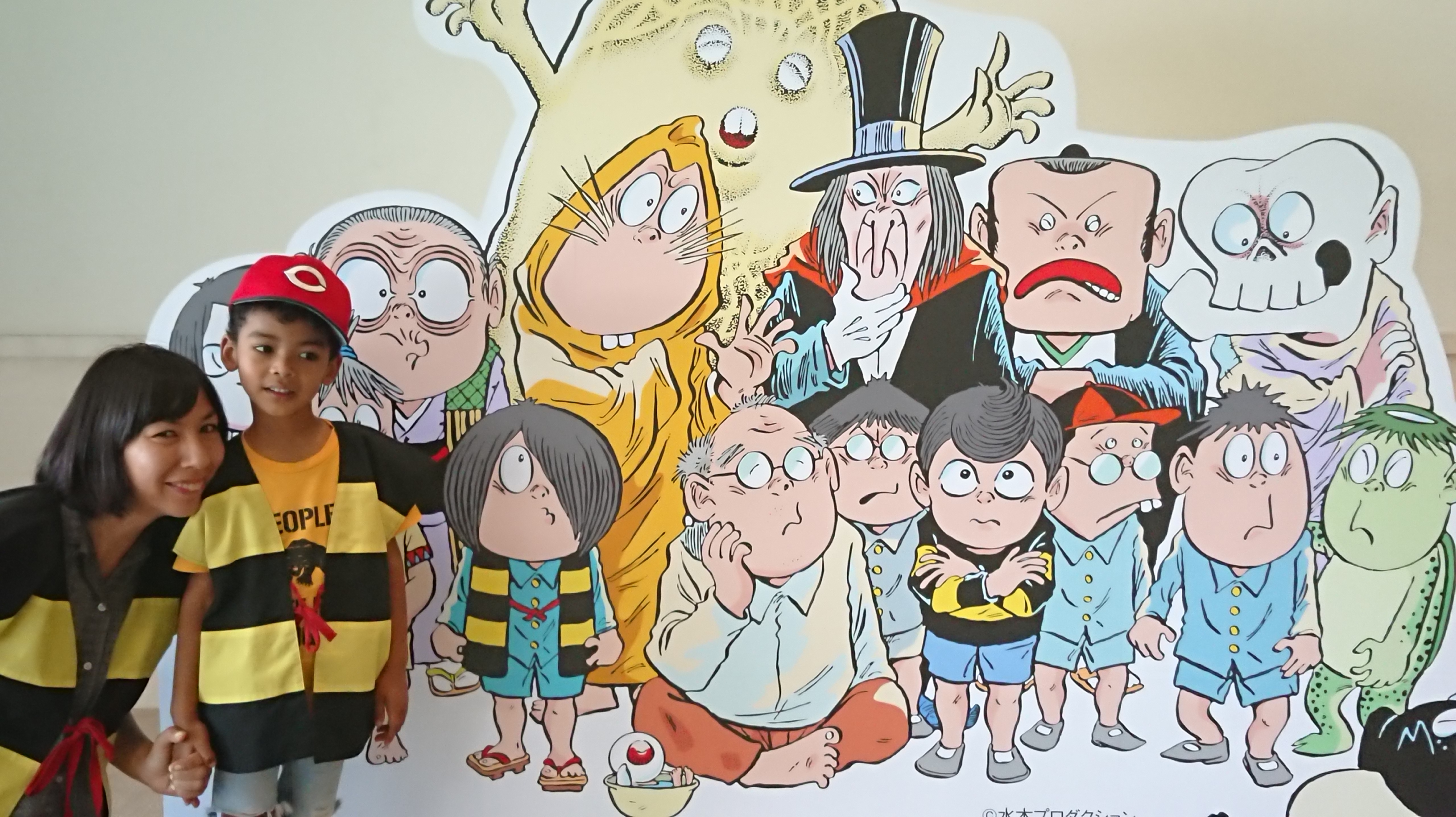
Eiji with Kitaro and other cute yokai friends
I want to add more about the yokai.They are mischievous spirits, hob-goblins that inhabit the woods or stream or work some influence on our lives. An important and intriguing part of Japanese folklore, they are mentioned as early as 772 in the Shoku Nihongi saying that Shinto purification was necessary because yokai were appearing in the imperial court.
Yokai were popularized in an anime series from around 1960 by manga artist Mizuki Shigeru in his “Gegege Kitaro” comics. (above image) We were lucky to get to see the exhibition on his work at he Hiroshima Prefectural Art Museum.
One of the more famous yokai that appear in folk literature is the kappa. Kappa are amphibious demons that live in the river. They have webbed feet and a tortoise like shell on their back.
Ancient text shows illustrations of kappa
The kappa can bring calamity such as causing someone to drown but are also capable of good deeds like helping a farmer to irrigate his field. WE think of the kappa as rather cute little spirits today.
Someday I’d like to take my grandsons to Tottori, the hometown of artist Mizuki to see the Mizuki Shigeru Museum and various figures throughout the town. There is even a nighttime parade of yokai spirits! If you are interested in monsters, Japanese folklore or anime, you might enjoy visiting there!
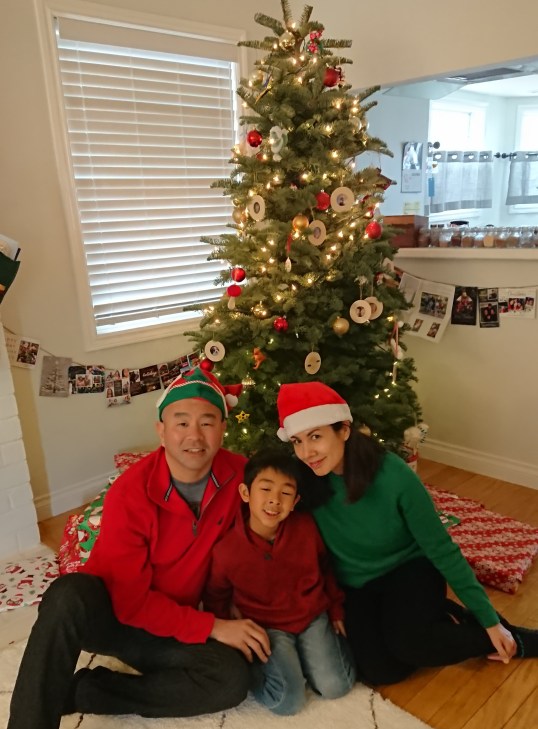
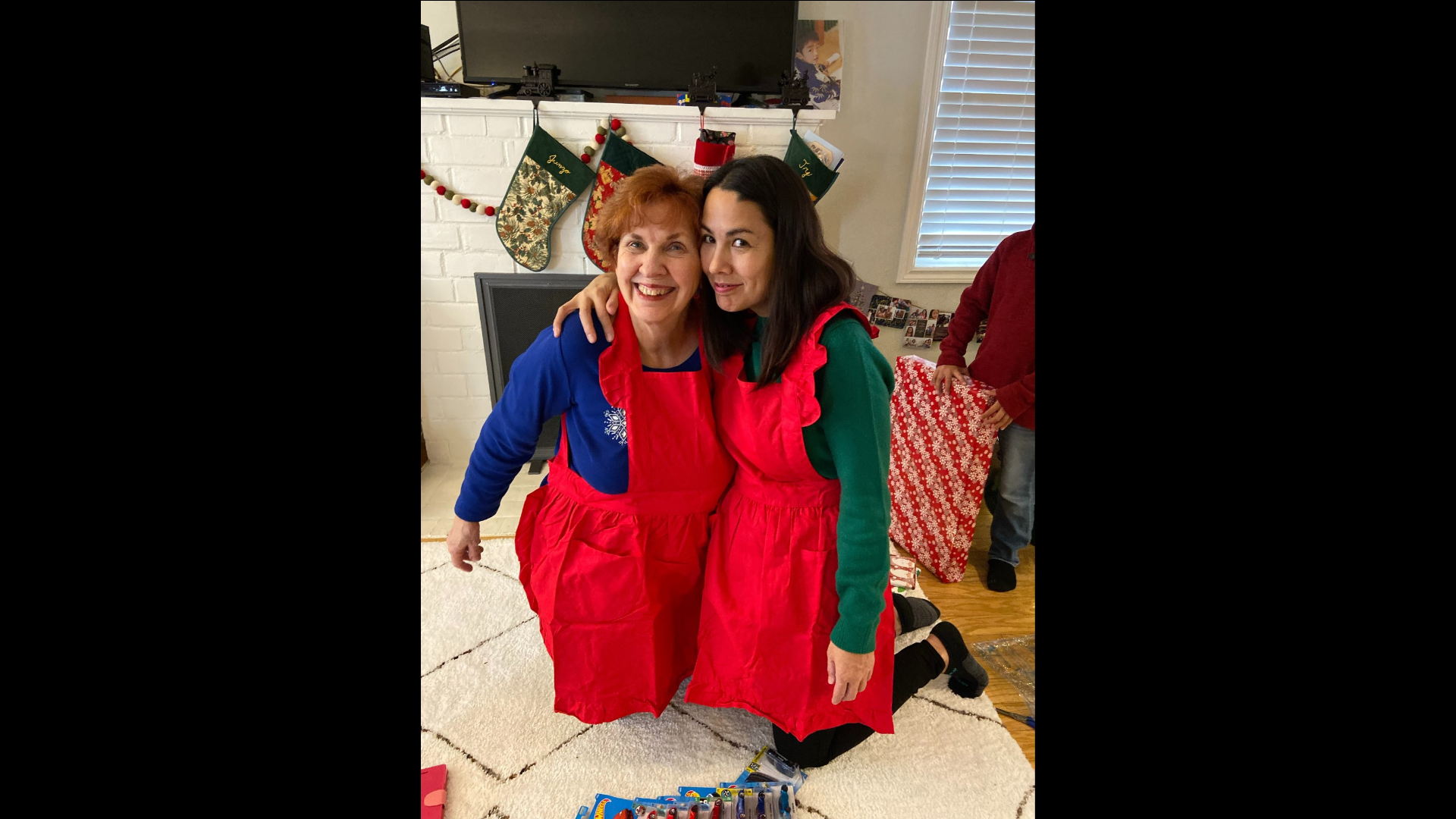
I arrived in Los Angeles on Christmas morning and two Santas and an elf greeted me at the airport. We came home and opened the presents Santa had brought us. I love the little light and pretty apron I received! I must have been a good girl this year!
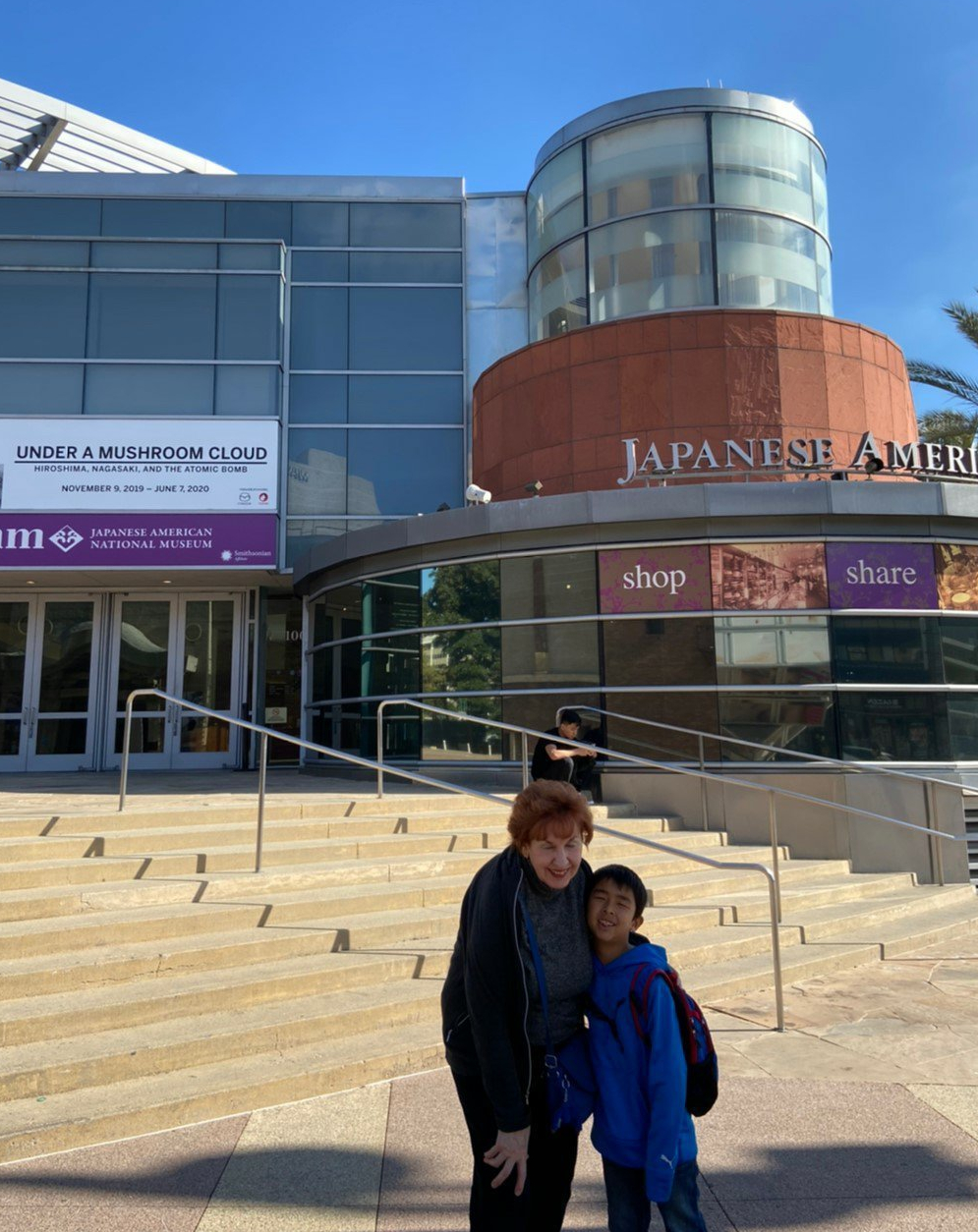
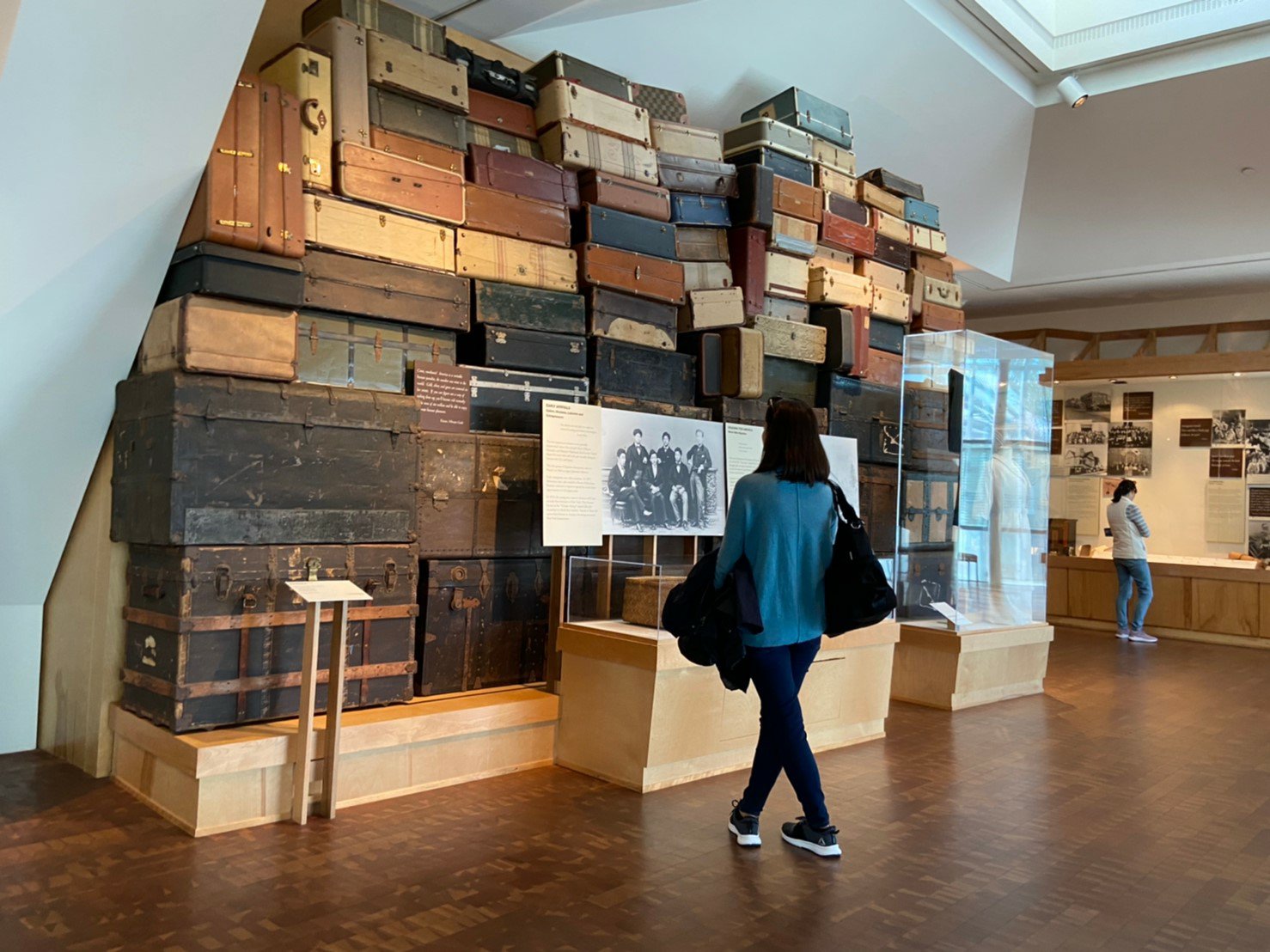
In Los Angeles, I went to several bookstores and took the Metro train to downtown LA to see the Japanese American museum.
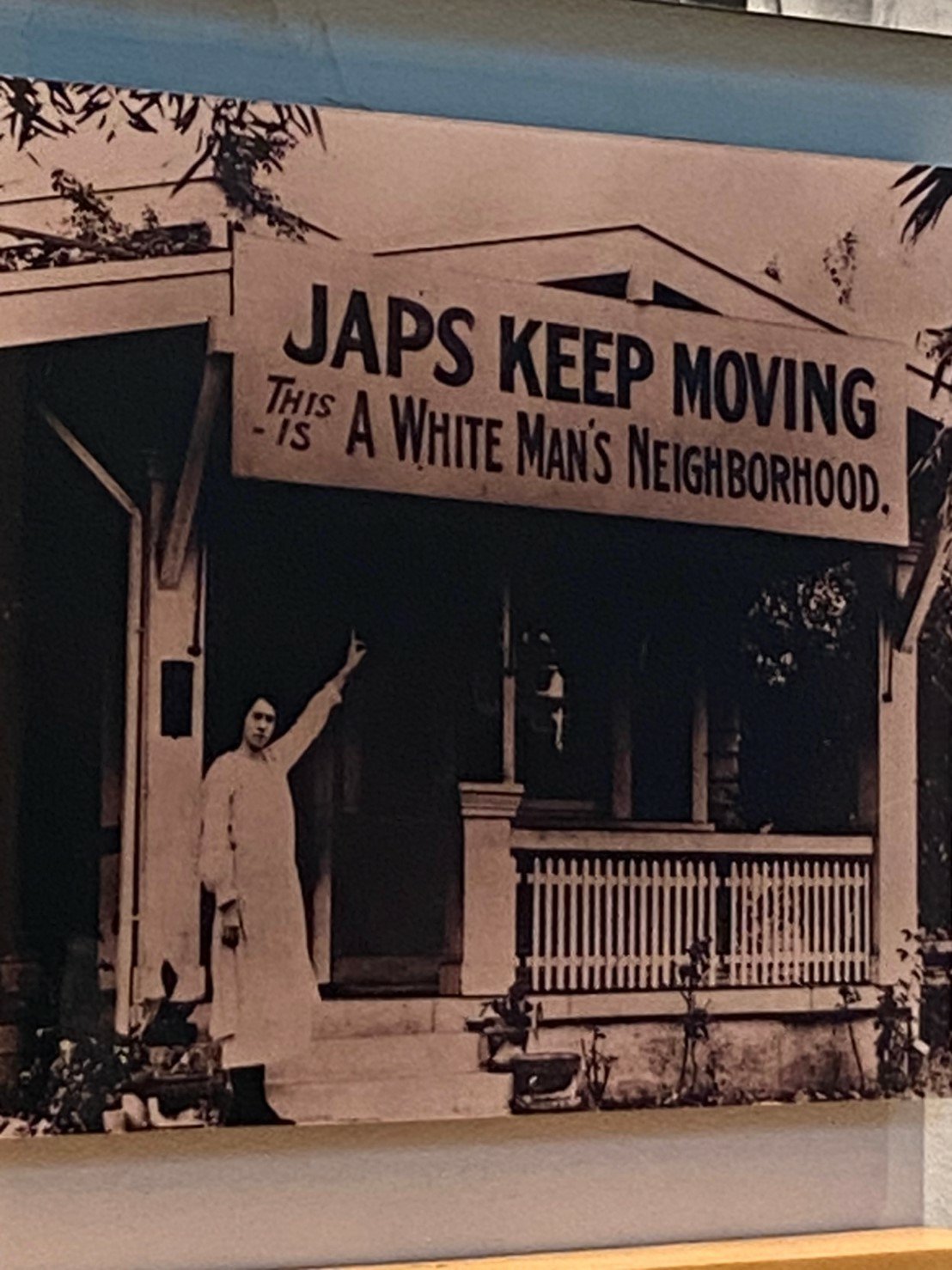
During WWII, Japanese-Americans living on the West coast of the U.S. were forced into Internment camps in isolated, desert areas, leaving all their homes, businesses and property behind.
They were American citizens, many were born in the U.S. Nevertheless, they were made to evacuate taking only one suitcase. There was a fear that those located on the coast would take part in espionage.
Loyal citizens, many volunteered for the U.S. army and gave their lives for their country.
Their homes and property were never returned to them.
I admire they way they made a life for themselves in the desolate camps, forming Boy Scout troops, baseball teams and observing holidays.
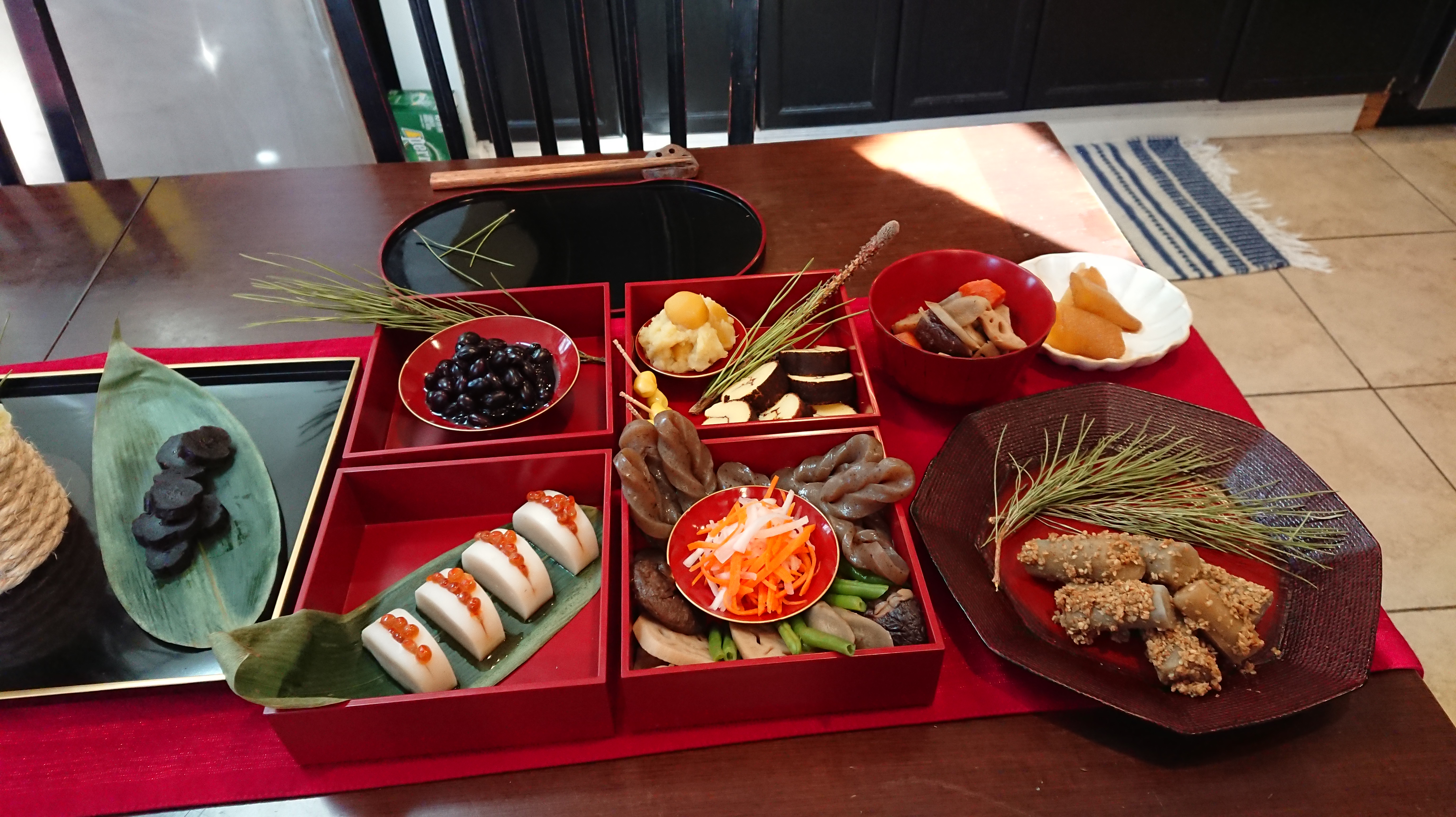
On New Years, Yukie made a lovely Japanese feast which we call Osechi. I was a bit under the weather and wasn’t able to help, but I enjoyed eating it!!
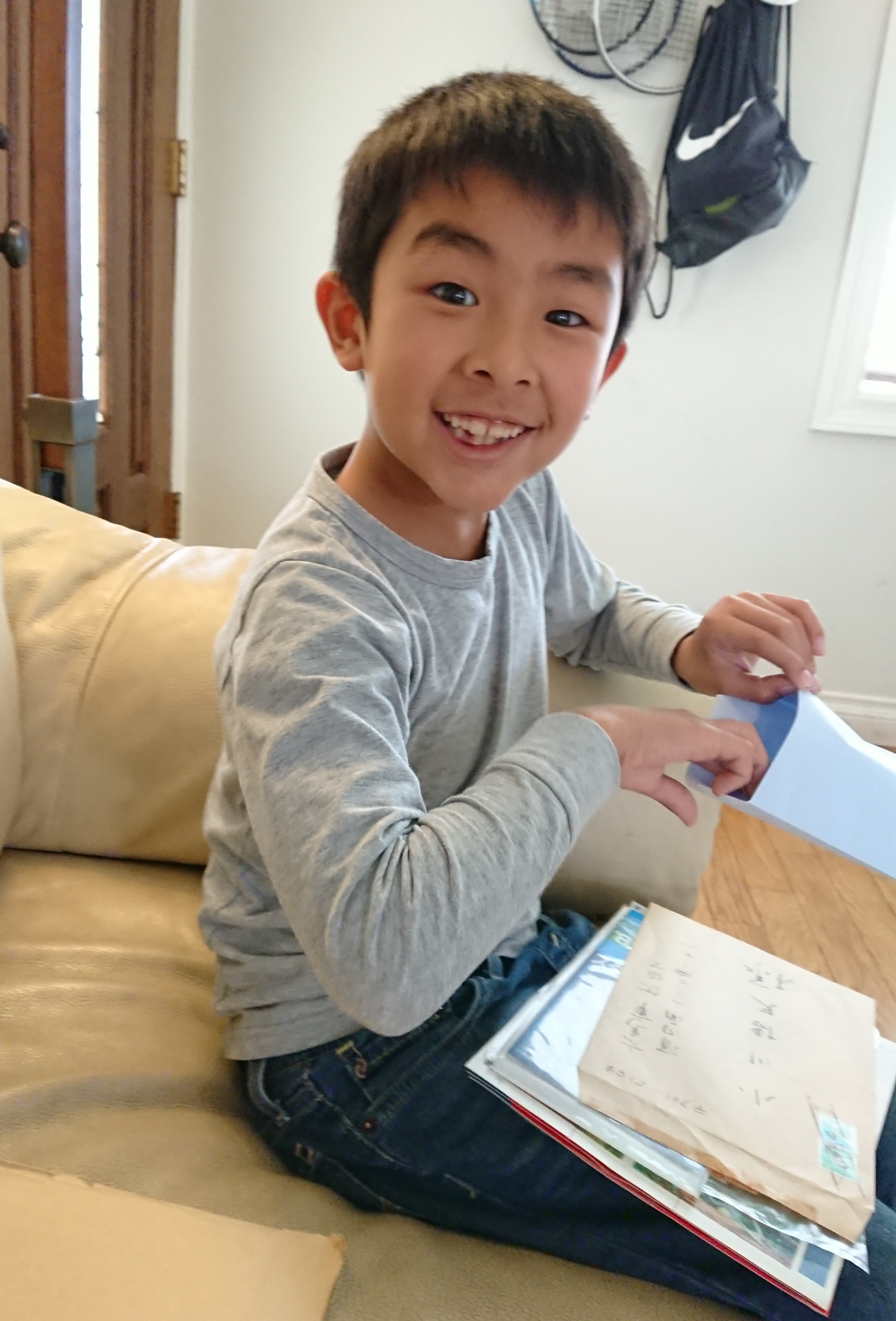
Try opens his present from Ojiichan, Stamps!
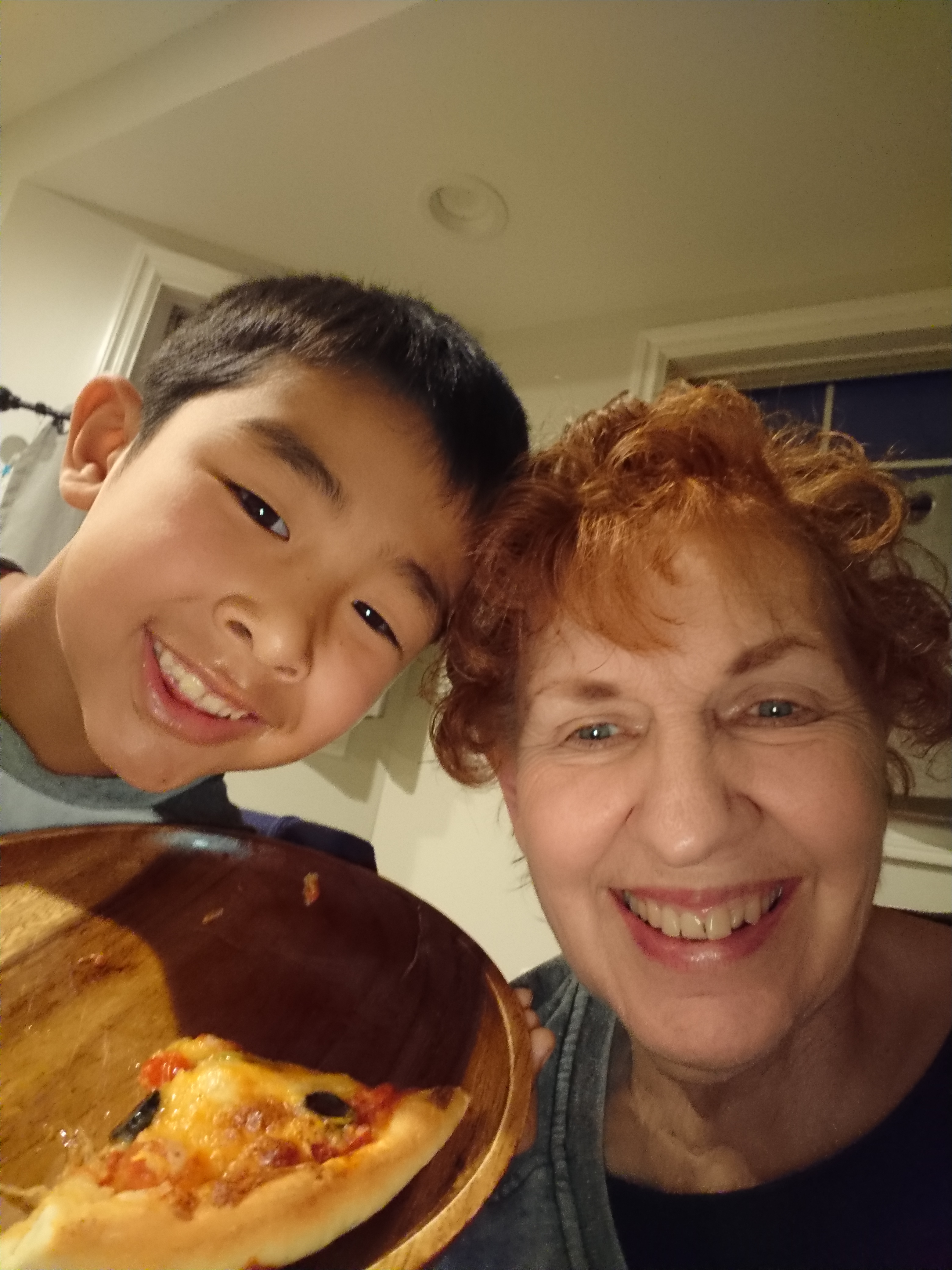
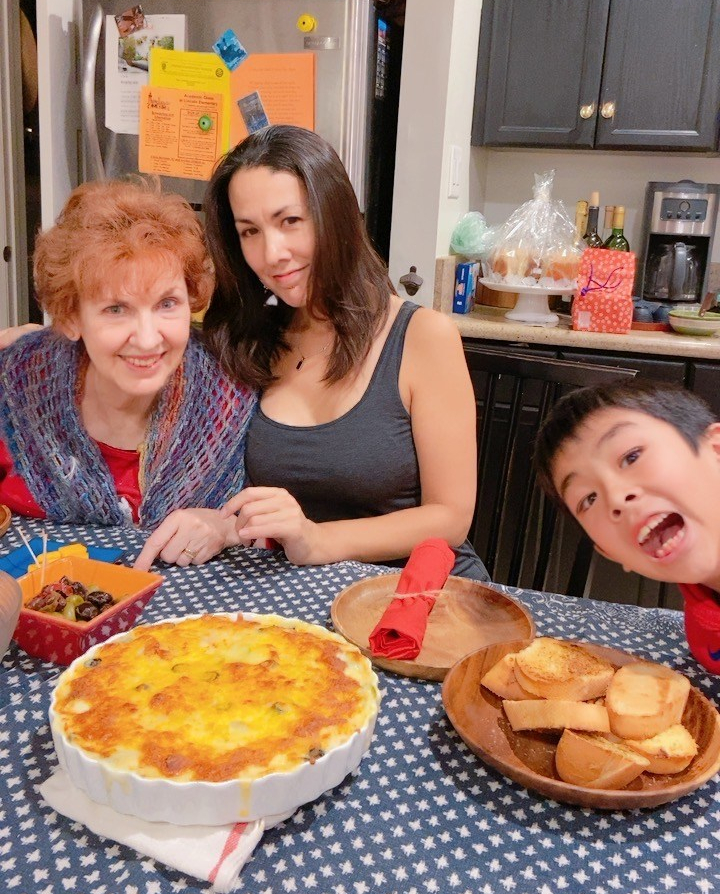
Making Pizza, just the two of us
Try and I enjoyed stories of Sam and Moon Dog which he loves me to tell. We made really great mini-Pizzas, just the two of us. It was lots of fun and yummy too.
Wonderful to be united with Lidia and with Noriko, Christian friends I made in L.A. 2 years ago. So glad we could meet up and pray together!
Florida in January
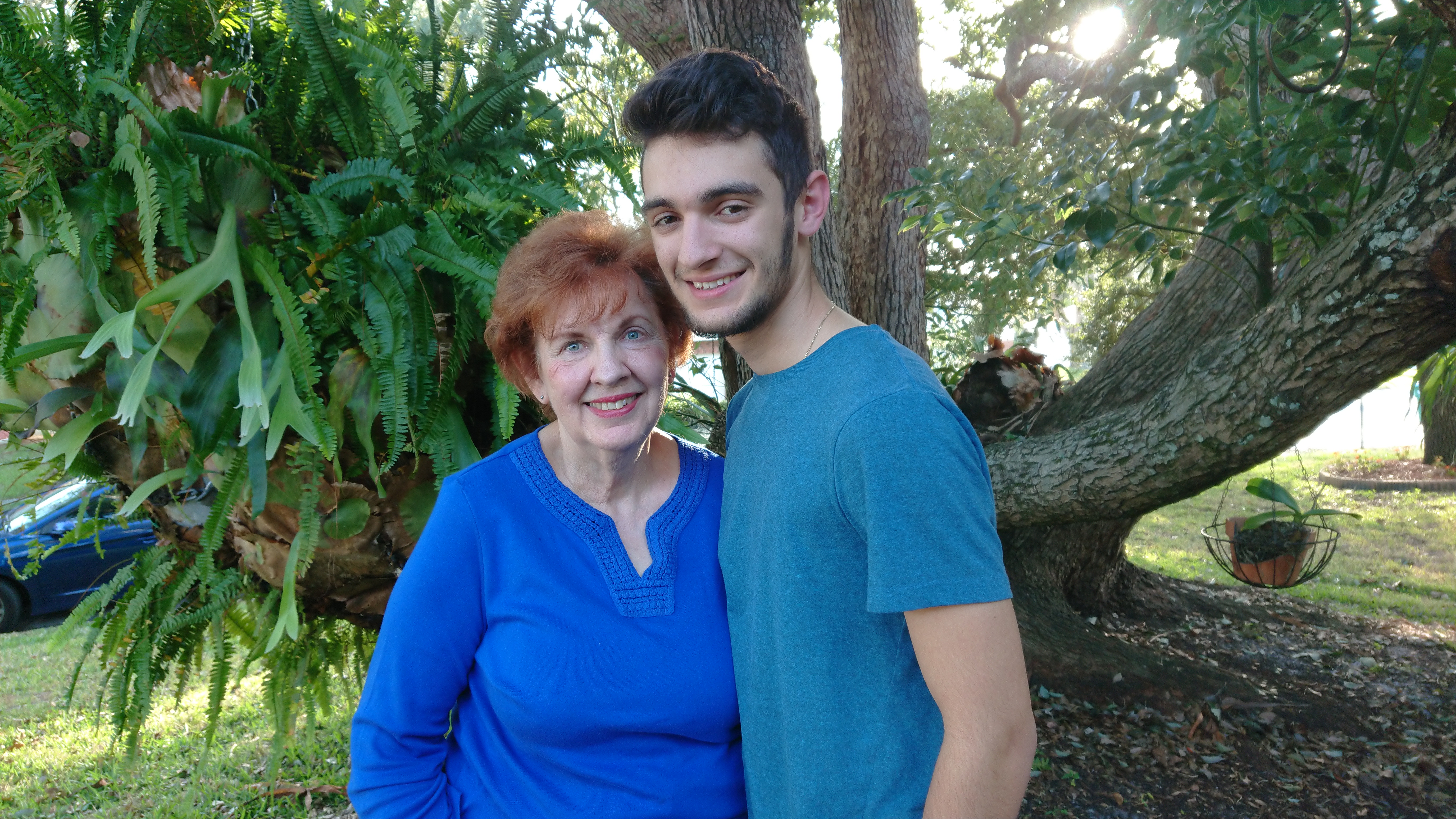
From there I flew to Florida to see Kirsten, my grandson Bobby and Kent and Doris. I hadn’t been down there for 4 years! Bobby had grown into a fine young man and talented musician.
While there, Kent had asked me to make a presentation at his church on Christianity in Japan, which we finally titled, “Hidden Christians in Japan.” I was nervous and a little worried about my condition, But God is so good and I felt fine that morning. I was able to talk to a group of 34 about the history of Christianity in Japan, the plight of hidden Christians during the ban on worship from 1587 to 1873.
I used power point for the first time. Kent was able to tape it and put it on YouTube. I was just thankful that it went well, people were so interested and I was able to give a testimony to God’s mercy and love for me.
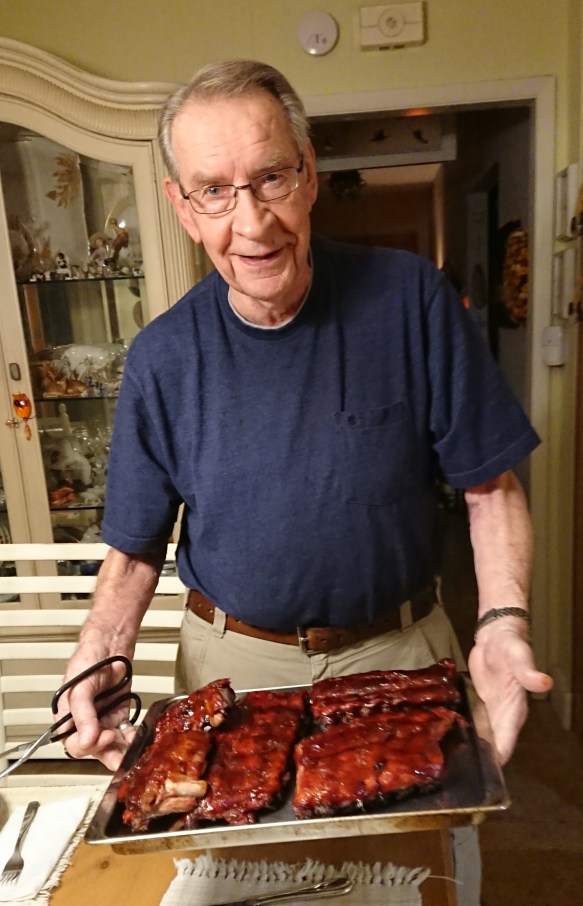
I ate well there! We had baby back ribs! and even lobster tail broiled in lots of butter! I enjoyed just hanging out with Doris and Kent. One night we all played “Pictionary” which was loads of fun. Marie came up to help me w iht setting up my computer and stayed to eat and play the game.
Kent took me to several used bookstores too. I couldn’t buy a lot due to the weight limits but it’s fun to browse and I got 4 or 5 books.
I’m really glad to see Grandma Dora who, at 95, is as sharp as ever! Kirsten picked me up at Tampa airport. We had lunch at her home with Dora.
It was so good to see Kirsten and I’m so proud that she is in college now! I would have done that if I could so I’m thrilled to see her doing it.
The time went all too fast and I regret Kent and I had to spend so much time setting up my new PC. But it was wonderful to see Kent and Doris. They got up before 4:00 AM to take me to the airport. When I got out of the car, I was so intent on finding a porter for my bags that I forgot to give Kent a big hug Goodbye. Later, when I realized it, I felt so sad..
Thanks so much for everything. You guys are my family and no one else would do for me what you all did! I miss you all now.
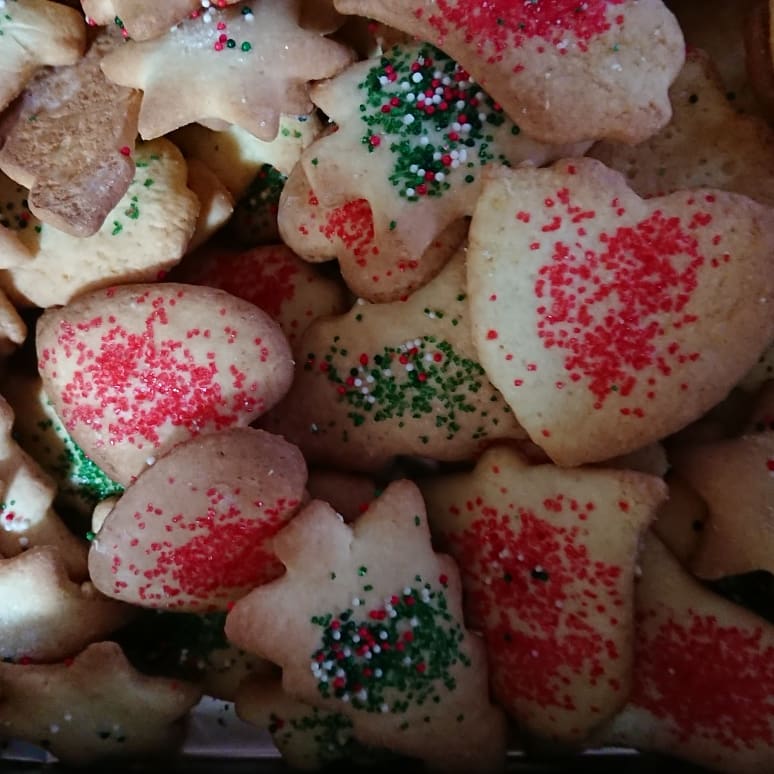
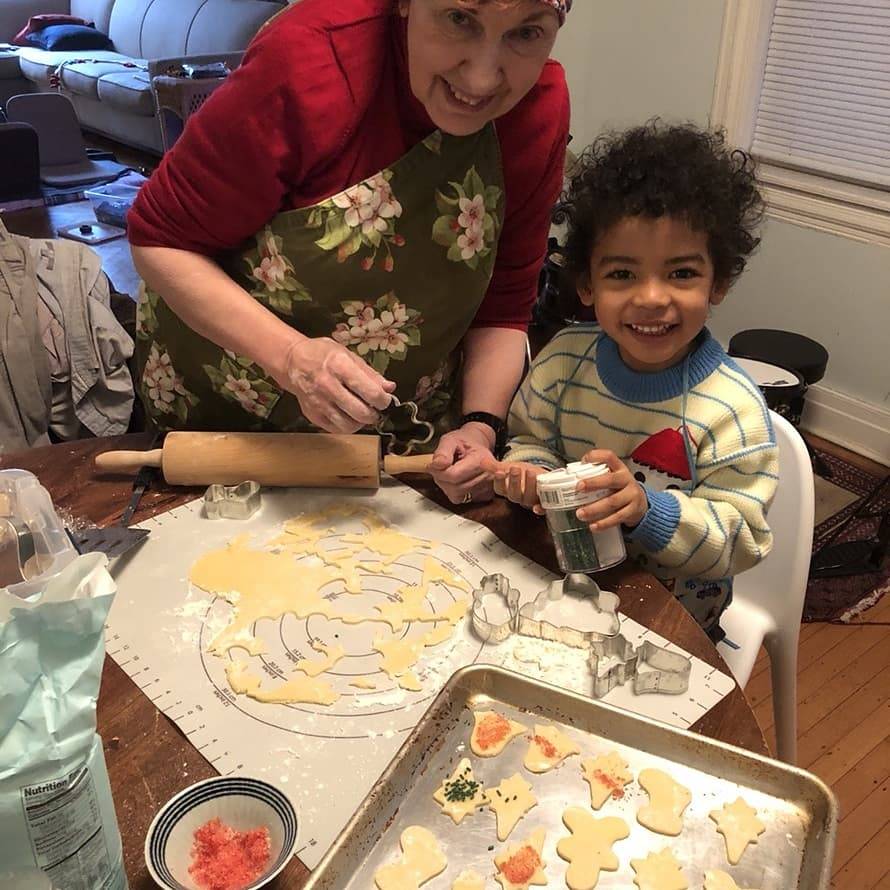
This recipe is the best-tasting cut-out cookie for making simple Christmas cookies. But I roll them out quite thin so they break easily if you are thinking of packing and sending them.
3/4 cup butter or margarine (170g)
1 cup sugar
1 teas vanilla
2 eggs
2 1/2+ cups flour
1 teas baking powder
1 teas salt
Cream butter and sugar. Add vanilla. Gradually beat in eggs. Add B.P. and mix in flour, finally using hands. Mix in a little more flour if necessary.
Roll out 1/4″. Cut out and place on lined baking sheet. Sprinkle with colored sugar if desired. Bake in pre-heated 400°F (200℃) oven 6-8 minutes. Immediately remove to cooling rack.
If you prefer to ice the cookies, omit colored sugar and ice with Royal Icing.
Royal Icing
1egg white
2-3 cups powdered sugar
1/2 Tbsp. lemon juice
Beat well. Divide and add different food colors. Let cookies cool well before icing.
Store in a tightly sealed container to prevent sogginess, esp if you live in a damp climate, like Japan!
I have been suffering from headaches for over 2 weeks. We had to cancel our trip to Shikoku. So Hiroo took me for a drive to cheer me up.
We drove through Yuki Onsen ( hot springs) and turned off onto a narrow road to Tsutsuga Mura. There is a Icho-no-Ki tree there that is over 1,100 years. The trunk is 7 meters in circumference. It is located in front of Oo-Otoshi Shrine.
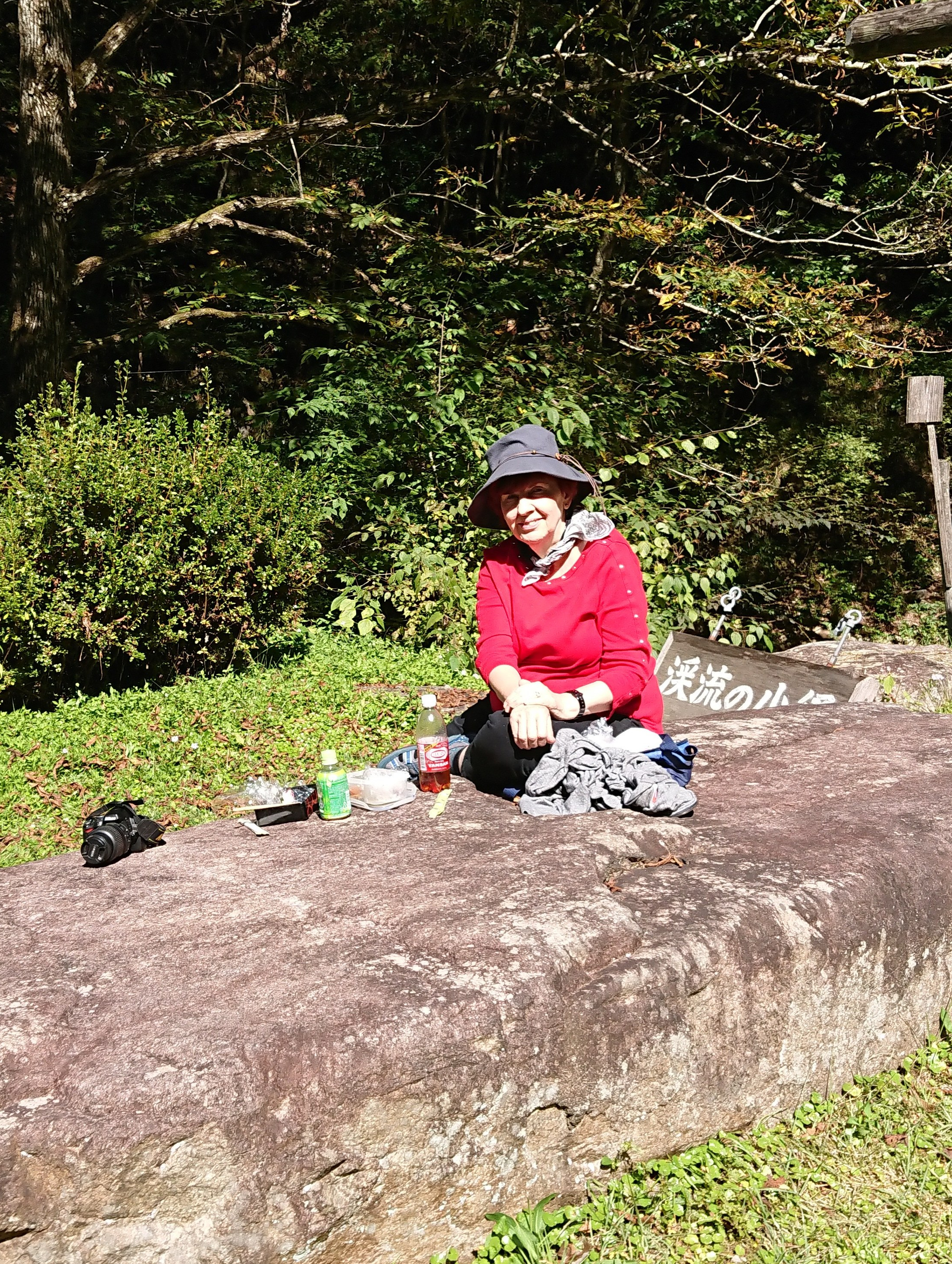
As always, we had packed a lunch and we drove up towards Ryuzu no Taki Falls to eat. The road was closed below the falls, so we ate our lunch near there.
After that, I wanted to go a little further and visit a place I haven’t been before.
We entered the country town of Kakei-cho, and found the old shopping district. I took a few pictures of older shops, but what caught my eye was a somewhat newer stationery store. I went inside.
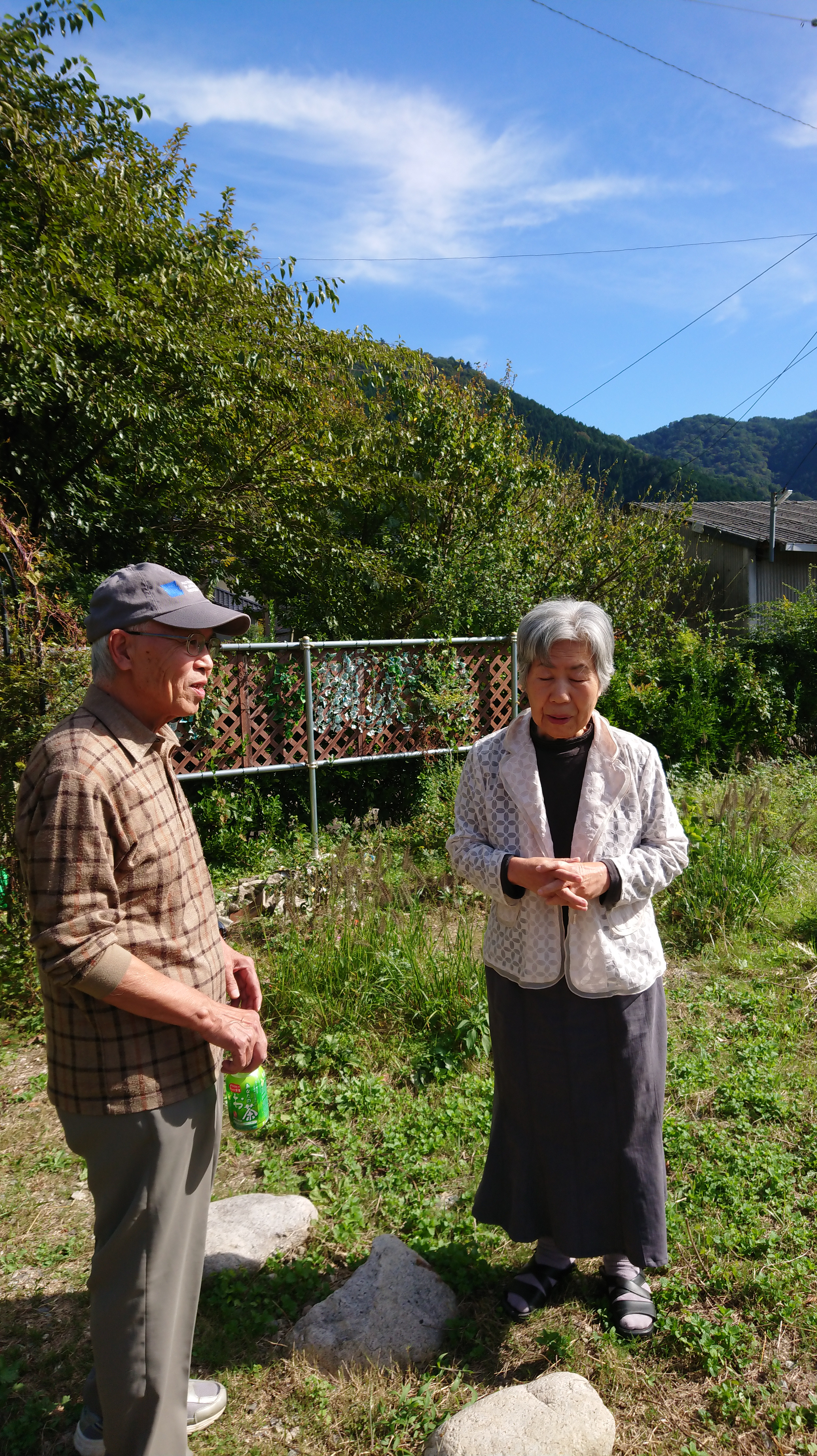
There I met the owner, Kazuko Kono. She is the third generation to run the shop which was rebuilt 30 some years ago. She enjoys writing haiku poems, and growing medicinal herbs.
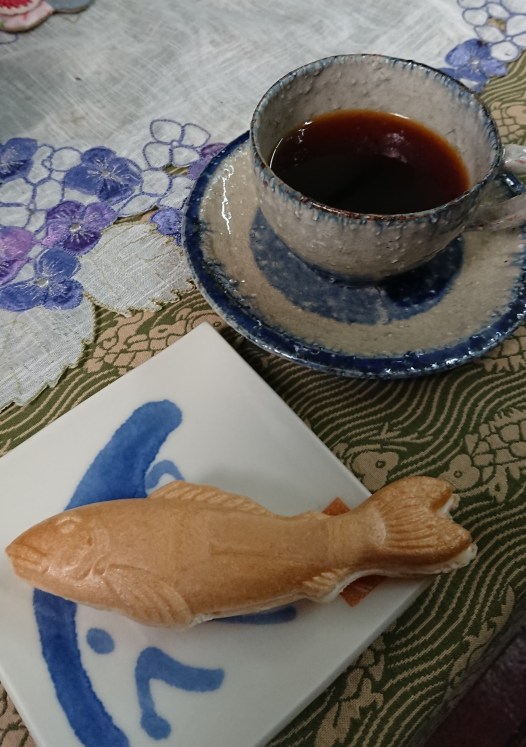
She showed us her field and served us very specially-blended coffee!
The shop is unique in that it is half bookstore and half stationery store. Some of the books have been on the shelves for so many years that they are collectible or out-of-print.
The memorable thing she said was explaining with irony that the first generation who opens a business works hard to build it up. The son who grew up watching that also works hard. The 3rd generation however, grows up in an affluent home, squanders the assets and goes out of business.
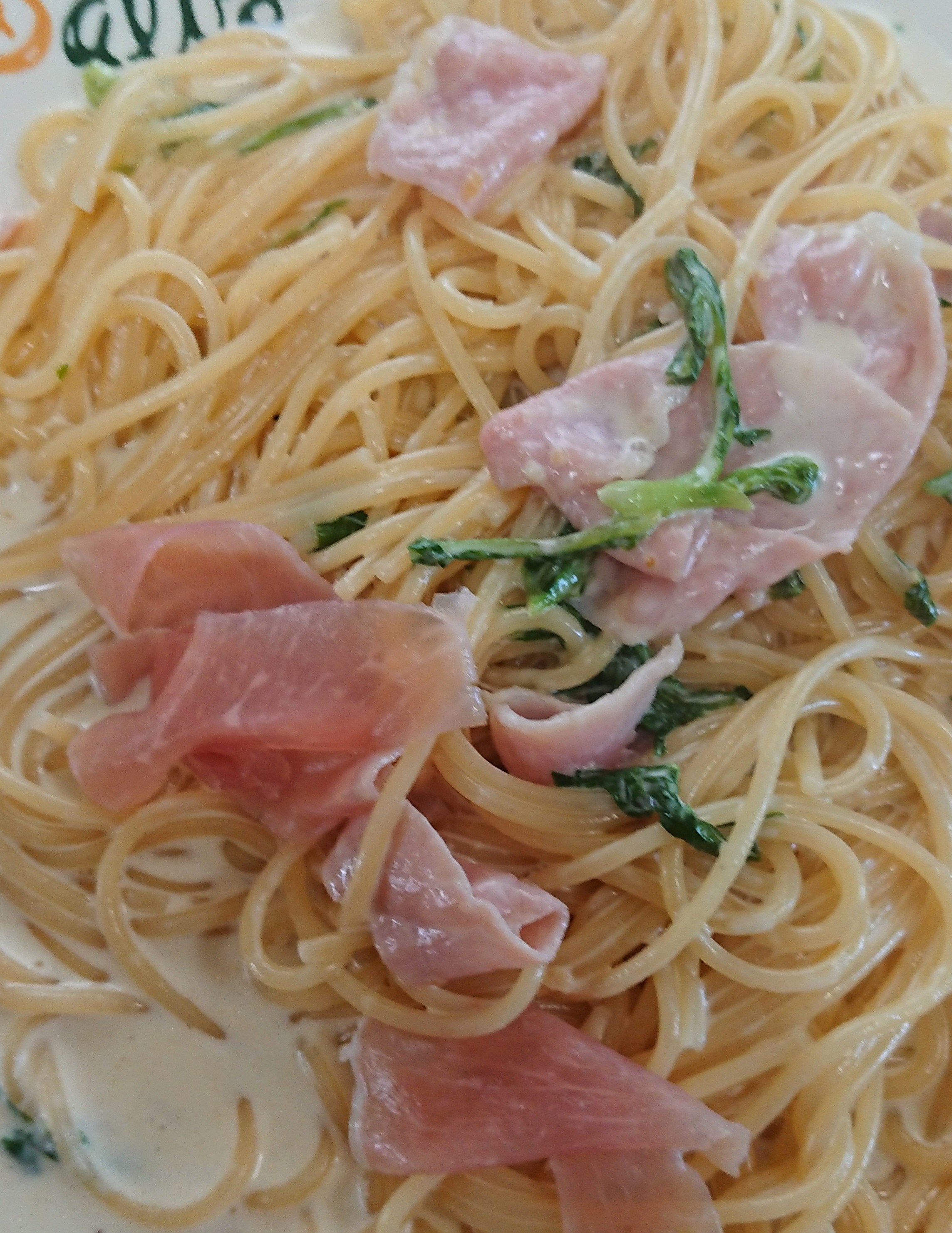
This is so easy to make and it’s really yummy! Sprinkle on some chopped parsley and serve with a glass of white wine and you’ll have an elegant dinner!
50g prosciutto 生ハム
1 cup heavy cream 生クリーム
1/2 cup milk
20g Parmesan cheese
salt, pepper to taste
150g uncooked spaghetti
Cook spaghetti as directed on package. Meanwhile separate the thin slices of prosciutto, cut in bite-size pieces. Set aside a little for garnish.
Warm cream and milk in a pan or skillet over medium low. Stir in Parmesan and prosciutto, Heat while stirring as it slightly thickens. Taste and add white pepper, salt, if needed. (Prosciutto makes the sauce salty, so you may not need salt,)
Drain cooked pasta and mix with cream sauce. Garnish with reserved prosciutto and chopped herbs.
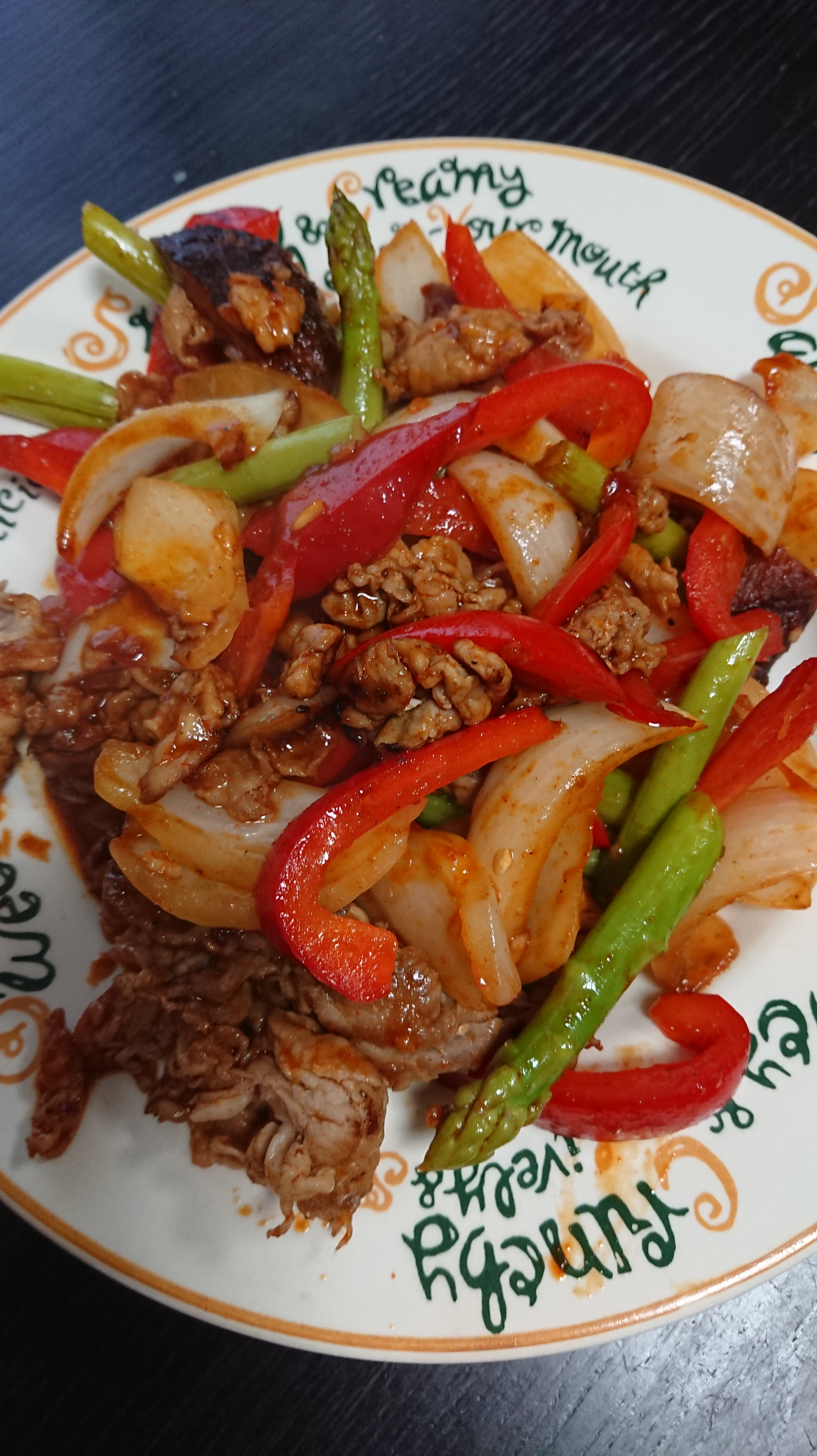
A spicy colorful stirfry to give you pep for a hot summer day!
250g thinly-sliced pork
4-5 stalks asparagus
1 red bell pepper
1 onion, quartered
3-4 fresh shiitake mushrooms
Sauce
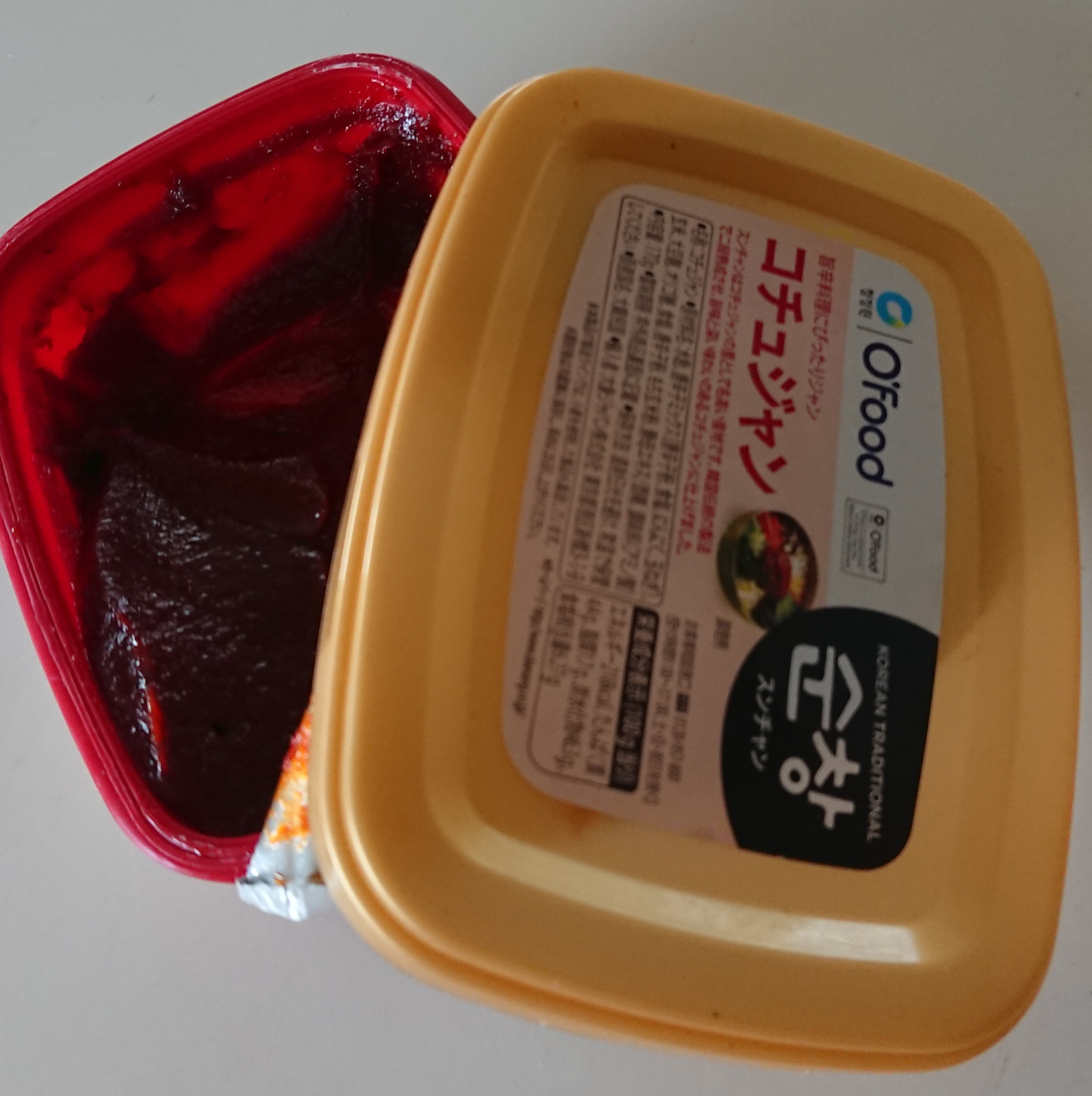
1 1/2 Tbsp kochijan(sunchan)
1 1/2 Tbsp soy sauce
1 1/2 Tbsp mirin( or sake)
1/2 Tbsp honey
1 tsp. sesame oil
1 clove garlic, grated
2 Tbsp minced onion
Cut asparagus in diagonal pieces, parboil. Season pork with salt and pepper. Saute in 1 Tbsp sesame oil, add vegetables, 1 Tbsp sesame oil. Cook and stir. Add sauce and continue stir-frying till veggies are cooked but still crisp. Very spicy so serve with green salad and rice!





















 Baba's Kitchen