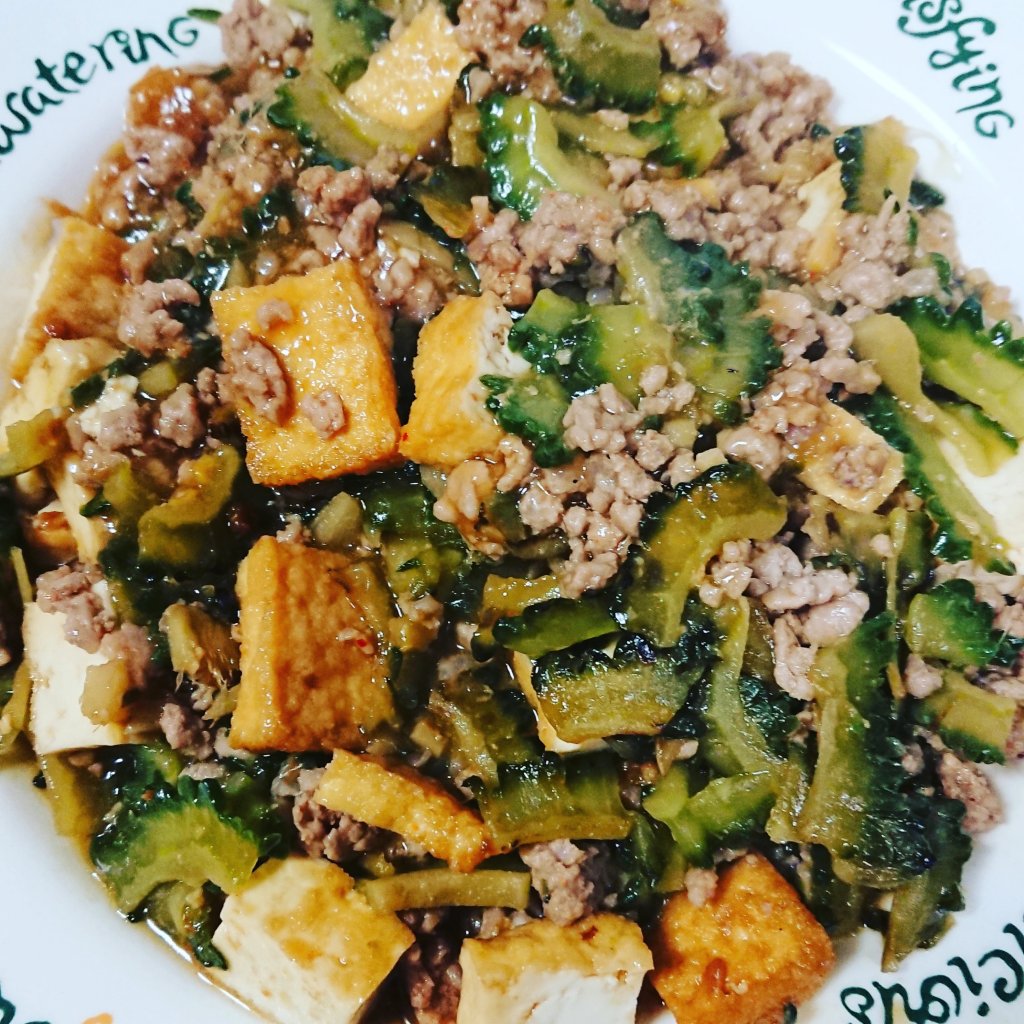
This is the time of year when people give me a lot of niga-uri or goya.
I often make goya chanpuru, but this dish is a nice change! Cut a goya
in half lengthwise and remove seeds. Cut in half again and slice thinly, sprinkle on a teaspoonful of salt, toss, let set 20 minutes, then squeeze out liquid.
Saute in 2 Tbsp oil. Add a Tbsp chopped ginger, 150g minced pork, stir and cook till meat is done. Add 1 pieced of agedofu cut in bite-size squares.
Stir in 2 Tbsp miso, 1 tsp tobanjan. Mix 1/2 cup chicken stock, 1Tbsp each oyster sauce, sugar, and sake
Cook 1 minute ane thicken with 1-2 tsp katakuriko mixed with 1 Tbsp water. Serve immediately.
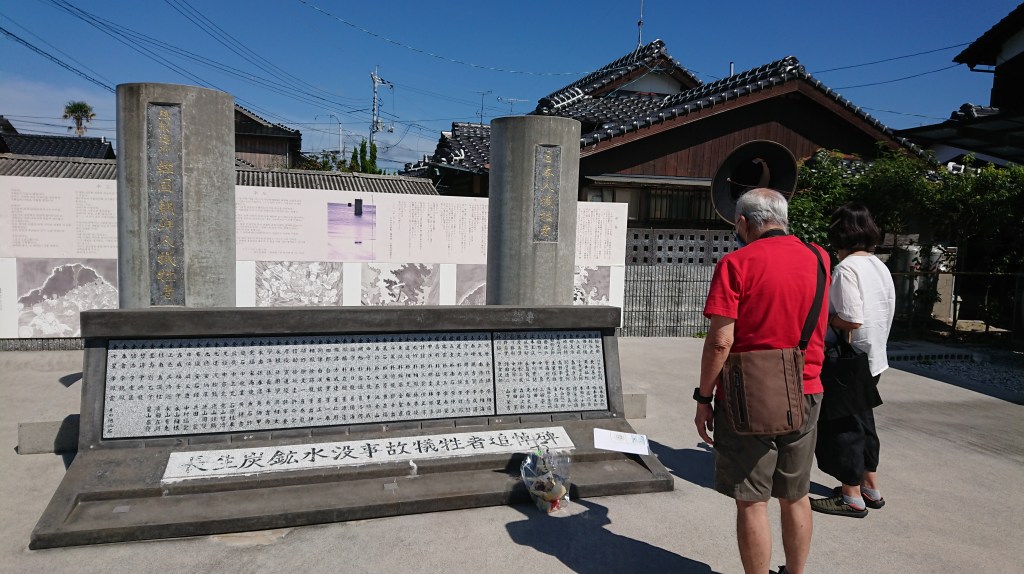
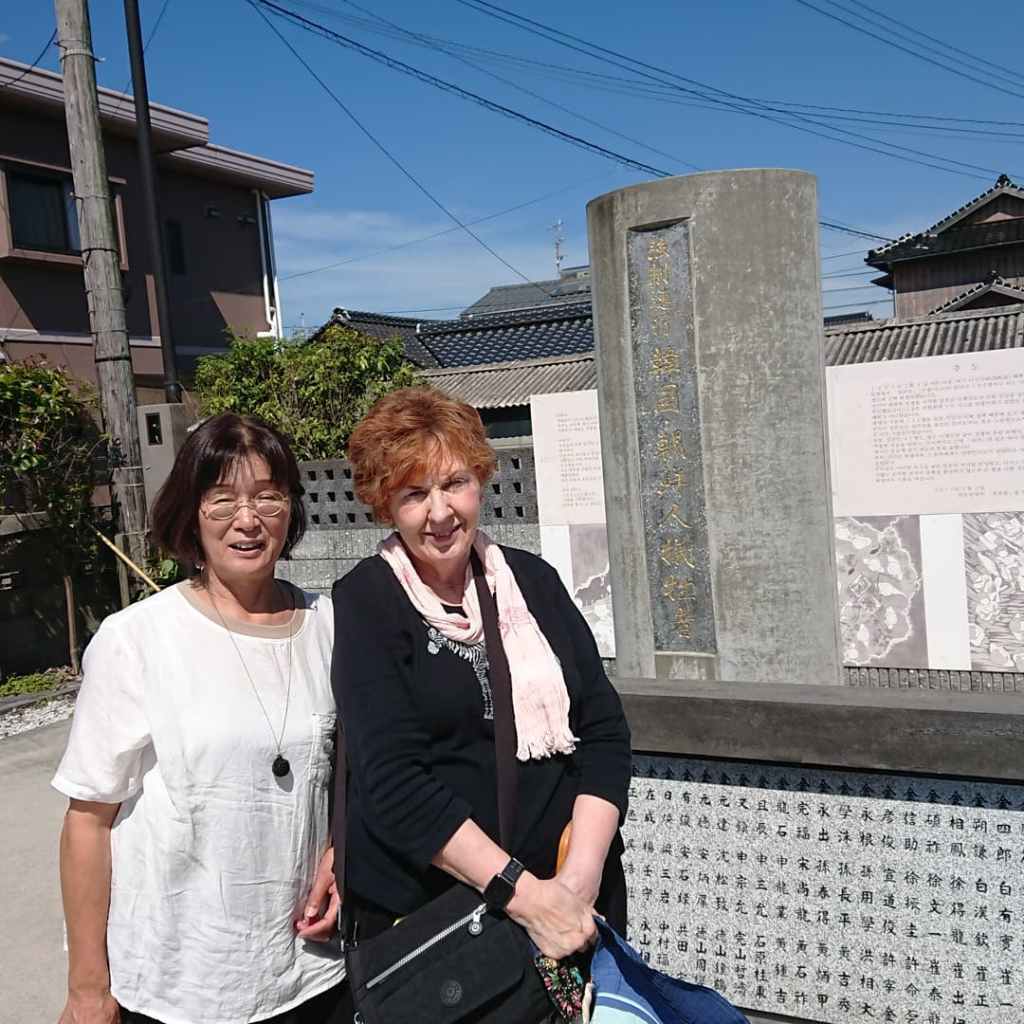
Memorial to VIctims of Chousei Coal Mine Accident (長生炭坑水没慰霊碑) Ube, Yamaguchi-ken
138 Korean Miners Among the Dead (February 3, 1942)
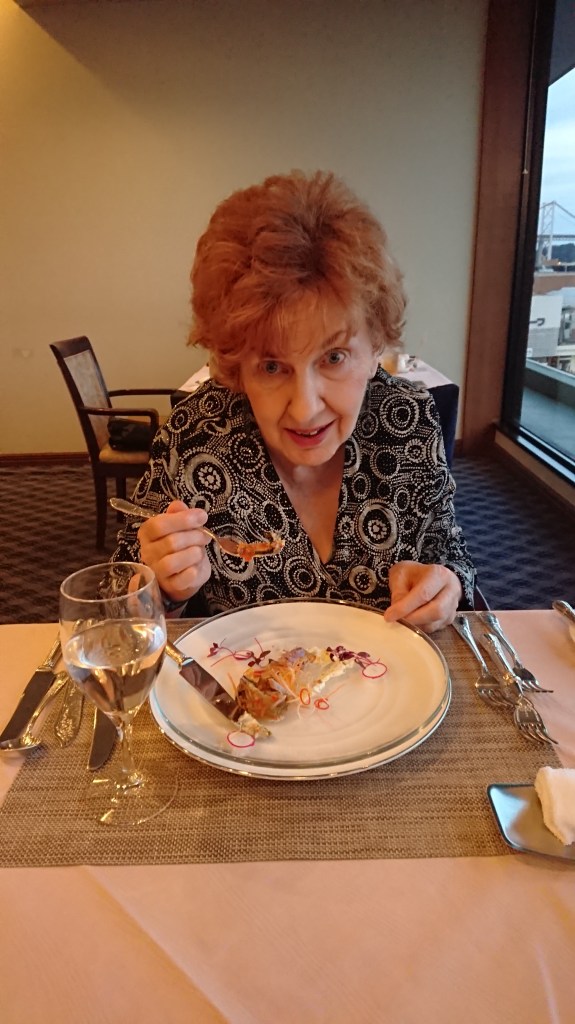
Finally we are fully-vaccinated and wanted to have an overnight trip to the next prefecture. It happened to be our 29th wedding anniversary on July 31st so we made reservations to stay at the Shimonoseki Grand Hotel and have a full course French dinner. It was lucky as the hotel is right next to the Karato Fish Market. (唐戸市場)which Hiroo was eager to visit.
Hiroo told me there was a coal mine in Ube (Yamaguchi-ken) and I found there is a Coal Mining Museum by Tokiwa Park. Luckily , I kept searching online and found a homepage about Chousei Coal Mine and the collapse of the underwater mine that occurred in 1942,
The mine had had previous incidents of flooding or collapsing supports so many Japanese miners were afraid to work there. Of course, during wartime many men were drafted to fight and so the mine needed more workers. Koreans were either recruited or , in many cases, forcibly brought to Japan to work in mines or in the construction of dams. This was very dangerous work and many lost heir lives.
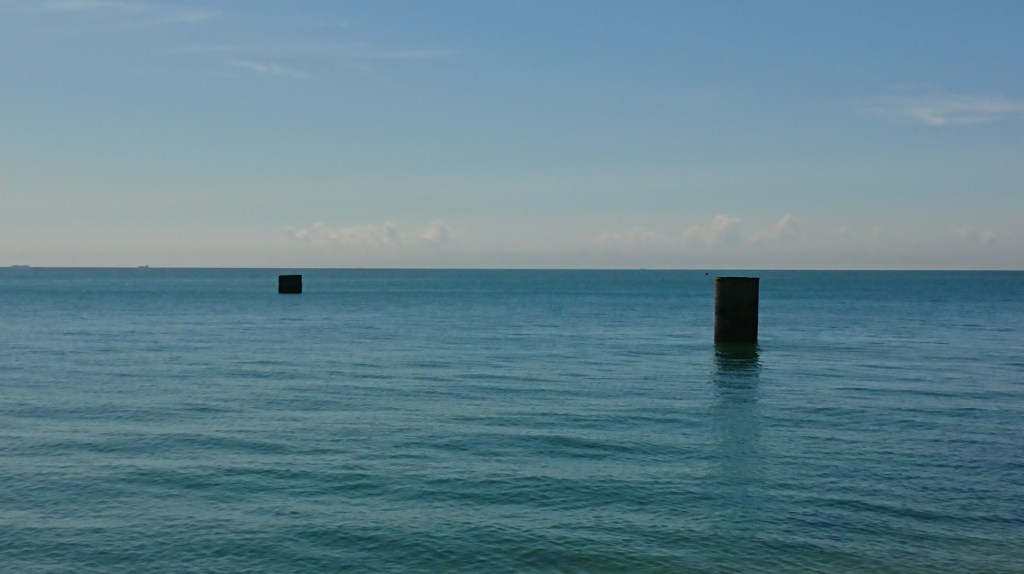
Two Piers are all that remains at Chousei MIne, Ube
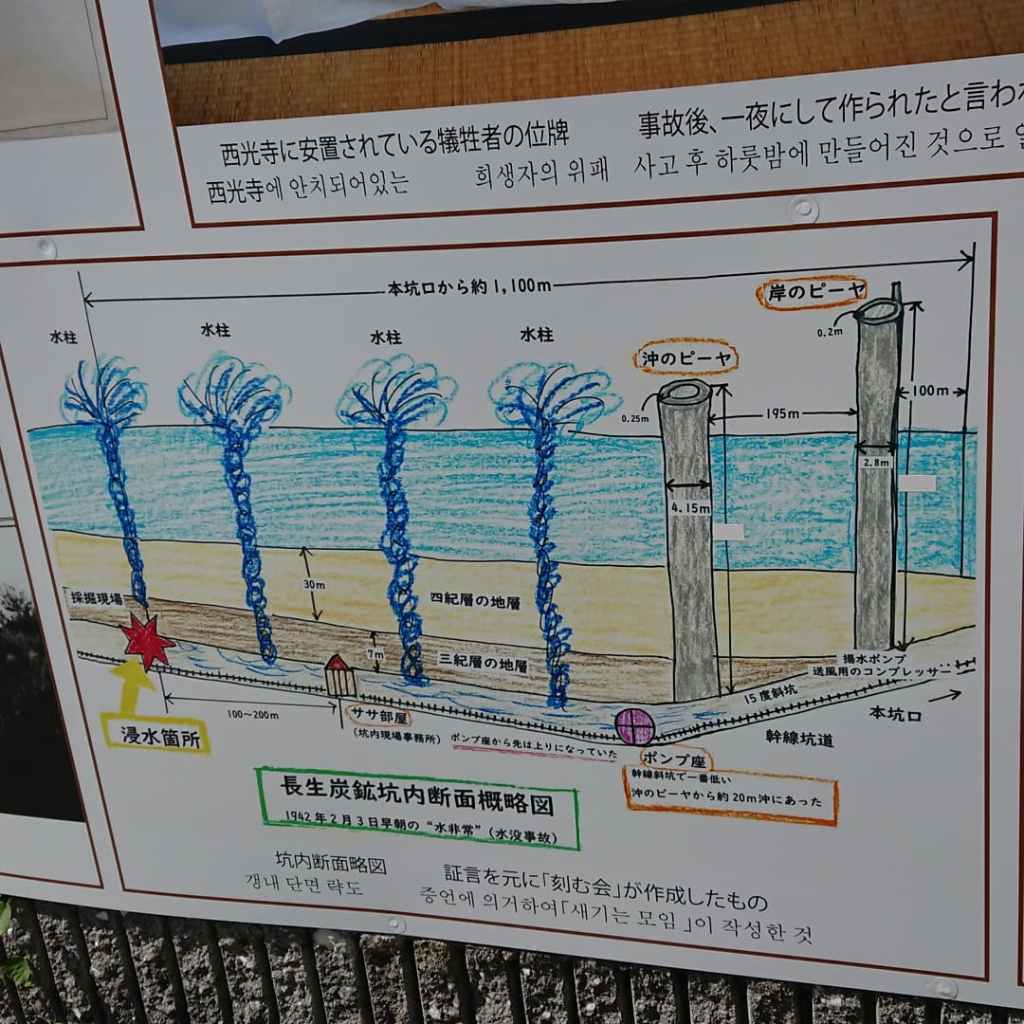
The Chousei Mine was under the sea. Now all that is left are two pillars in the ocean referred to as “piers”. Originally there was a long pier and tracks to carry coal to waiting ships. On the morning of February 2, 1942, the mine collapsed letting in billows of sea water and only a few of the miners had time to get out.
Of the 183 dead , 136 were Korean laborers (forced labor). At the time , these Korean miners were housed in barracks encompassed by a 3.6 meter- high fence and only allowed to walk the short distance to the mine entrance. This accident was not reported or was only mentioned in local newspapers saying “most of the miners managed to escape.”
In 1982, a memorial was erected and only the families of the Japanese miners were contacted to attend the dedication. Though there is a record of all the dead, no names were inscribed on the monument. it was built adjacent to a softball field overlooking the ocean and piers. The reason for constructing it was to appease the spirits of the dead so no harm would come to children playing on the field. (Japanese superstition!)
1982 Mnument to CHousei MIne VIcitms
Through the website I was able to contact the “Keep the History of Chousei Disaster in our Hearts ” (長生炭坑に“水非常”を歴史に刻む会)I promptly received an answer and was contacted by Yoko Inoue who offered to guide us to the new Memorial and explain the history to us.
Kizamu Kai member Inoue Yoko
We visited the monument with names of all the victims, Japanese and Korean inscribed there. Two pillars reminiscent of the two piers represent Korean victims separately from Japanese victims. The ” Keep History” group found an old list of workers’ names from 1940 and sent out letters to all the Korean vicitms’ families. The addresses in Korea were old so there was no telling how many relatives would actually receive the letter.
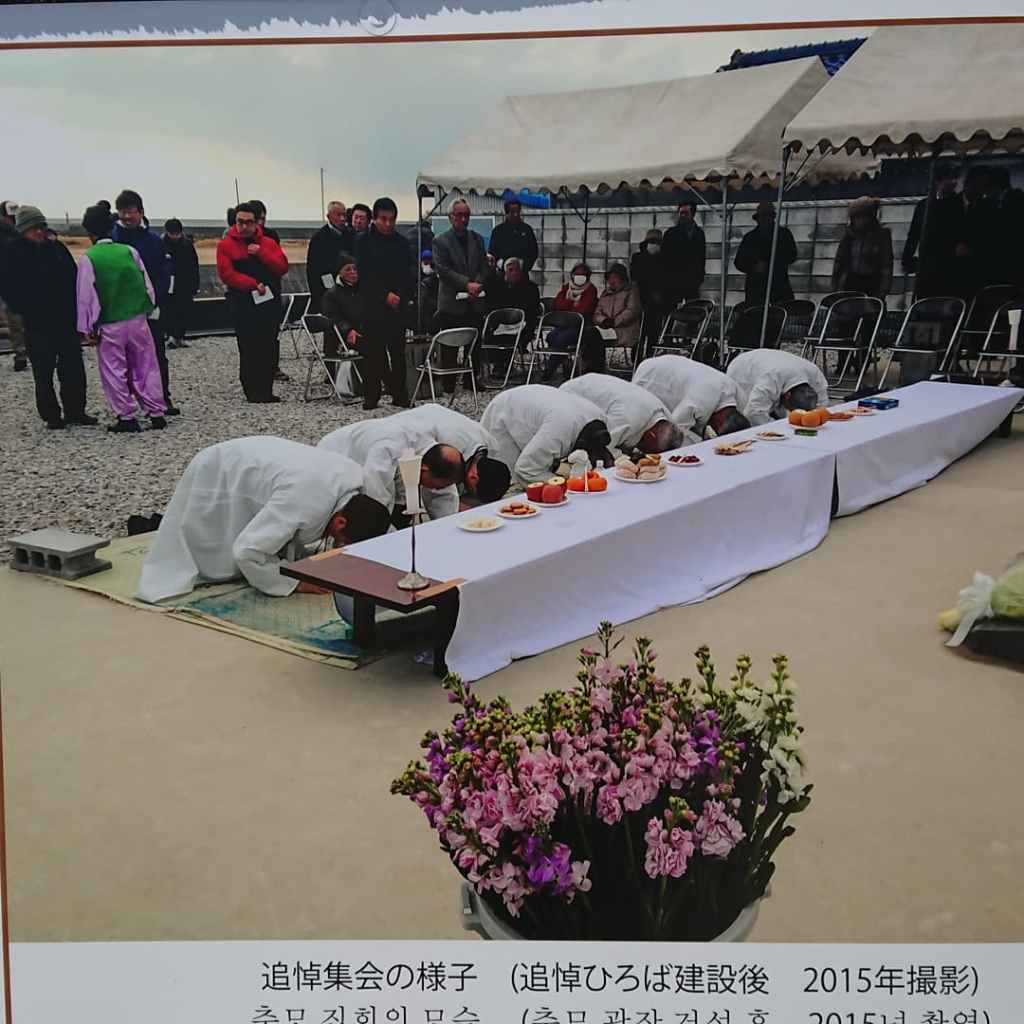
Korean relatives hold Memorial 73years on
I was amazed at the attempt to contact people after over 50 years. Of the 118 letters mailed out, there were 17 replies that first year. The surviving family members were invited to come to the sea to observe a commemorative service for the victims. I was touched to read the translation of one letter where a Korean woman wrote ” My mother was pregnant with me when my father left Korea. He may not have even known. We never heard from him again. We didn’t know how he died. So I am grateful to know how and what day he died. I would love to come to pay respect to him.”
Guides fo r the day, Inoue Yoko and Matsumoto-san
Later the inclusive monument was constructed and victims families come from Korea and Japan to Ube every year on February 3rd for a memorial service. I hope to read all the materials Yoko gave me and to visit there for the 80th Year since disaster Memorial Service in 2022.
From Ube we visited the Tokiwa Mine Museum which had no mention of the diaster or of forced labor in the mines, which is typical for government-funded museums and organizations. They want to deny the fact of forced labor from occupied Korea or Chinese war hostages.
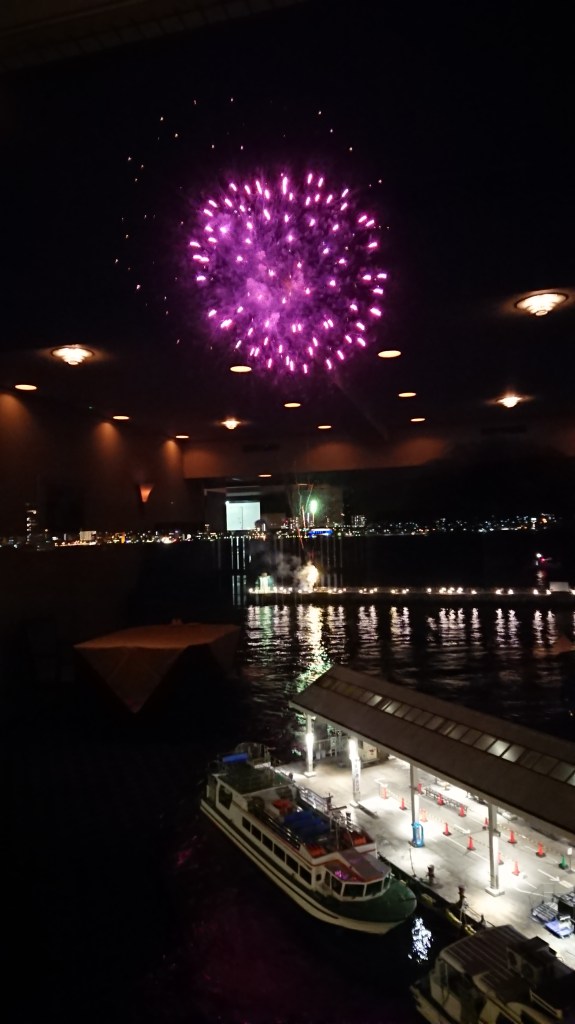
Fireworks from Restaurant View French Food
Reaching Shimoseki at about 3:30, we checked in to our hotel . We enjoyed our dinner and were very lucky that there was a fireworks display held that night.
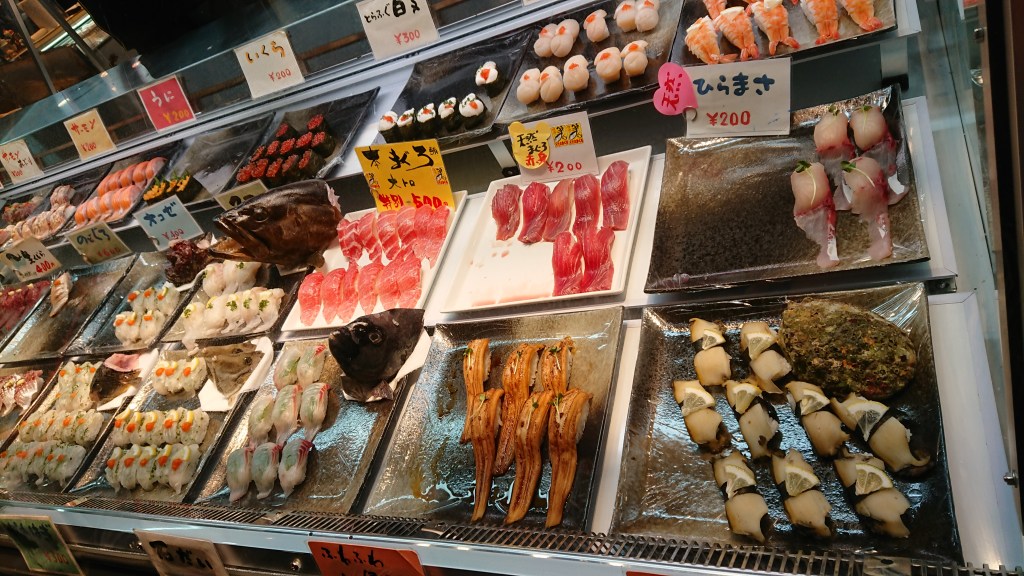
The next day we visited the Karato Fish Market and bought fresh octopus and squid. Then we enjoyed choosing sushi one piece at a time for lunch. It was a very popular spot.
Sushi at Karato Ichiba FIsh Market, Shimonoseki
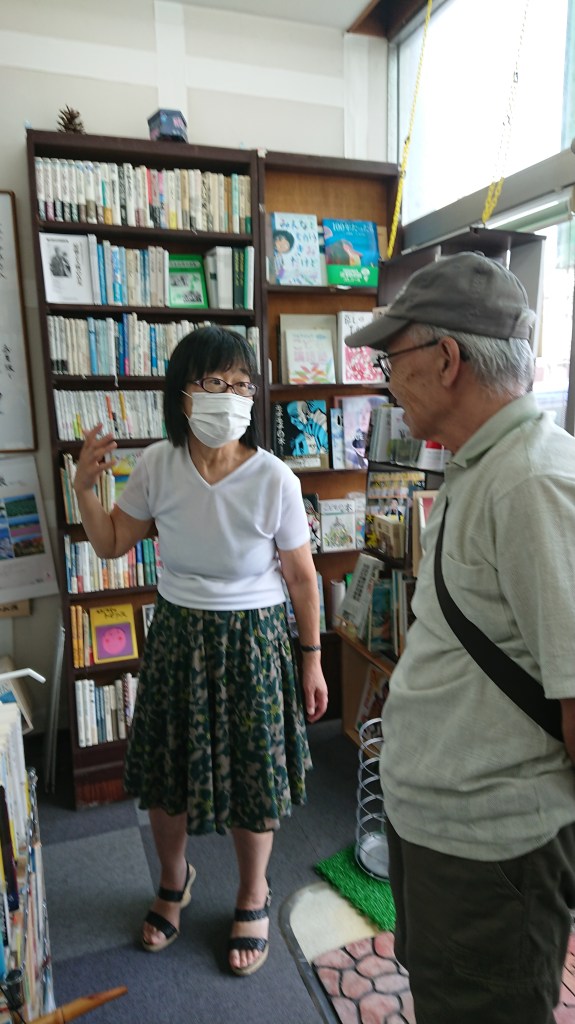
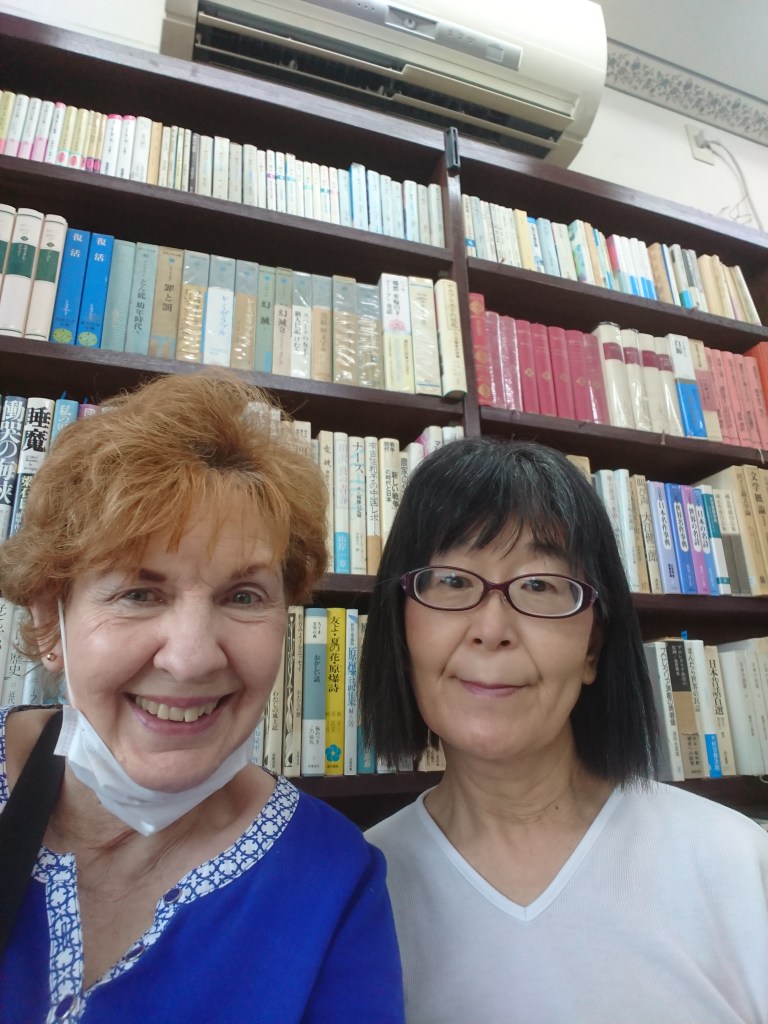
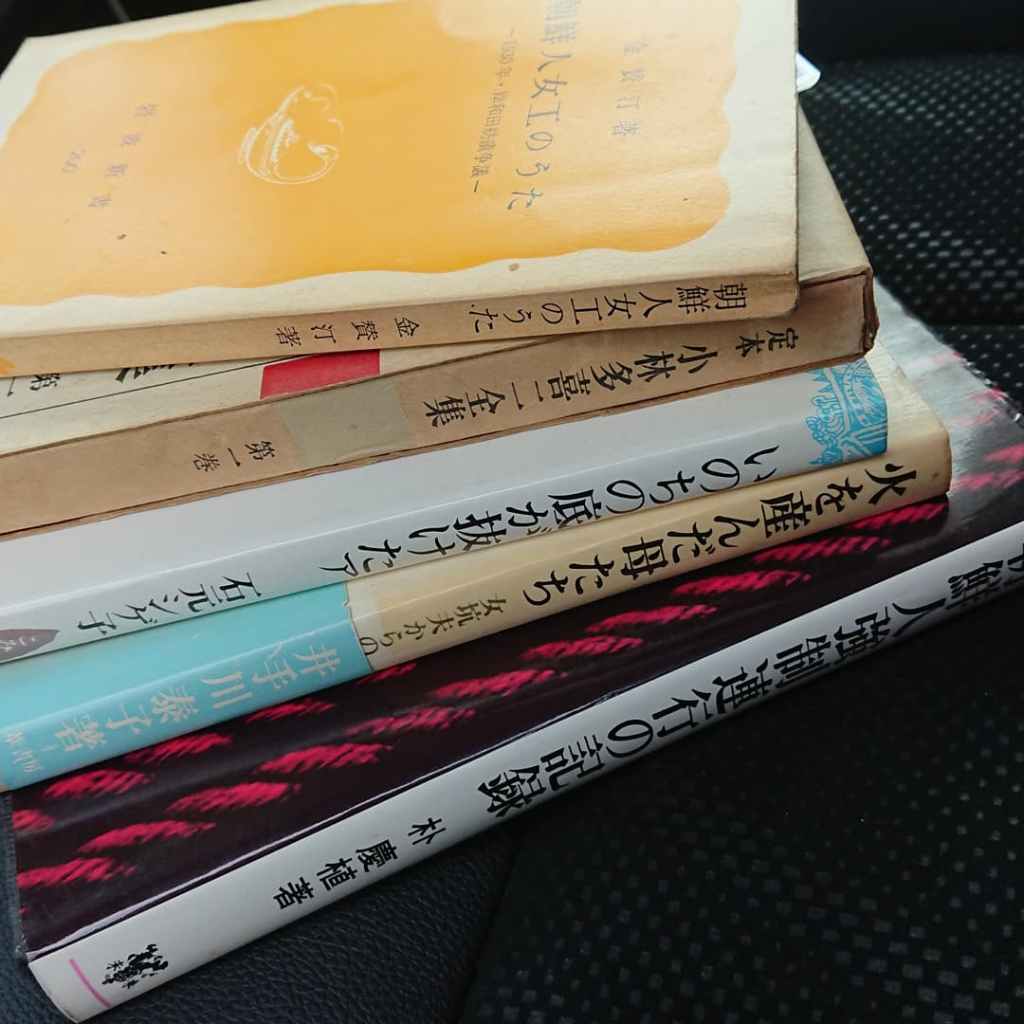
Finally Hiroo took me to one used bookstore , Azusa Books (梓 書店 083-232-4100) He said it was probably just “manga” but we were both pleasantly surprised to find it had so many books on history and social issues. It is a great place to visit. Owner, Tomoko Tsukioka has been in business for 40 years, 10 at this location.
HIroo talks with Tsukioka-san at Azusa Bookstore
With Tomoko Tsukioka at Azusa Books
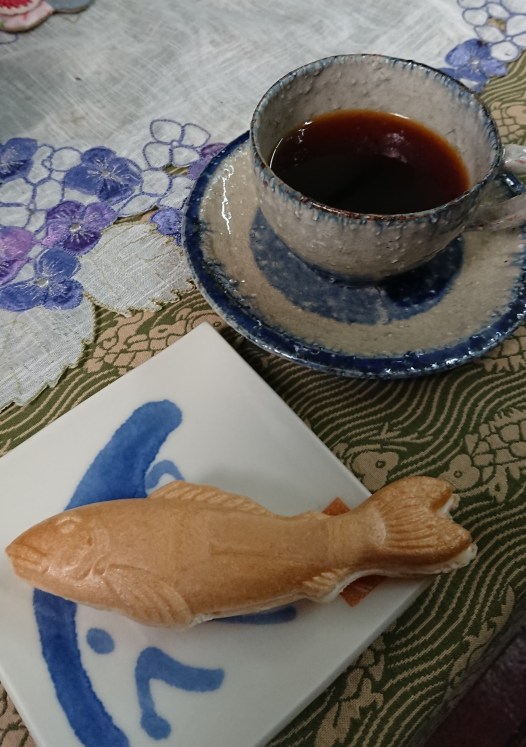
We enjoyed talking and she helped me find interesting books. When she heard it was our anniversary , she served us coffee! The most amazing thing was when she handed me one book and said, this is really a good book.
I found it!! (ずっと探していた!)
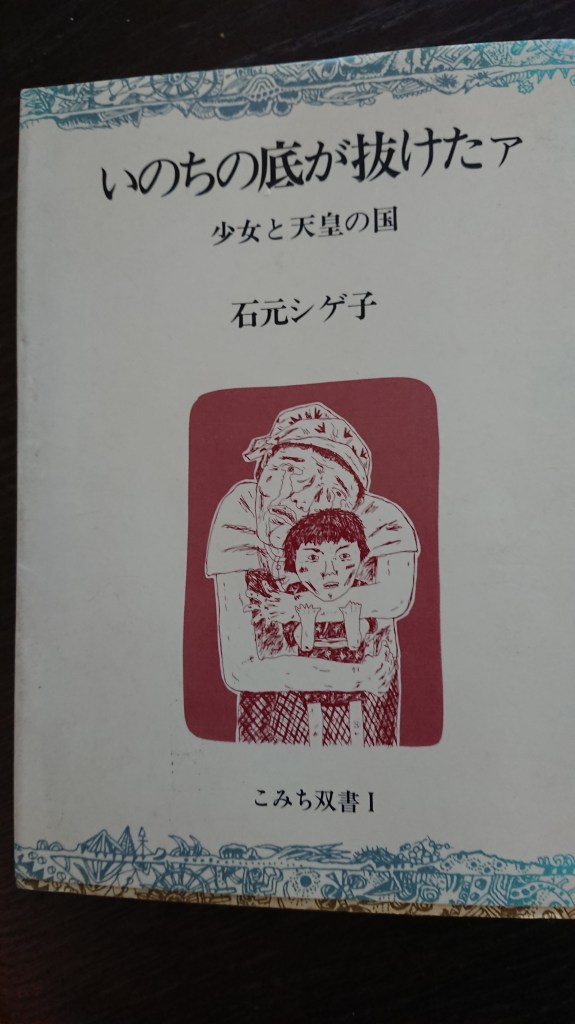
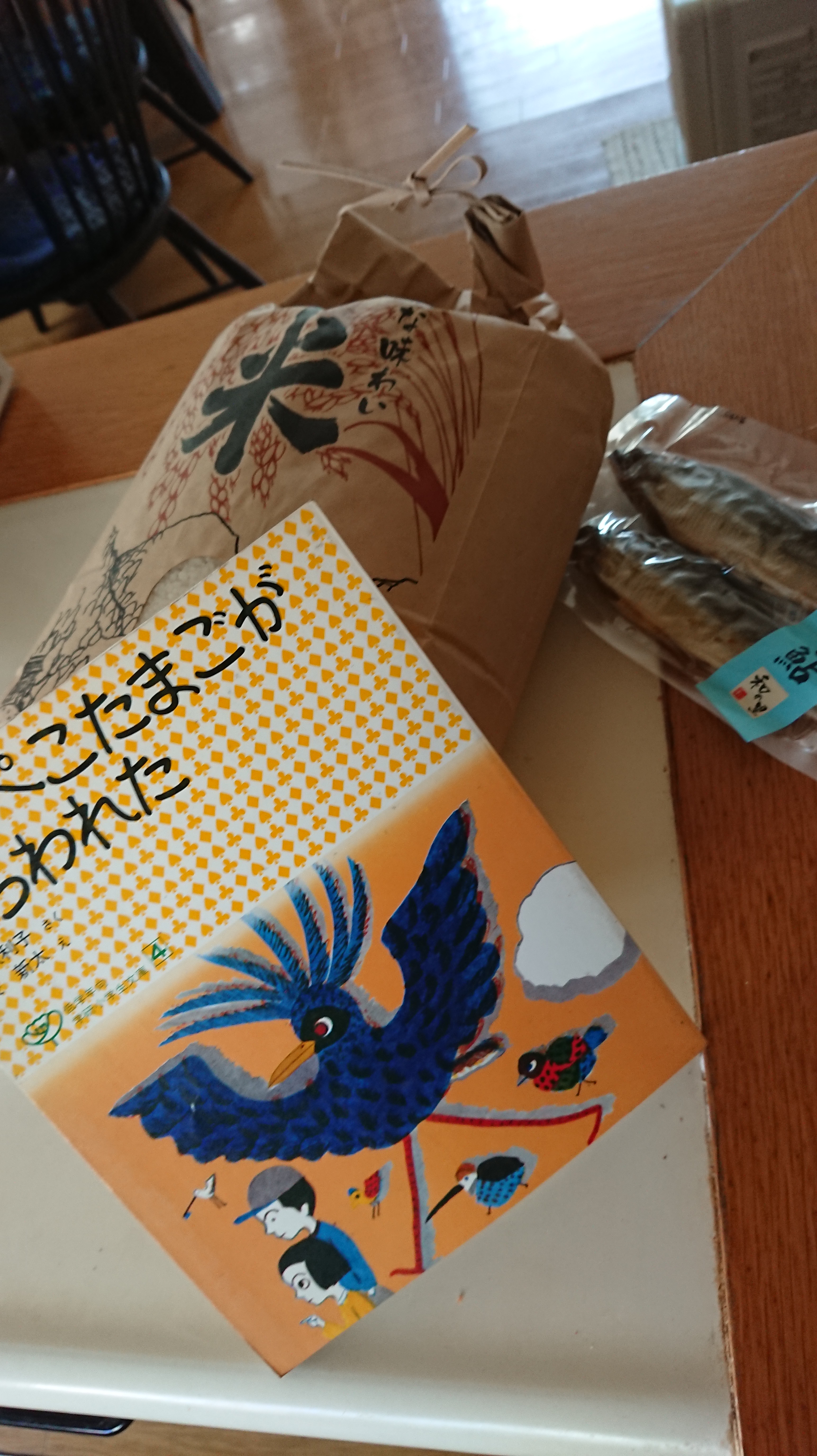
I was speechless as I had read it 30 years ago and often searched for it but had forgotten the title. This was just amazing and thrilling. She insisted on giving the book to me as a present! I hope to visit this shop with Eri some day.
Last week I was invited to visit at a facility in Kumano, Hiroshima where many people with handicaps learn art or make jewelry.
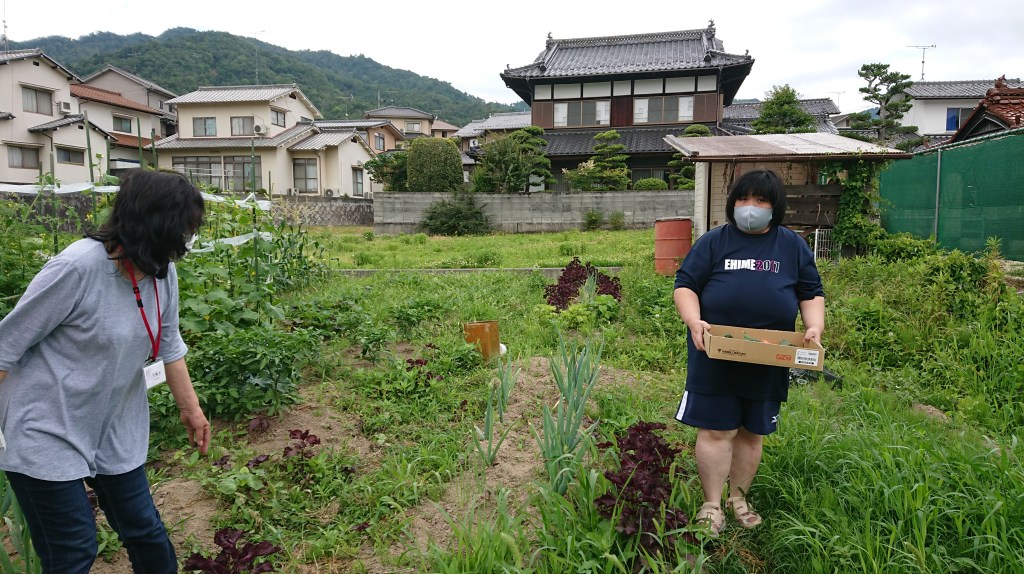
They spend the day there and have lunch there. They also have a big vegetable garden outside. I enjoyed meeting many people there. I talked with Yuko as she made jewelry, and Megumi took me to the garden to gather fresh veggies.
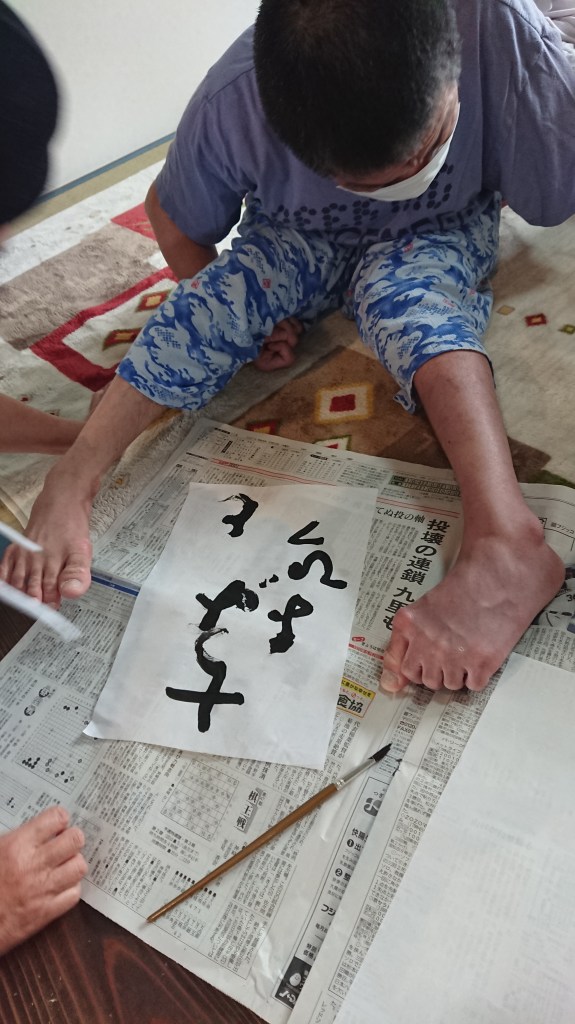
I was amazed to meet this man who does calligraphy with his foot. The word is that he is also a champion at Othello ( a chess-like game).
Calligraphy Artist
I had lunch there and it was quite filling. The staff and participants are all very friendly. Yuko gave me a beautiful glass magnet she had made. Yukiko gave me a hairpin. They will hold a bazaar on July 30th. I hope they can have some people come in spite of the coronavirus limitations.
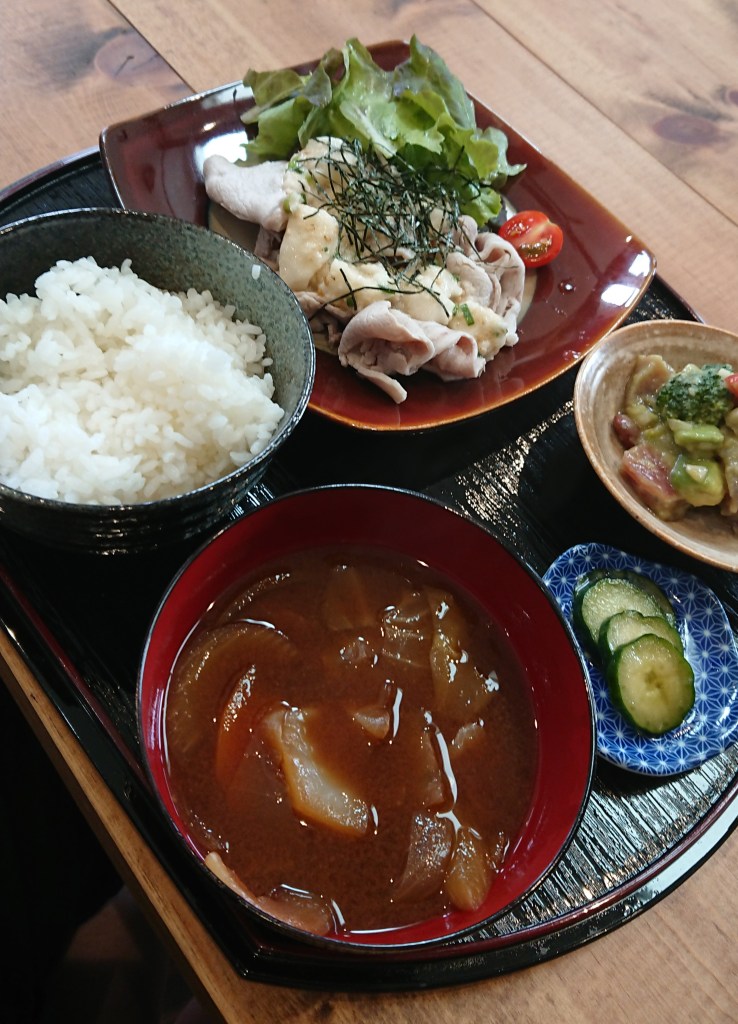
Tomoaru Lunch
Thanks for inviting me. I wish I had more to contribute rather than just listening. I know they have lots of exciting things planned. Excursions, BBQs, games and many other events. What can I do??
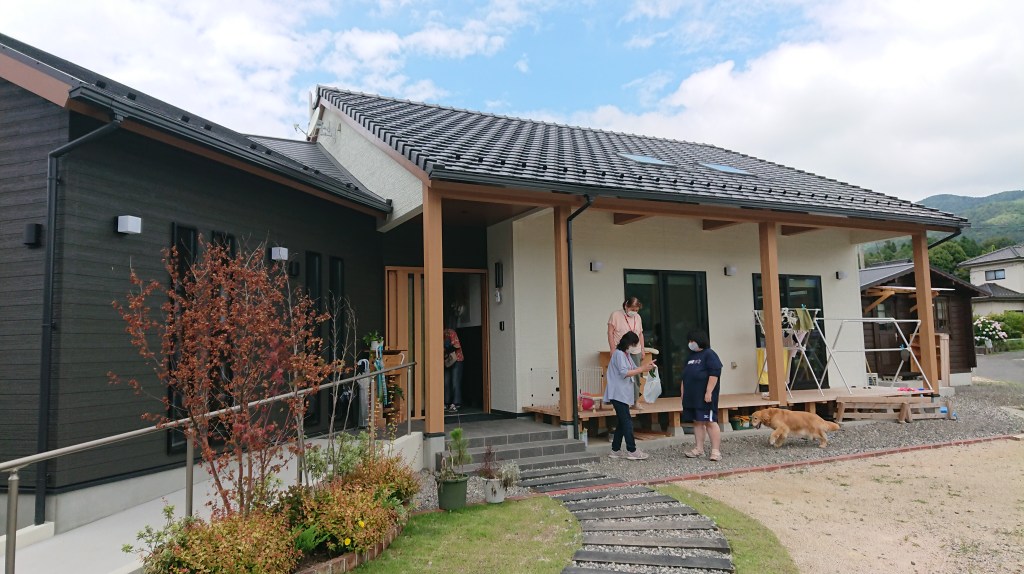
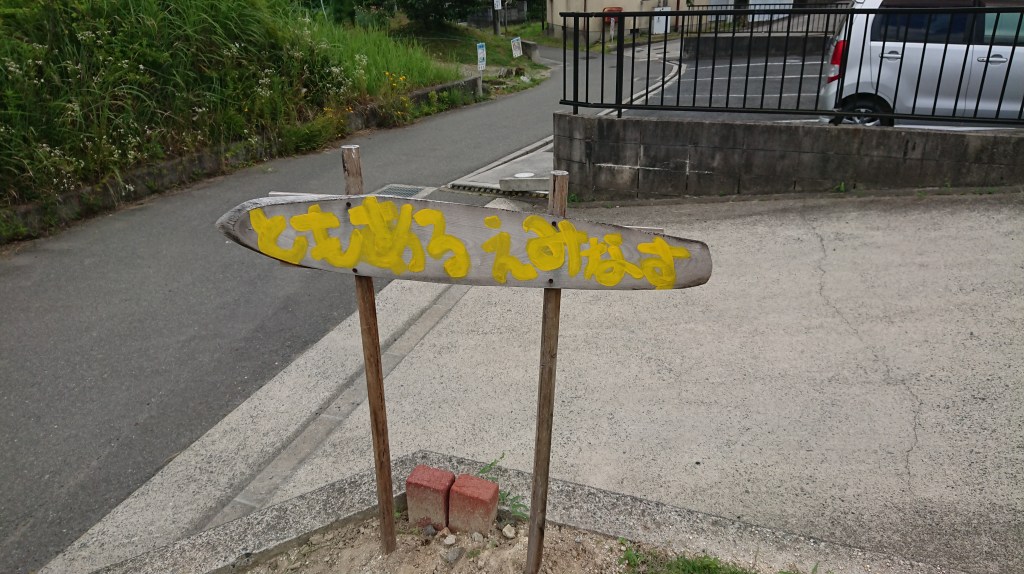
Tomoaru House, Kumano
Megumi-san picked these for me!
I was so glad to meet you all. One young woman who was there showed me a photo of her three-year-old daughter in kimono. She was so proud. I wondered what barriers she had to overcome to have a child in spite of her handicap. We often think that those with Down’s syndrome or other conditions won’t marry or won’t have kids. In so doing we deny them basic human rights, deny their sexuality.
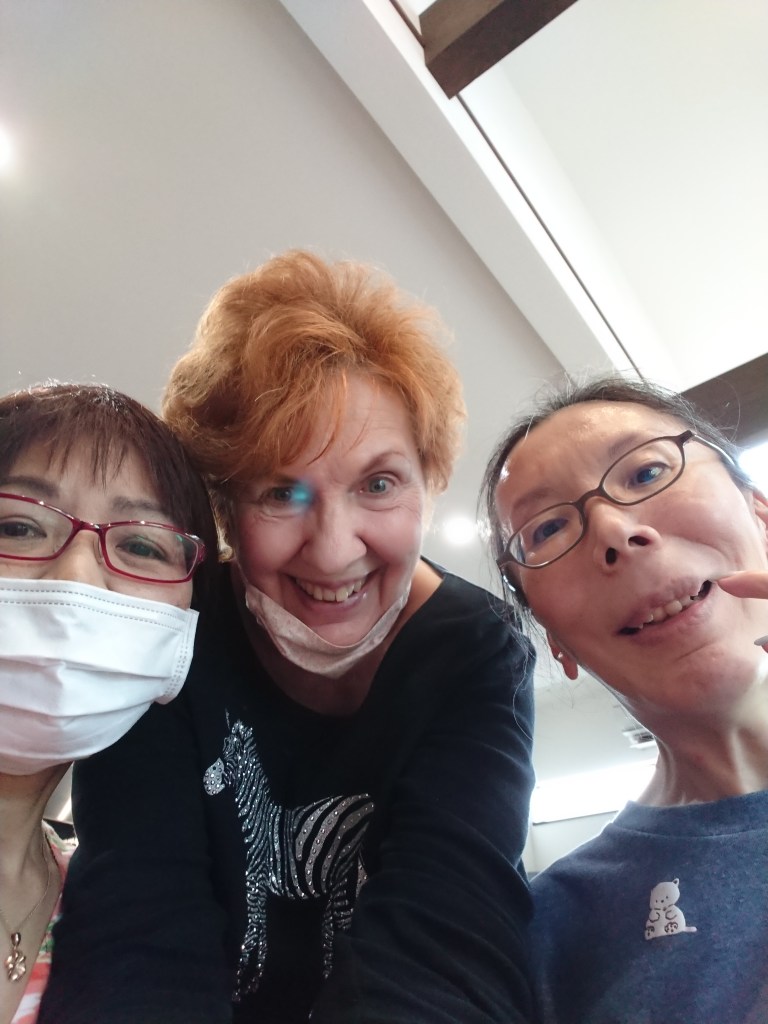
Friends at Tomoaru, Yumi, me and Yuko
A young man with cerebral palsy was being fed his lunch. Each person is unique with unique needs and abilities. The calligraphy artist had a body that seemed to be folded in half and unable to sit up, but he has made great efforts to draw and do other tasks that we take for granted. I was humbled to see him.
I hope to visit again, but I really want to think about what I could contribute, what I can do with everyone.
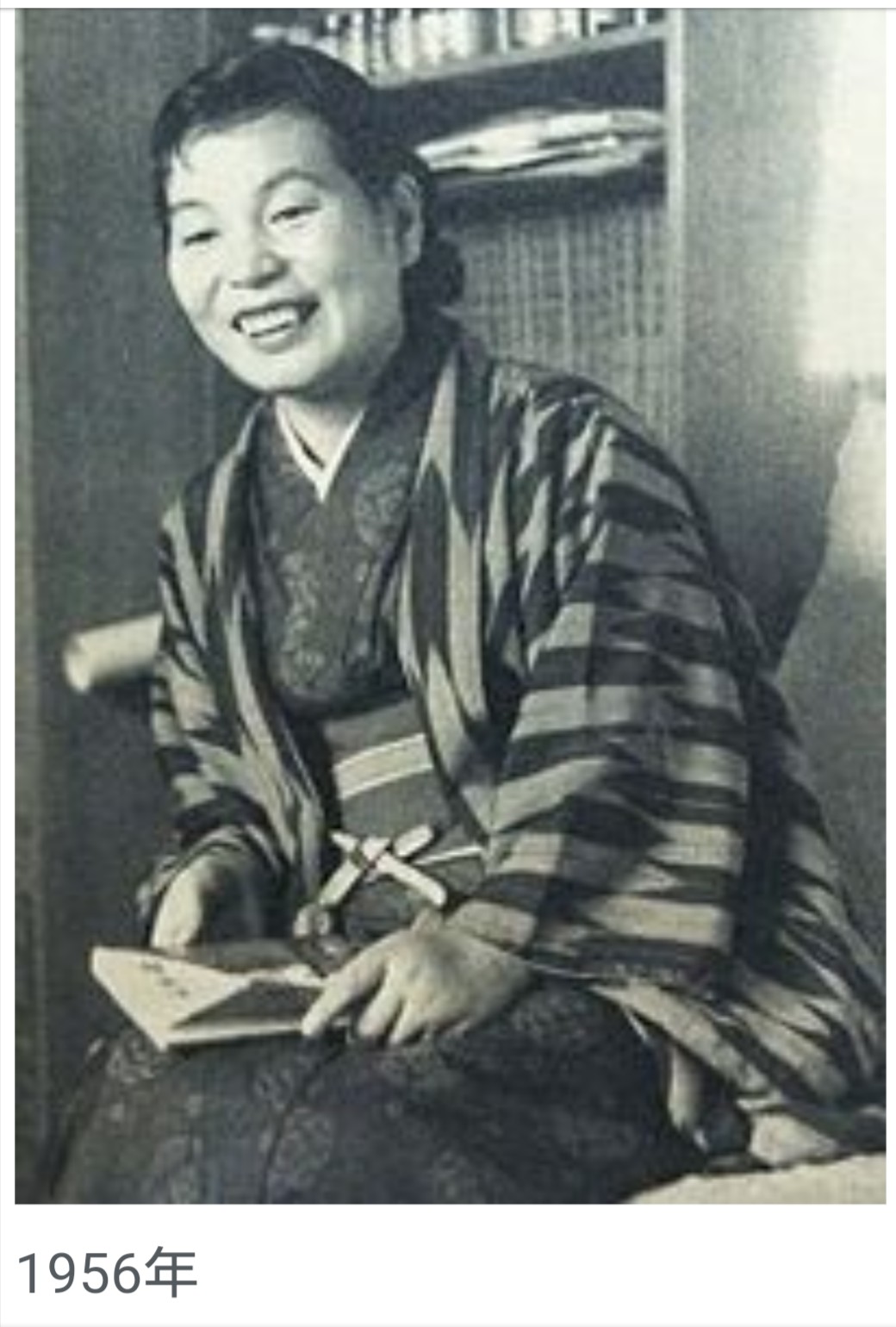
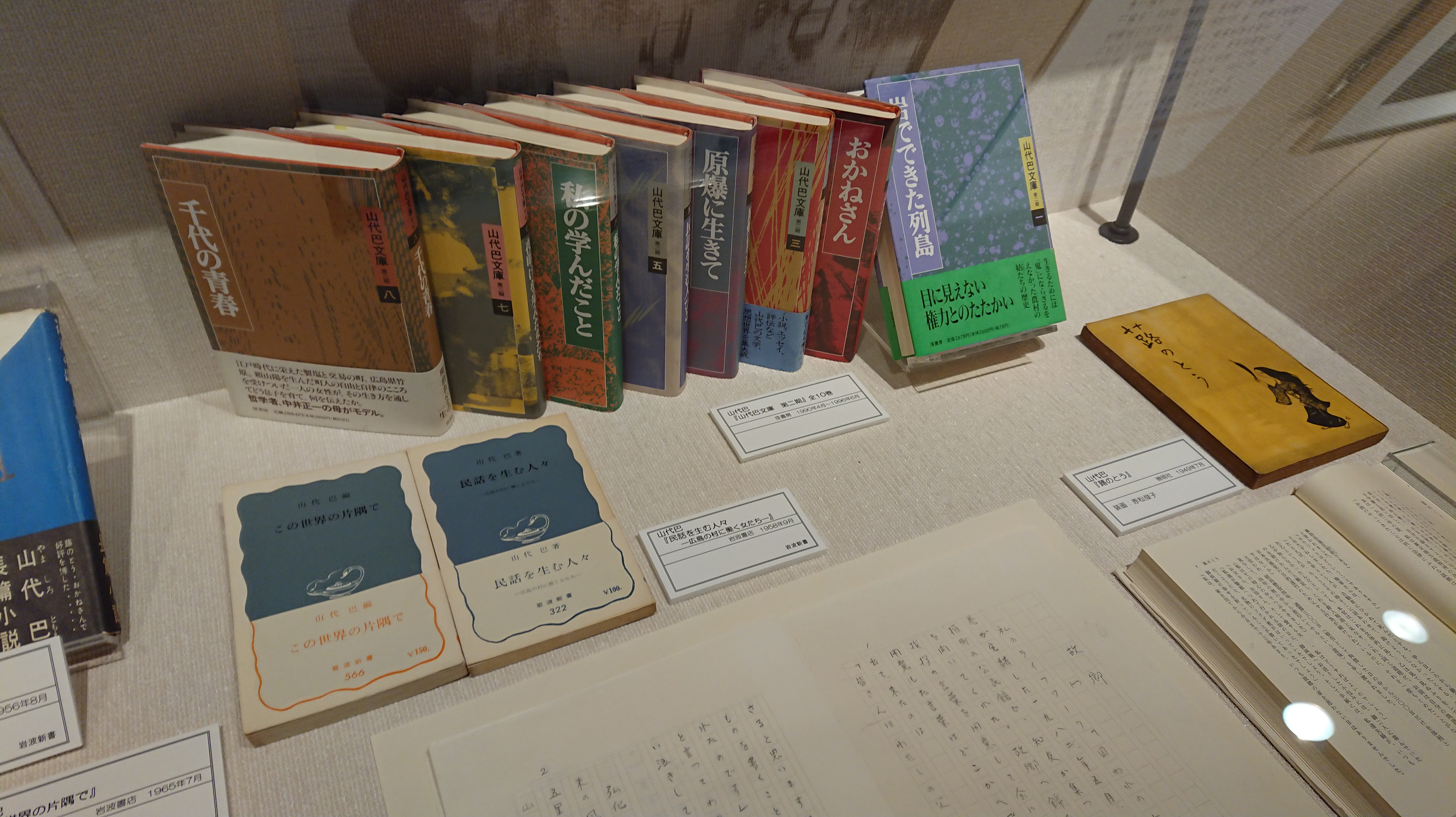
My favorite writer and activist is Yamashiro Tomoe who passed away in 2004. I discovered her when Hiroo recommended I read a novel by her entitled Okanesan. It is about a young woman who leaves her own village to go to another farming village as a second wife to a widowed man with a small daughter. She arrives to find the house in disarray, an idle husband and mean neighbors who do small unkind things to her for no reason.
In depicting life for women in rural areas of mid-twentieth century Japan, Yamashiro raised questions about the status of all women but especially in rural and agricultural areas.
I later discovered that she had been in a women’s prison for her political beliefs from 1940-1944. I am now reading the 10 volume biographical novel she wrote about those years and the women she encountered.( 囚われの女たち)
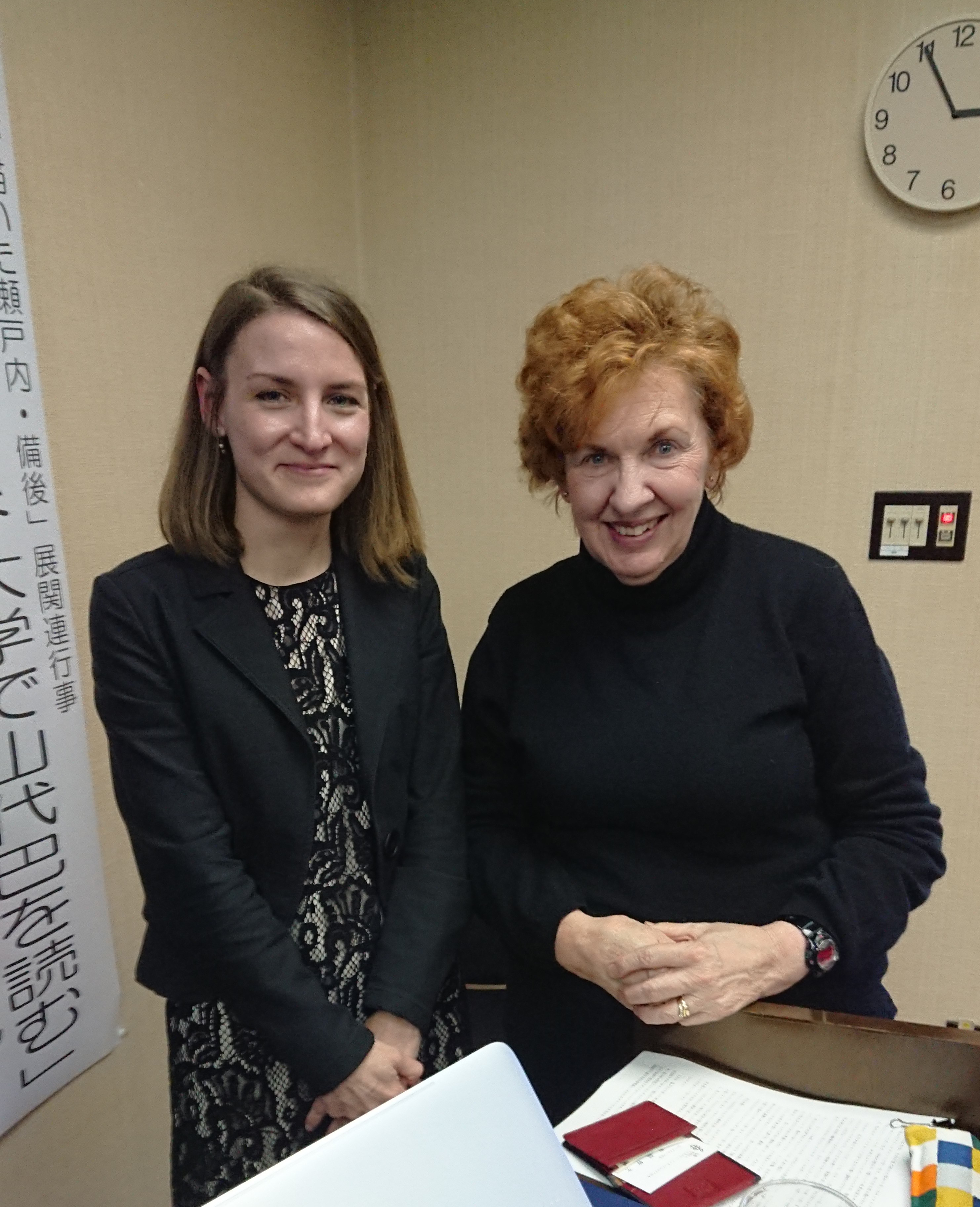
WIth Yamashiro Scholar, Chiara Comastri
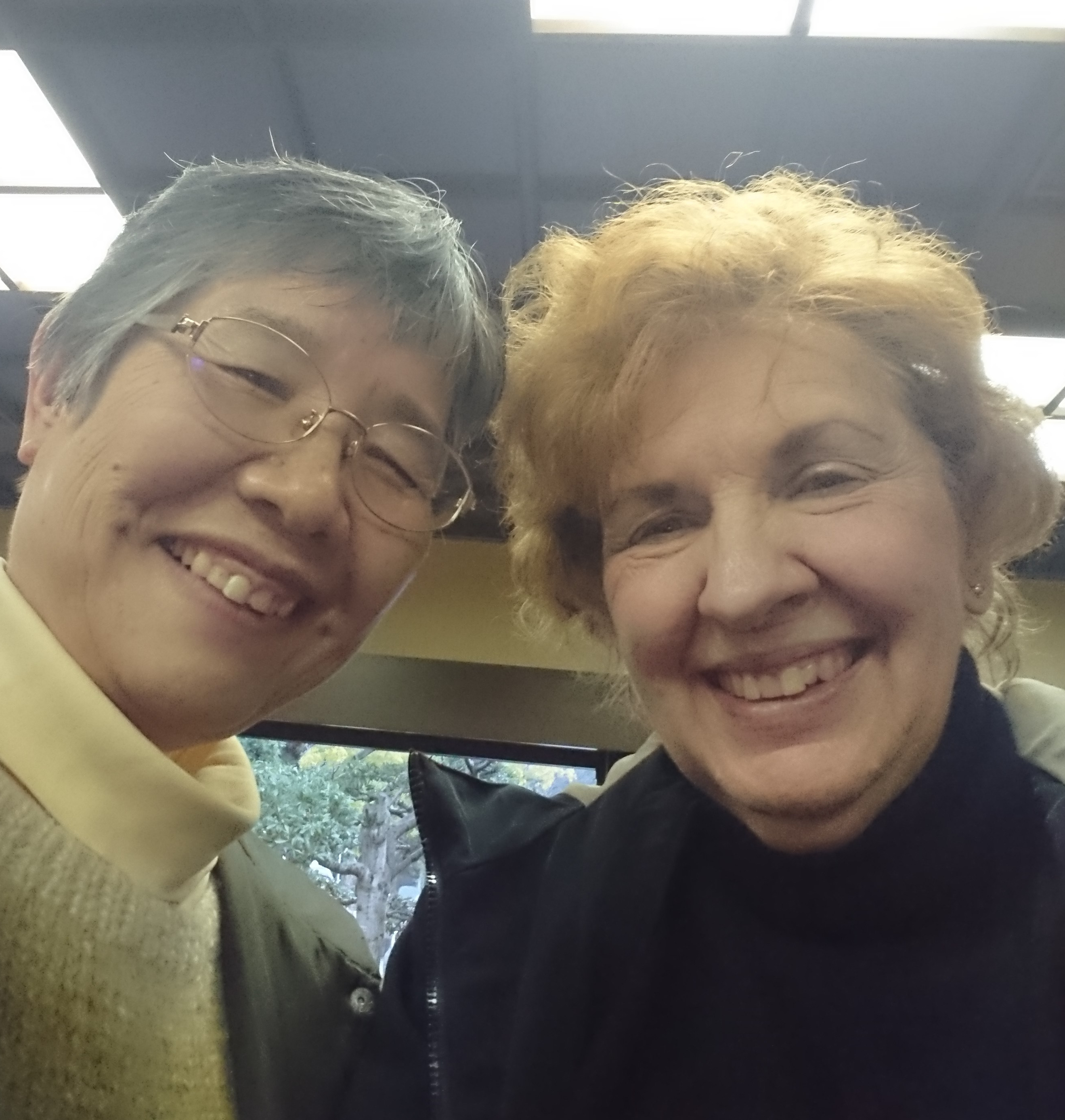
Yesterday we went to Fukuyama City to hear a lecture on Yamashiro by Chiara Comastri, a scholar from Oxford University. I was amazed by her command of Japanese which put mine to shame!
She focused on Yamashiro’s postwar activities with women in the farming communities. The stories these women told her of the suffering and difficulties they had undergone became part of Tomoe’s fiction. But her main purpose was to raise the awareness of the women and have a positive impact on their lives.
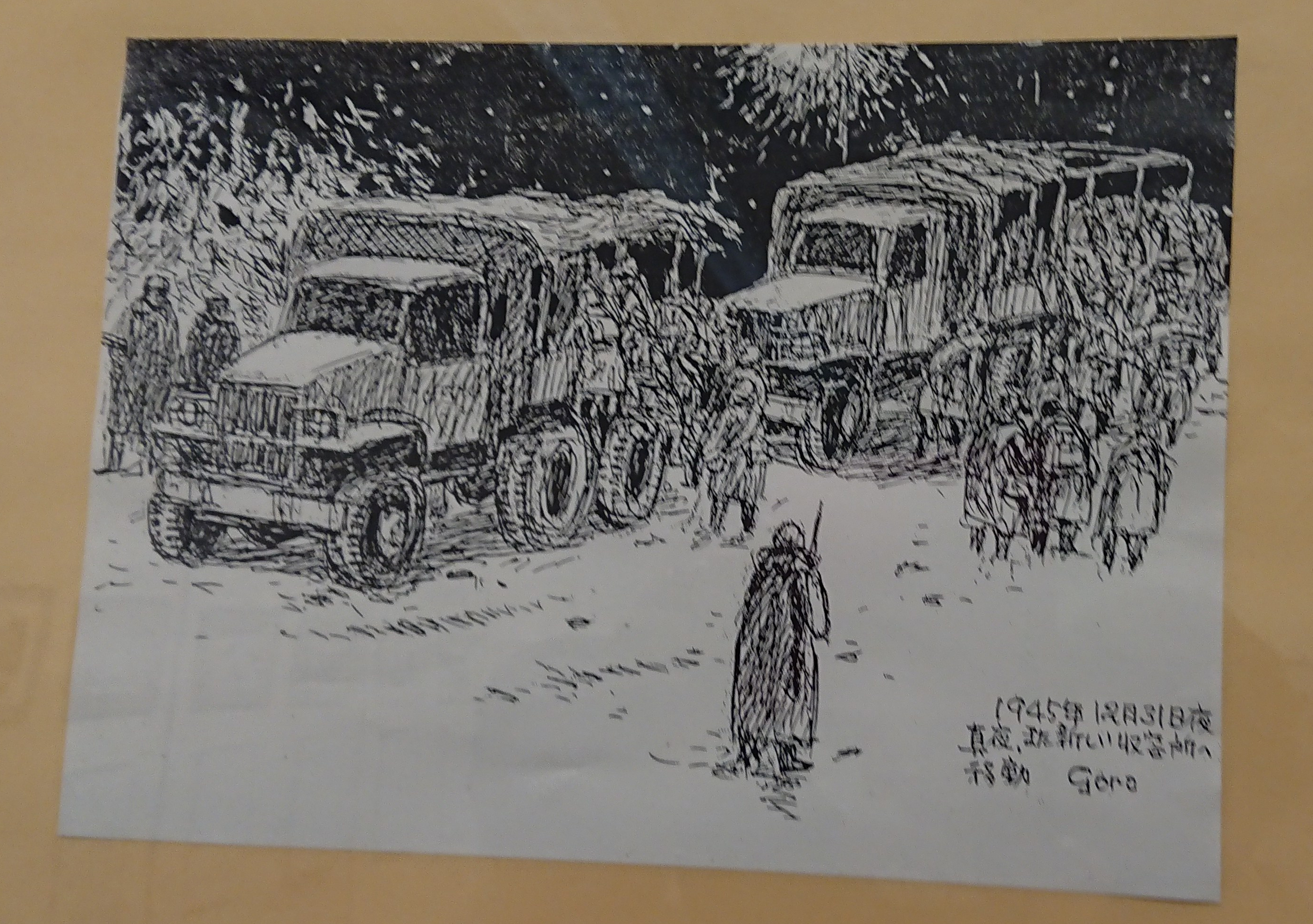
We first visited the Center for Human Rights and Peace which is located next to the Literary Hall. We saw an exhibition of drawings and paintings done by a man from the Fuchu area of Fukuyama while he was in a Siberian labor camp. His name is Shikoku Goro, (四國五郎)
Sketch by Shikoku
Ichikawa Hauko
Oil Painting by Haruko
The staff member on duty, Haruko Ichikawa, gave us a lot of information. We were happy to meet her and she mentioned that she’ll have an exhibition of her paintings next month. She is a very accomplished artist!
We attended the lecture and met the wife of Yamashiro’s biographer Makihara Norio. (牧原憲夫) I hope to keep on reading Tomoe’s work. I learn so much from it. It may take me years to get through this 10 volume set, not to mention her other books!
Makihara Norio’s wife, Makise Akiko
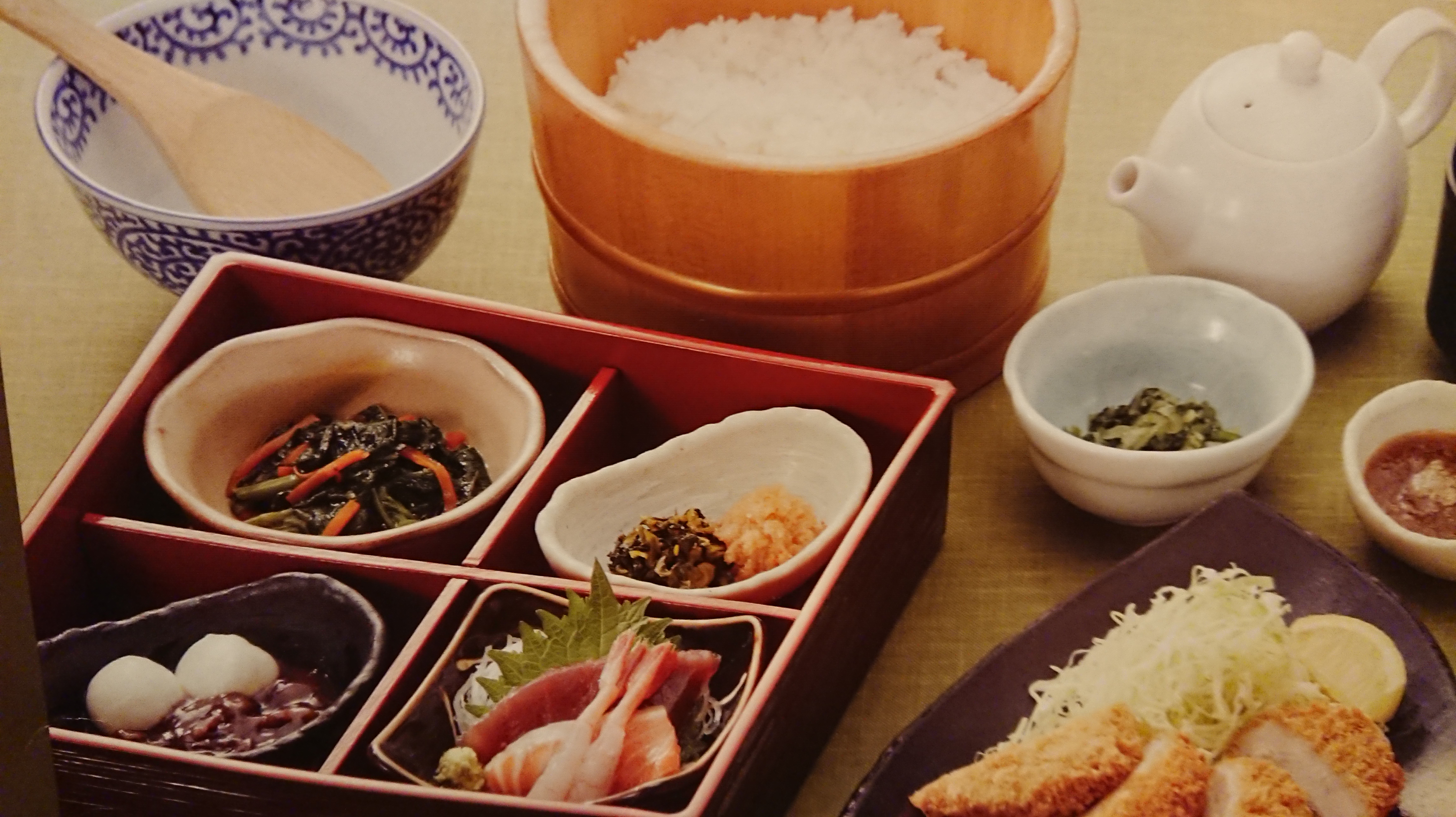
Tonkatsu Pork Cutlet at Hitsuya
We stayed over night at the Vessel Inn near Fukuyama Castle. The train station is literally a stone’s throw away and we ate dinner there at a great restaurant called Hitsuya because they serve all the rice dishes in wooden o-hitsu.
We also visited the History Museum next to the Castle. There is a very good recreation of a early Edo village、Kusado Sengen-cho, ( 草戸千軒町) that was excavated in the middle of the river nearby. It was destroyed by a flood in 1647 and only uncovered in 1930. Referred to as the Asian Pompeii, excavation began in 1961.
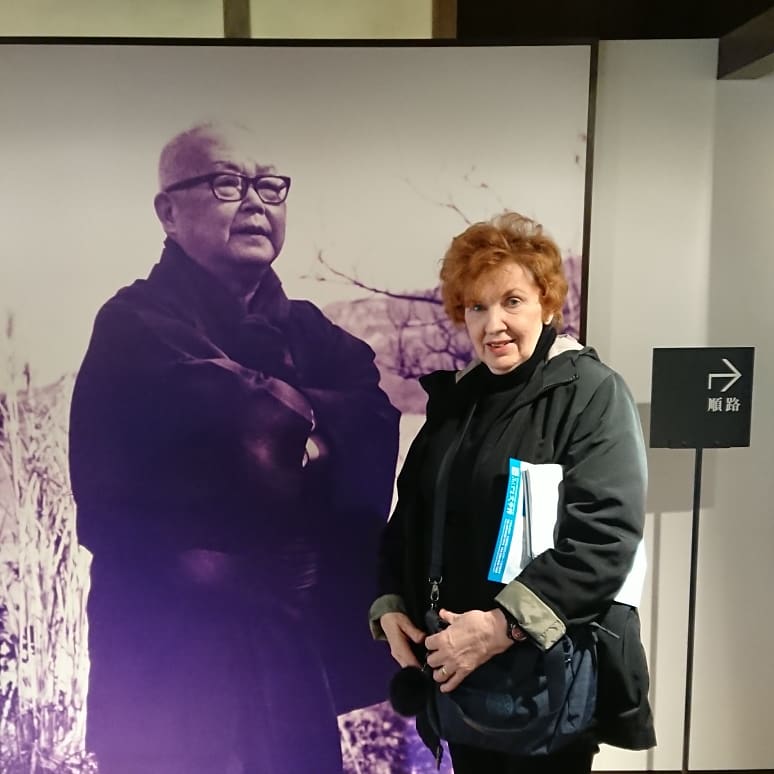
There are many interesting things to see in Fukuyama. The Literary Hall (福山文学館) includes a fine exhibition on Ibuse Masuji(pictured above). He is known for his book about the Atomic bomb in Hiroshima, “Black Rain”.「黒い雨」 The museum is very well organized and I recommend you visit there。
Last year I took a trip with my daughter and grandson. I neglected to write about it at the time but I wanted to upload some pictures and record some memories while they are still in mind.
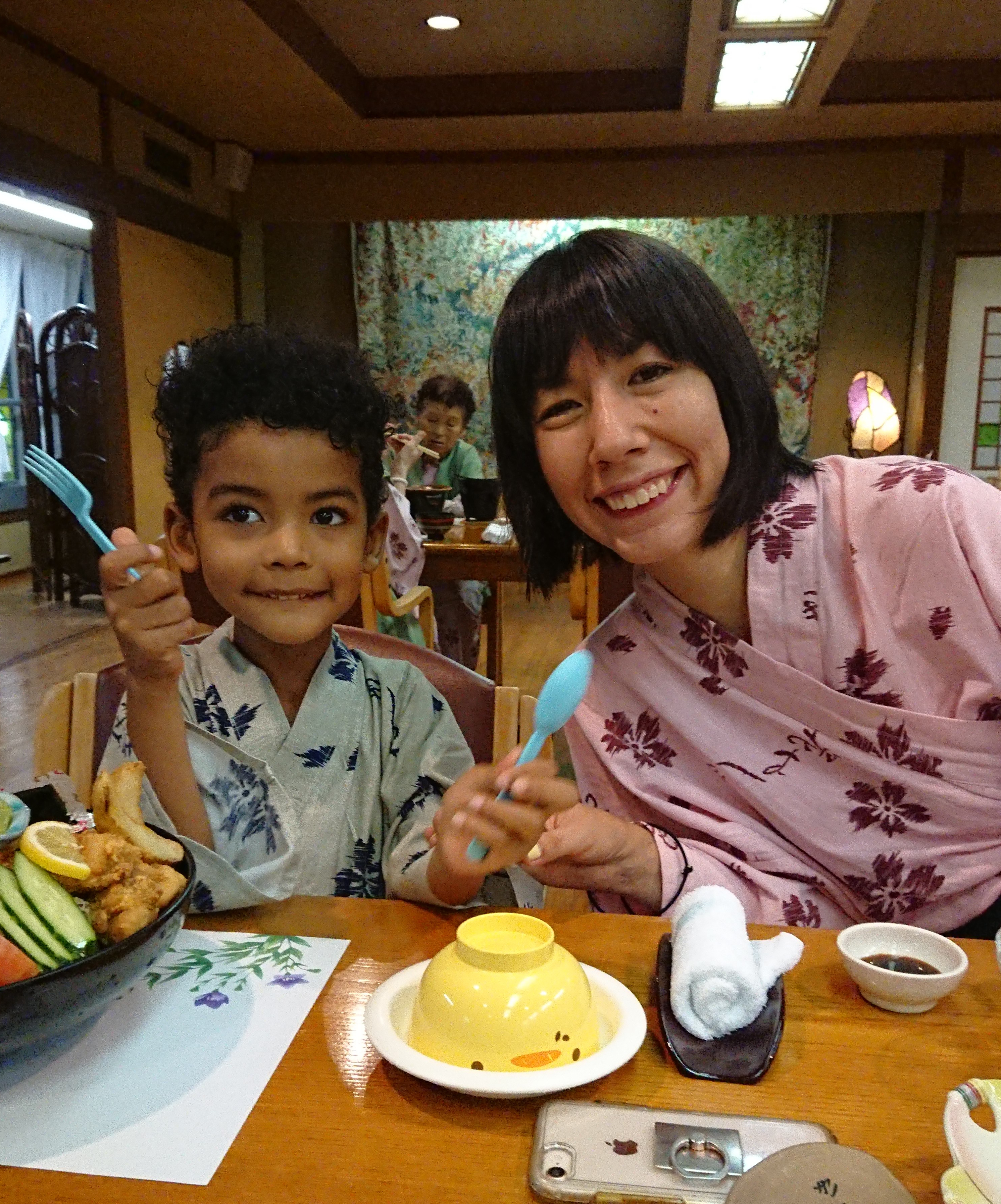
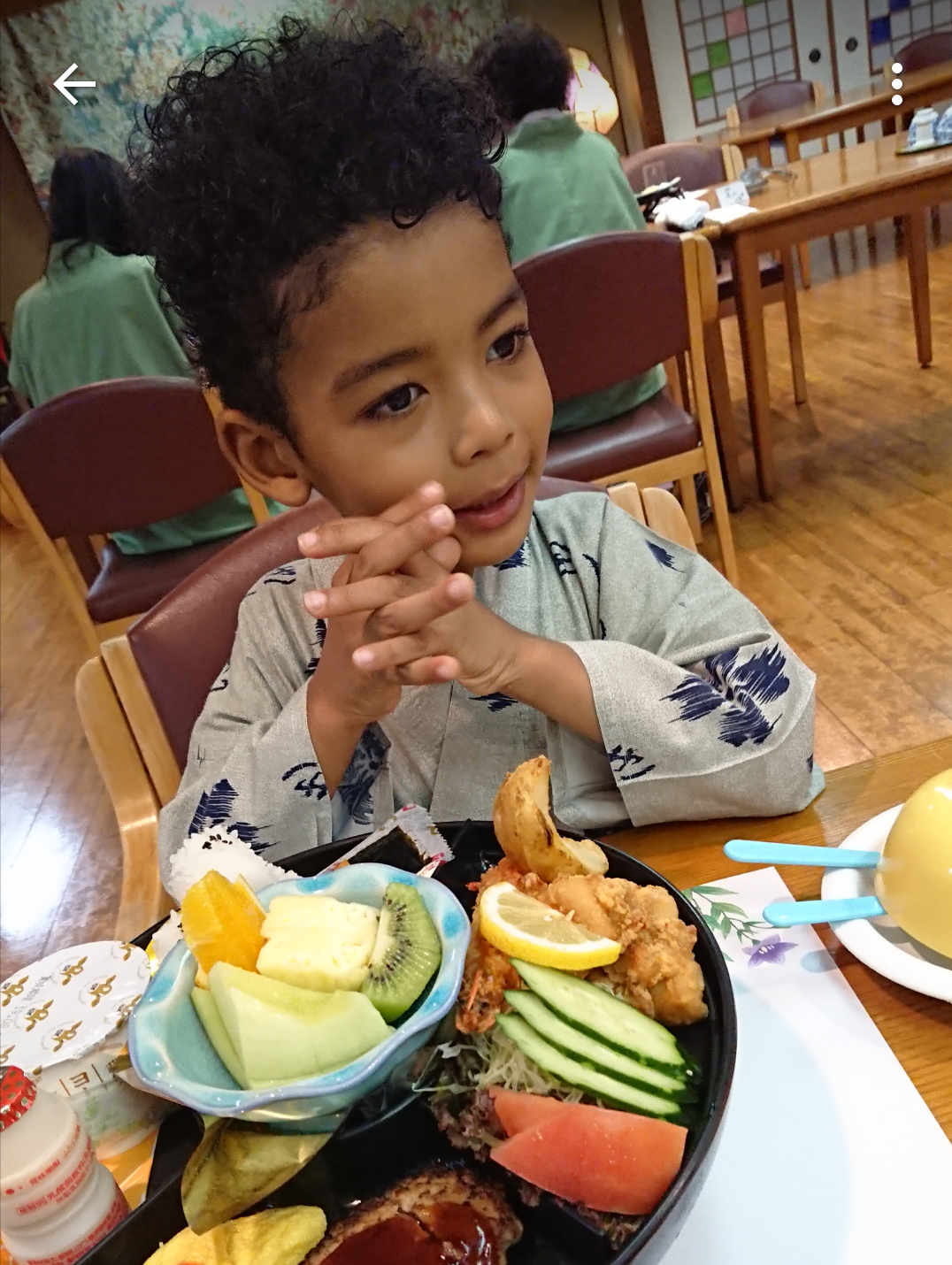
Dinner at the Resort
Japanese people love to visit hot spring resorts and take the hot baths. Often various minerals in the water are a boon to our health. I enjoy the food and scenery more than the bath, but it’s fun to take a trip with grandkids.
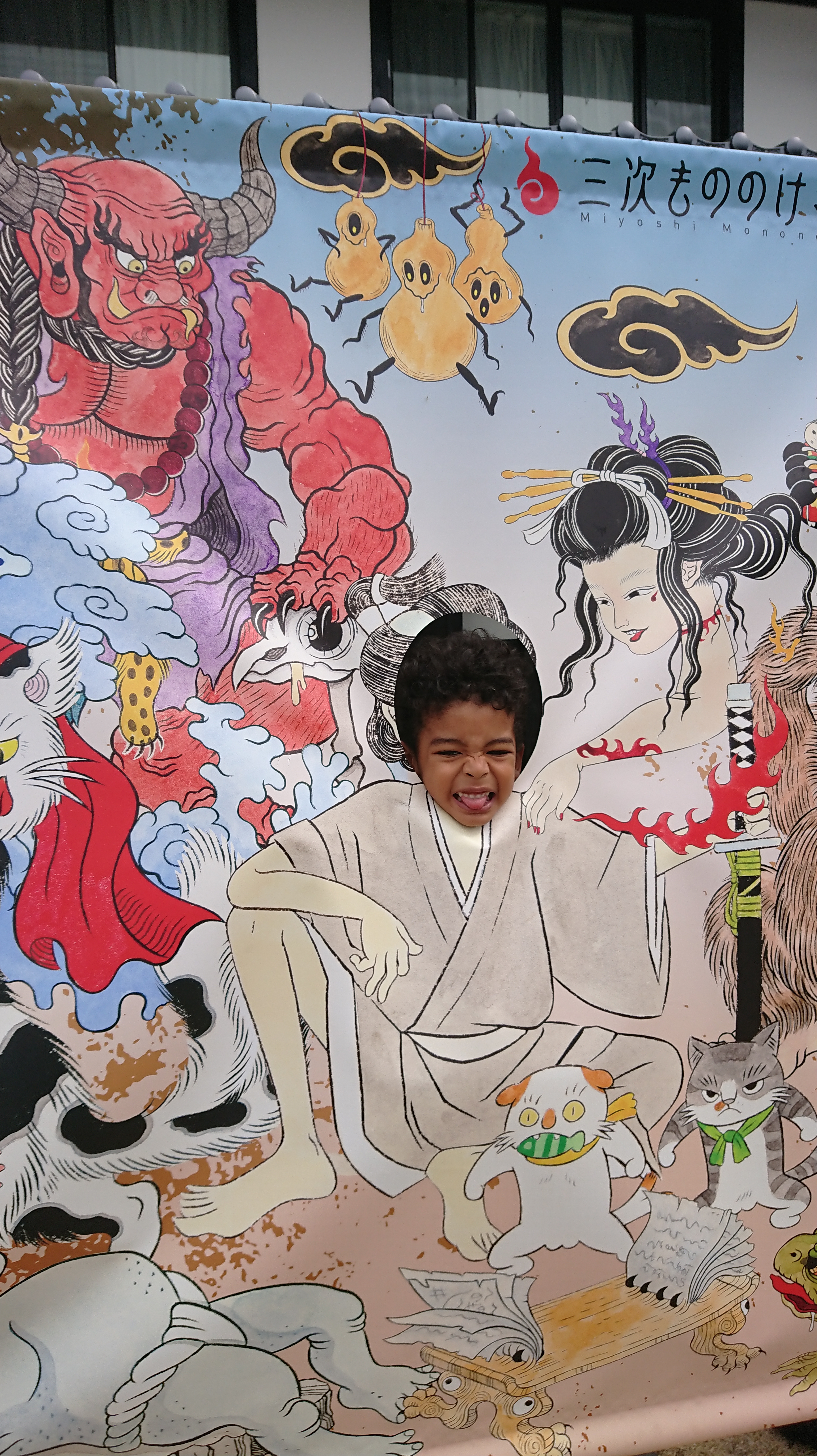
We stopped at the new “Monnonoke Museum” in Miyoshi where we can see exhibits about the yokai (imaginary creatures that inhabit the world around us.) There were some fun things ot do for kids as well as Edo era exhibits of scrolls and objects that portray these yokai.
Eiji becomes a yokai!
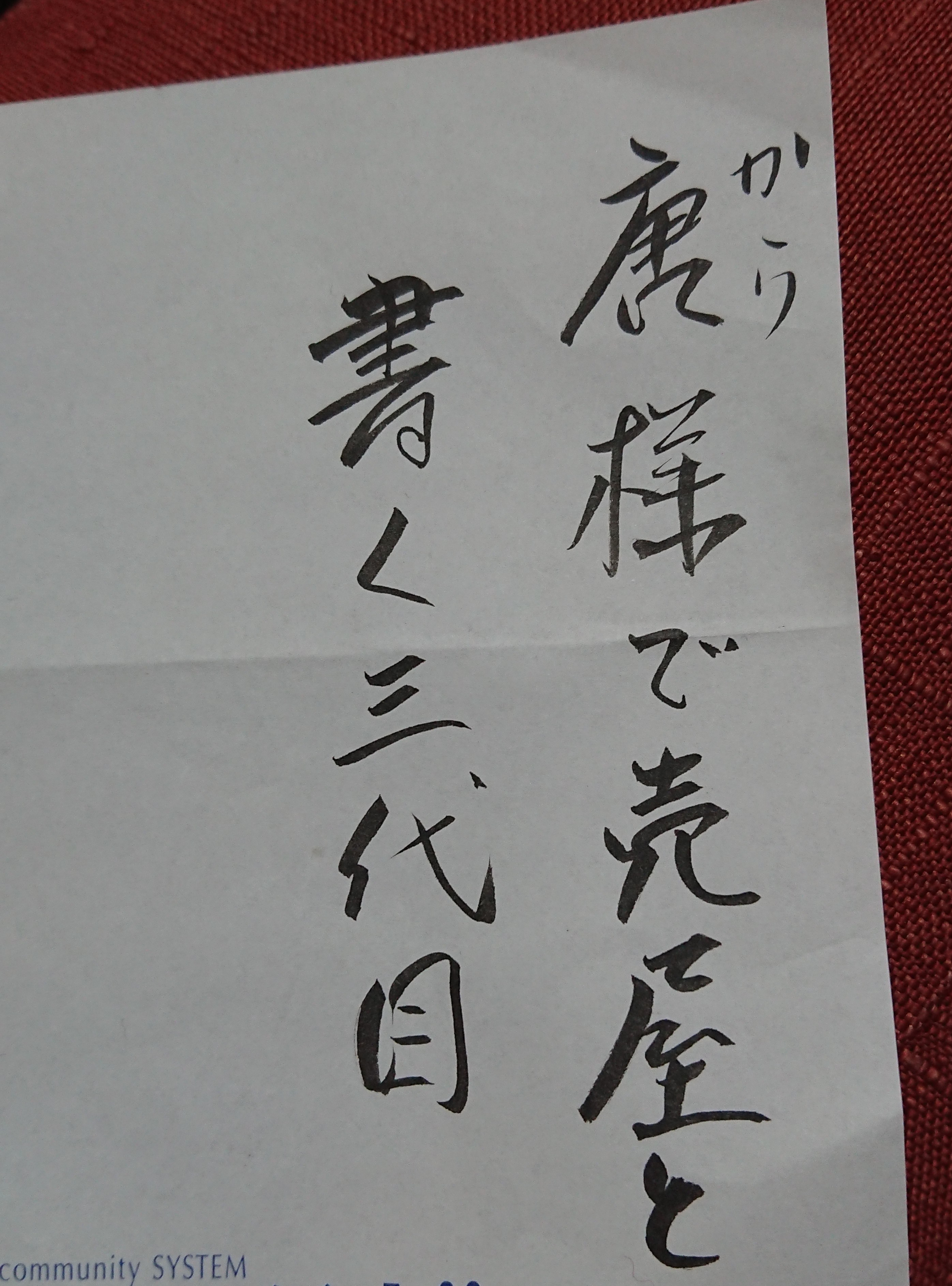
On the way, we stopped at an old hardware store that had been in business for three generations and was full of all kinds of neat junk. We enjoyed looking and bought a few things from the friendly owner, Hanazono-san.
Then we stopped at Maniwa where we had arranged to be taught “kusaki-zome”, natural dying from famous artist Yoko Kano.
I made a small handkerchief and Eri choose to dye a long scarf. Eiji was patient as we worked on it. It was lots of fun and I recommend you visit this shop-gallery in Okayama prefecture!
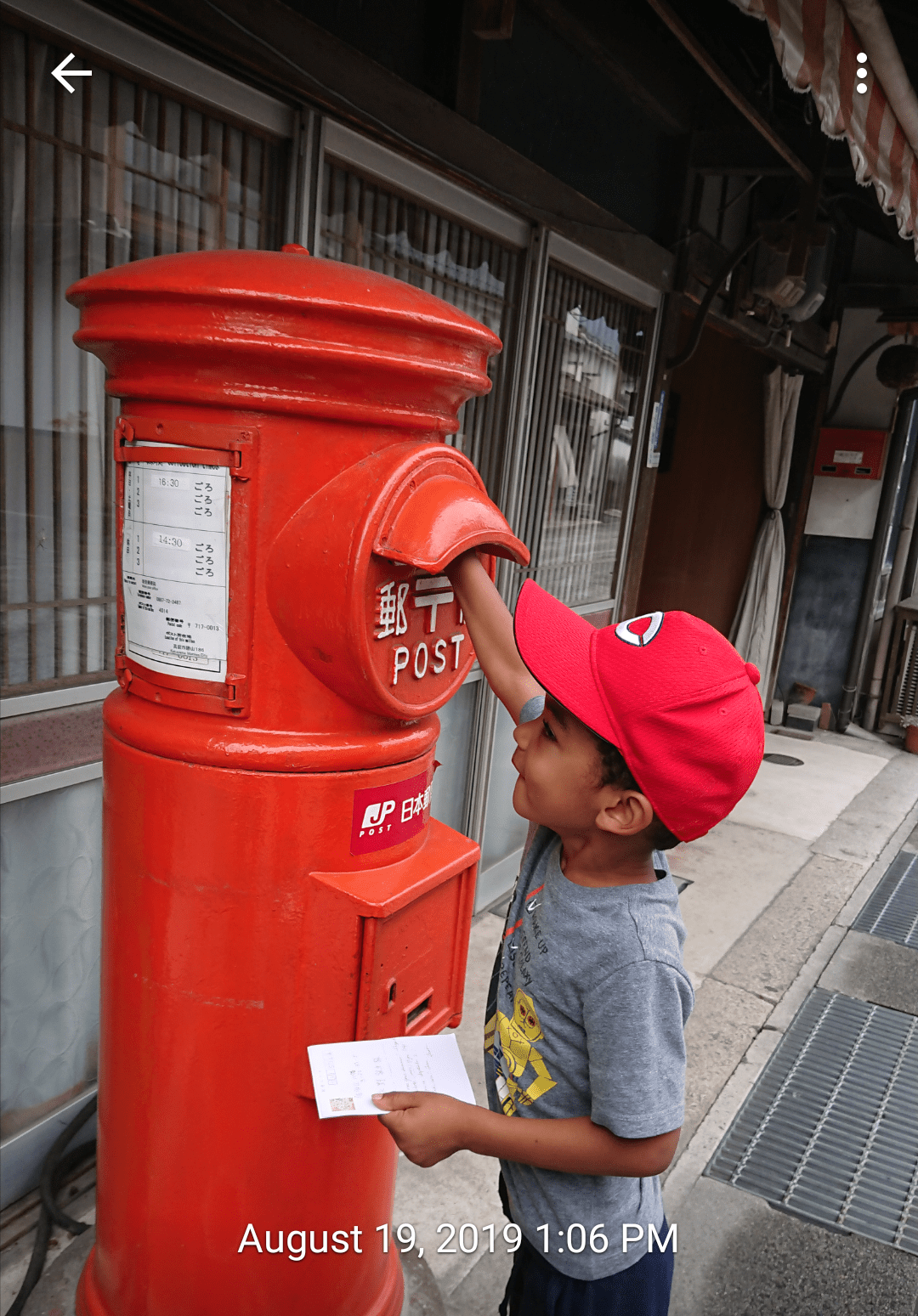
Old-fashioned Postbox
Yoko Kano has put the little old town of Katsuyama on the map since she began creating original noren banners for each shop along the street!
We enjoyed dinner at our inn, Hanayashiki, in Yunotsu Onsen.
The next day it was raining, so we drove straight to Misasa Onsen (hot springs).
On the way, we were getting hungry and I had a headache, so Eri googled ramen restaurants nearby. We found this great place that makes the soup with “gyu-kotsu” stock! It was really good!
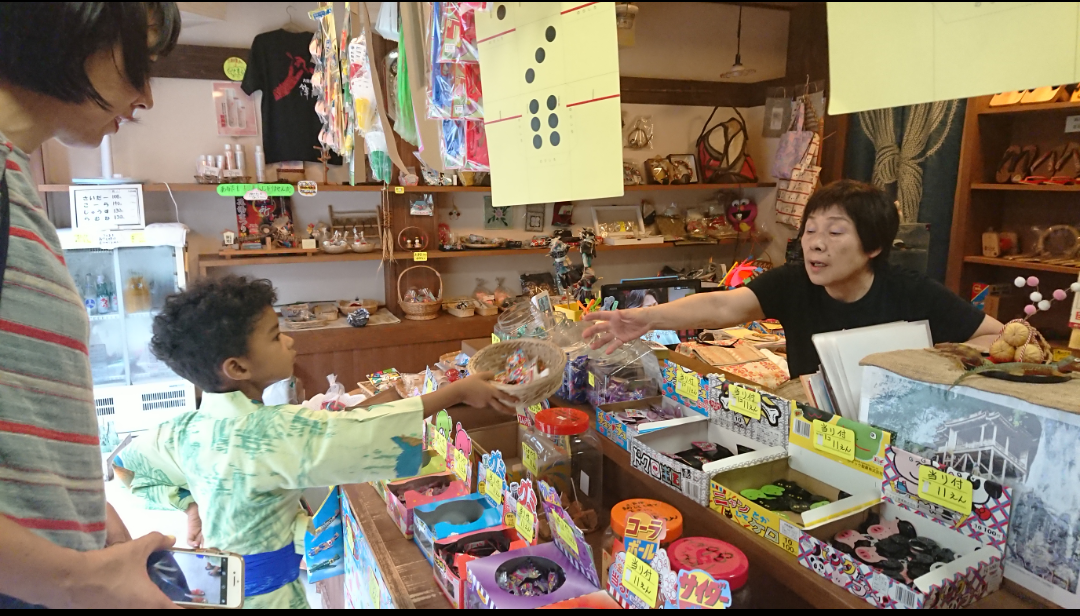
Japanese Penny Candy Shop
There was a street of quaint shops including a shooting gallery and a “dagashi-ya” penny candy store. Eiji chose some candy in a little straw basket.
The last day, we searched for a unique used bookstore in Okayama City. Eri was thrilled to find it and meet the owner!
All in all we had a good time and I’m glad it was sprinkling instead of the usual blazing hot August days!
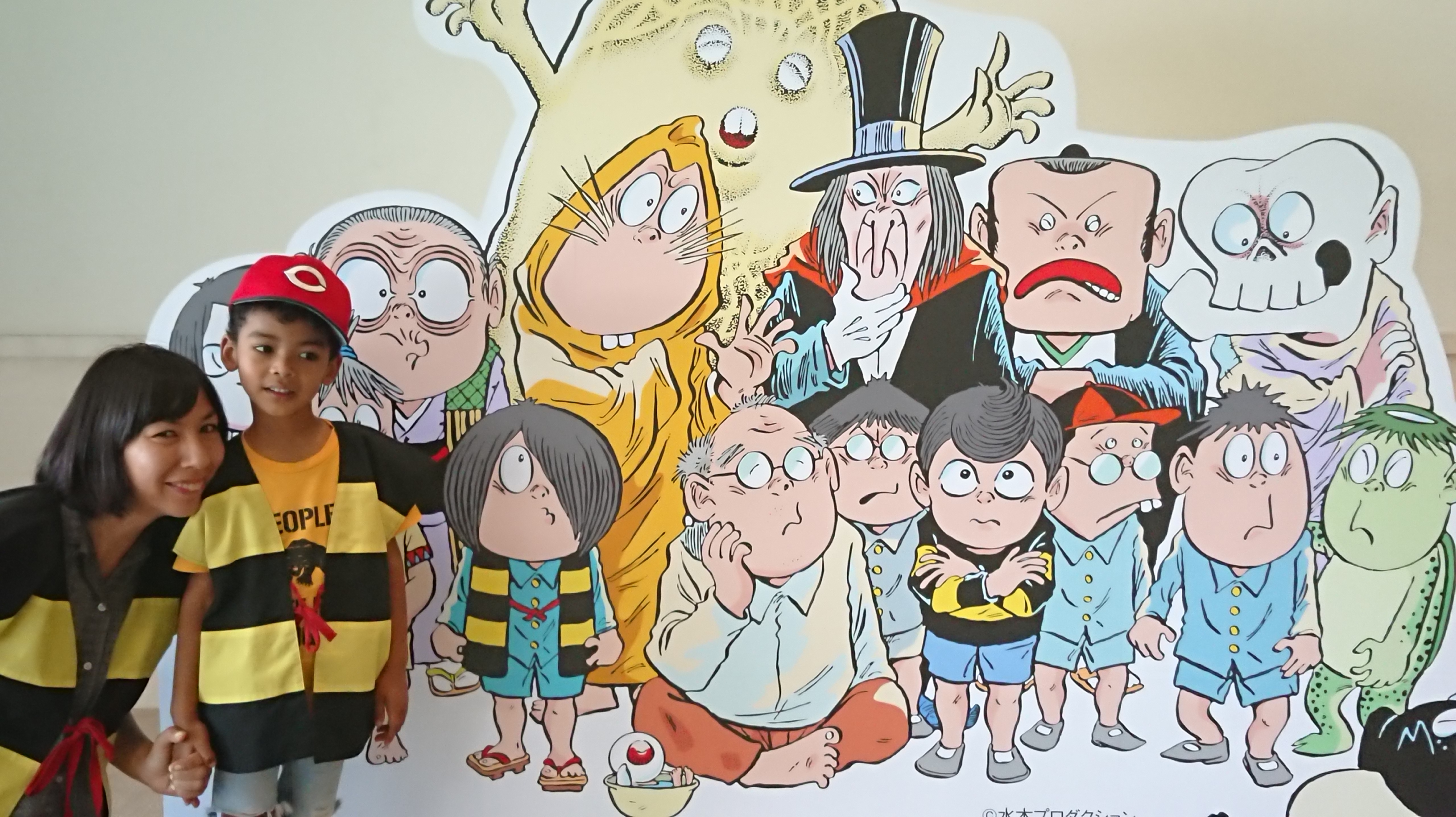
Eiji with Kitaro and other cute yokai friends
I want to add more about the yokai.They are mischievous spirits, hob-goblins that inhabit the woods or stream or work some influence on our lives. An important and intriguing part of Japanese folklore, they are mentioned as early as 772 in the Shoku Nihongi saying that Shinto purification was necessary because yokai were appearing in the imperial court.
Yokai were popularized in an anime series from around 1960 by manga artist Mizuki Shigeru in his “Gegege Kitaro” comics. (above image) We were lucky to get to see the exhibition on his work at he Hiroshima Prefectural Art Museum.
One of the more famous yokai that appear in folk literature is the kappa. Kappa are amphibious demons that live in the river. They have webbed feet and a tortoise like shell on their back.
Ancient text shows illustrations of kappa
The kappa can bring calamity such as causing someone to drown but are also capable of good deeds like helping a farmer to irrigate his field. WE think of the kappa as rather cute little spirits today.
Someday I’d like to take my grandsons to Tottori, the hometown of artist Mizuki to see the Mizuki Shigeru Museum and various figures throughout the town. There is even a nighttime parade of yokai spirits! If you are interested in monsters, Japanese folklore or anime, you might enjoy visiting there!
I have been suffering from headaches for over 2 weeks. We had to cancel our trip to Shikoku. So Hiroo took me for a drive to cheer me up.
We drove through Yuki Onsen ( hot springs) and turned off onto a narrow road to Tsutsuga Mura. There is a Icho-no-Ki tree there that is over 1,100 years. The trunk is 7 meters in circumference. It is located in front of Oo-Otoshi Shrine.
As always, we had packed a lunch and we drove up towards Ryuzu no Taki Falls to eat. The road was closed below the falls, so we ate our lunch near there.
After that, I wanted to go a little further and visit a place I haven’t been before.
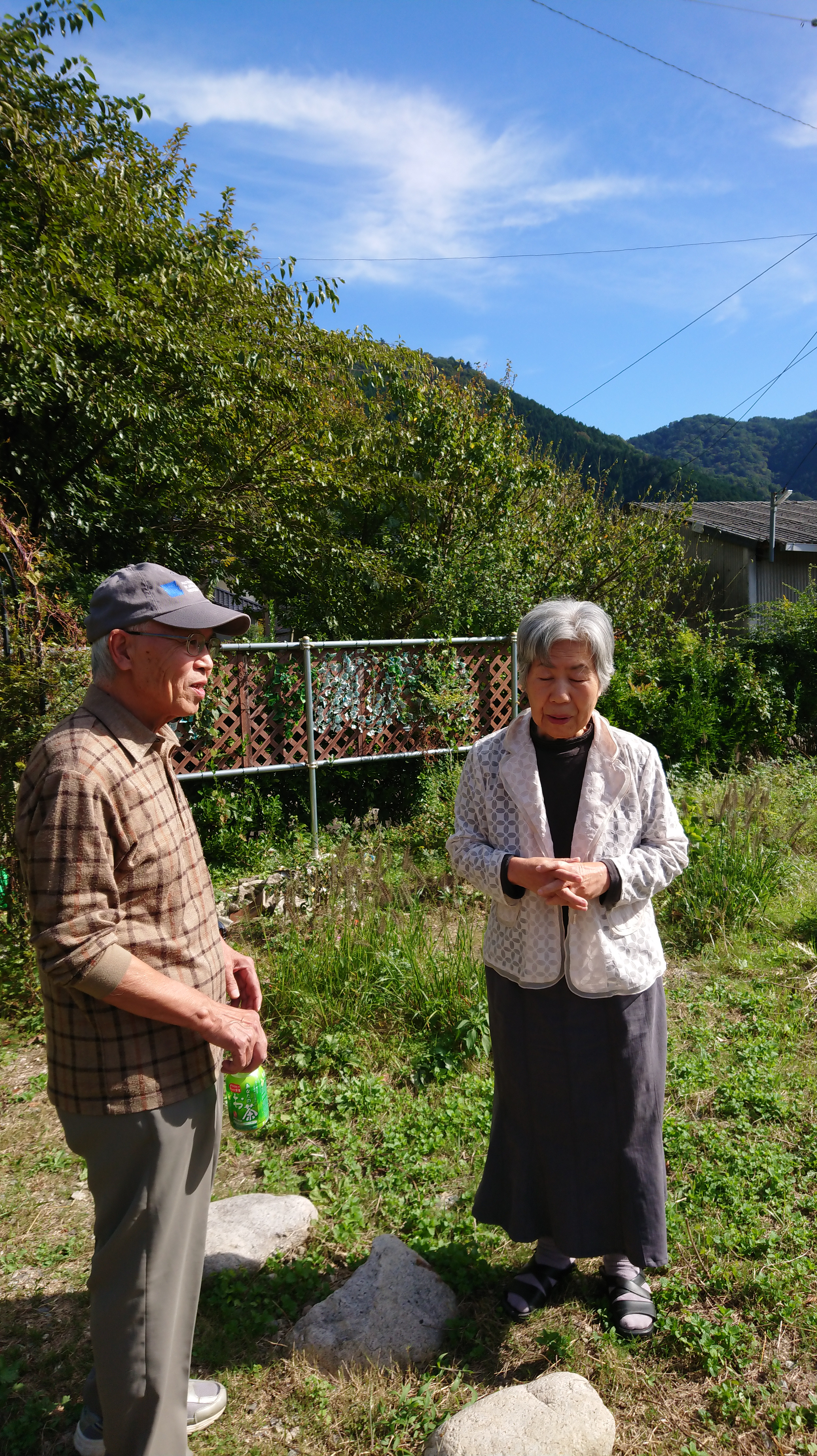
We entered the country town of Kakei-cho, and found the old shopping district. I took a few pictures of older shops, but what caught my eye was a somewhat newer stationery store. I went inside.
There I met the owner, Kazuko Kono. She is the third generation to run the shop which was rebuilt 30 some years ago. She enjoys writing haiku poems, and growing medicinal herbs.
She showed us her field and served us very specially-blended coffee!
The shop is unique in that it is half bookstore and half stationery store. Some of the books have been on the shelves for so many years that they are collectible or out-of-print.
The memorable thing she said was explaining with irony that the first generation who opens a business works hard to build it up. The son who grew up watching that also works hard. The 3rd generation however, grows up in an affluent home, squanders the assets and goes out of business.
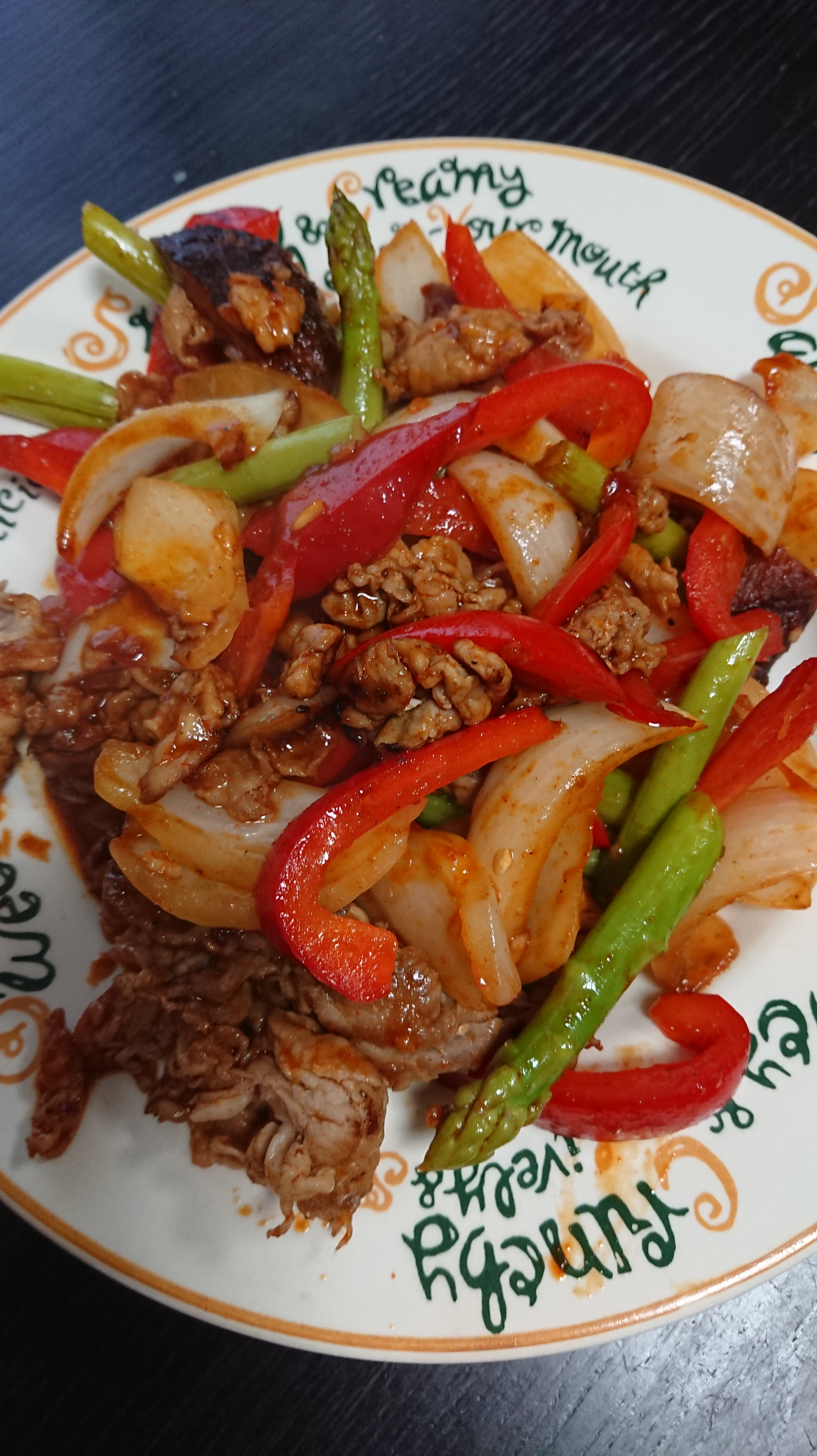
A spicy colorful stirfry to give you pep for a hot summer day!
250g thinly-sliced pork
4-5 stalks asparagus
1 red bell pepper
1 onion, quartered
3-4 fresh shiitake mushrooms
Sauce
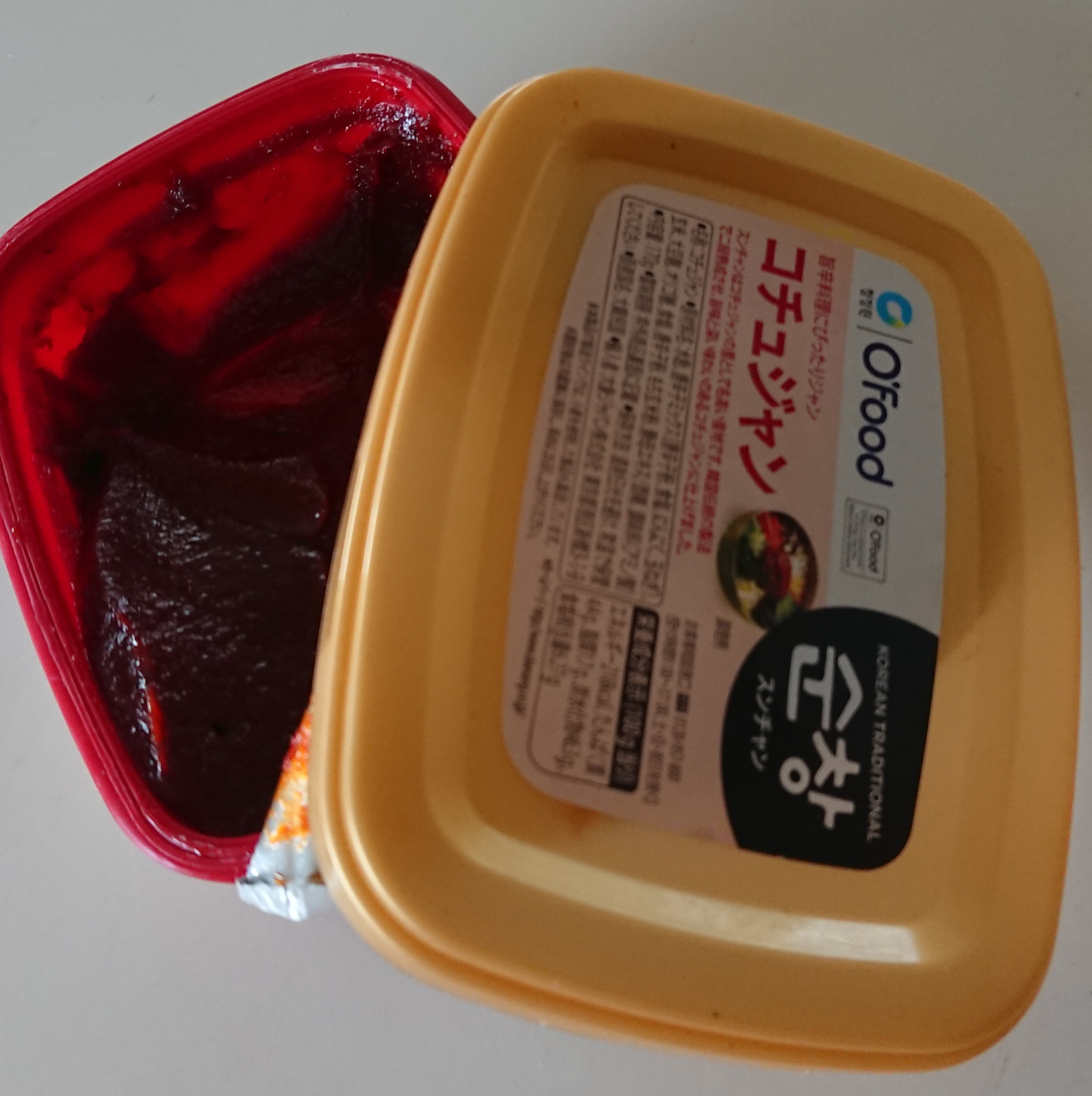
1 1/2 Tbsp kochijan(sunchan)
1 1/2 Tbsp soy sauce
1 1/2 Tbsp mirin( or sake)
1/2 Tbsp honey
1 tsp. sesame oil
1 clove garlic, grated
2 Tbsp minced onion
Cut asparagus in diagonal pieces, parboil. Season pork with salt and pepper. Saute in 1 Tbsp sesame oil, add vegetables, 1 Tbsp sesame oil. Cook and stir. Add sauce and continue stir-frying till veggies are cooked but still crisp. Very spicy so serve with green salad and rice!
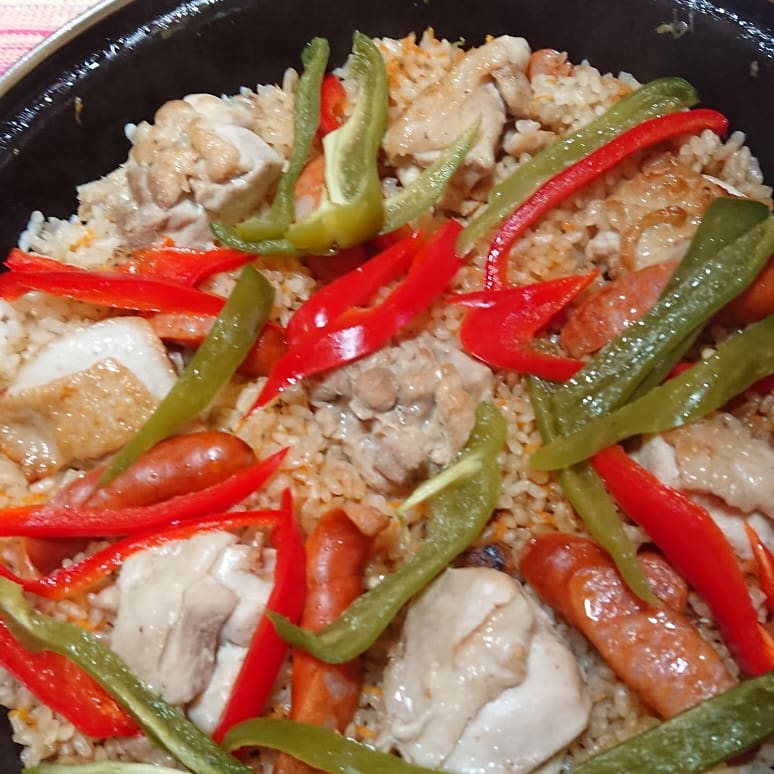
An easy dish to prepare, it goes great with enchiladas or burritos! This is very popular with my Japanese guests, too!
1 1/2 cups rice, wash and drain
1 chicken breast, cut in 8 pieces
3-4 chorizo cut in thirds
grated carrot (1/2)
1 1/2 cups chicken stock
red bell pepper
Season chicken with salt and pepper, Saute in 1-2 Tbsp oil. Add chorizo, saute. Remove from skillet, saute rice, add grated carrot, extra seasoning if desired.(chipotle flakes, chili powder?) Stir in stock. (I use water+ chicken bouillon) Arrange chicken, chorizo and red, green or yellow bell pepper on top. Cover with a lid that fits tightly. Bring to a good simmer, then turn down to lowest heat, cook 15 minutes. Let set covered for 10 minutes!
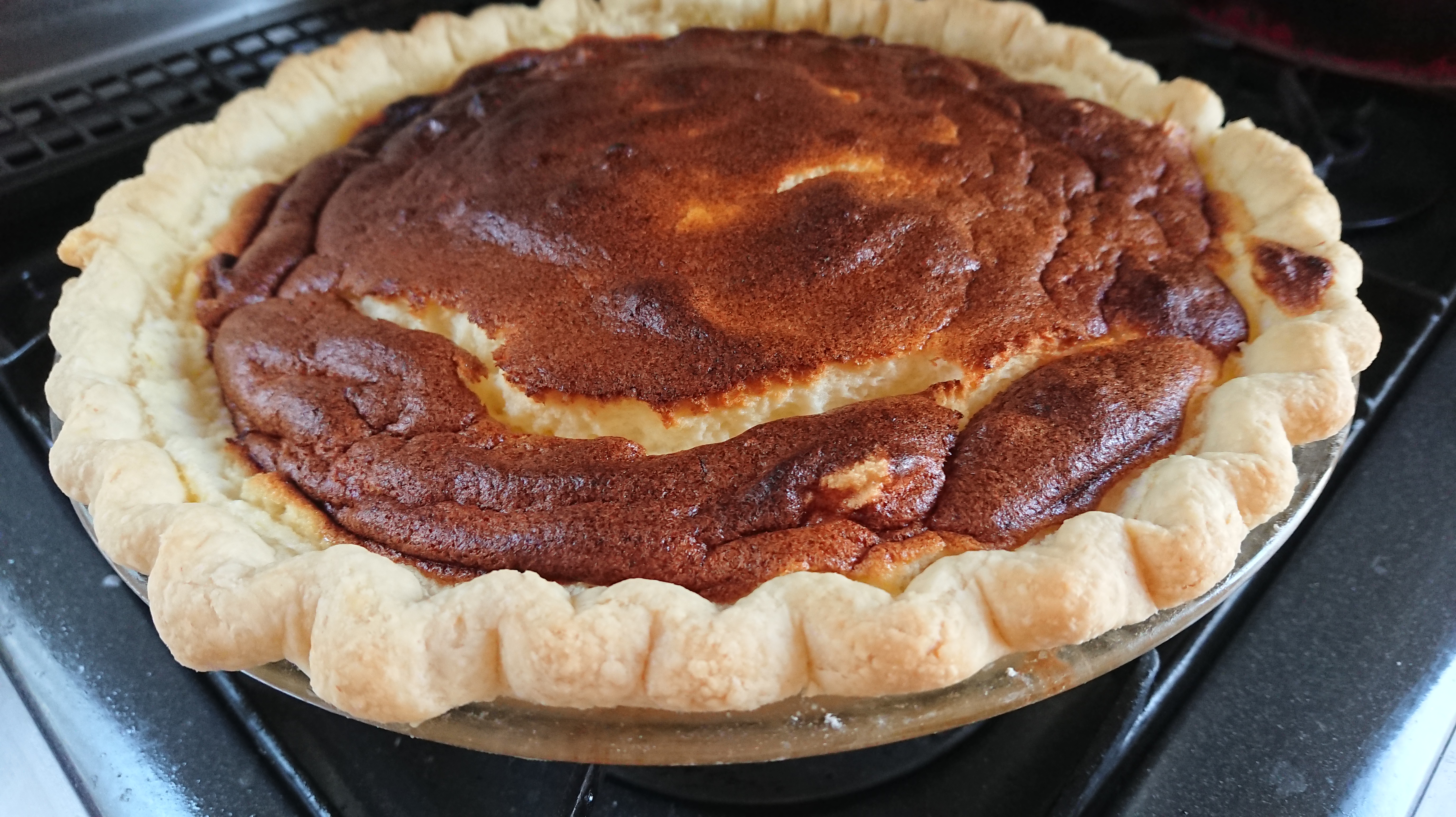
A lemony cool summer dessert! I once made it in a cooking class I did featuring desserts made with vegetables! It was a hit!
An unbaked 9″pie crust
1 medium-sized potato
3 Tbsp butter
3/4 cup sugar
3 egg yolks
1/2 cup milk
1Tbsp lemon grated zest
3 Tbsp fresh lemon juice
3 beaten egg whites
Cook and mash potato with butter. Beat in other ingredients, except egg whites. Beat egg whites till stiff, fold into custard. Pour into pie crust and bake at 400°F (200°C for 15 minutes, Turn oven downtown to 350°(180°) Bake for 15-20 minutes.























 Baba's Kitchen