Coal Mine Accident in Ube

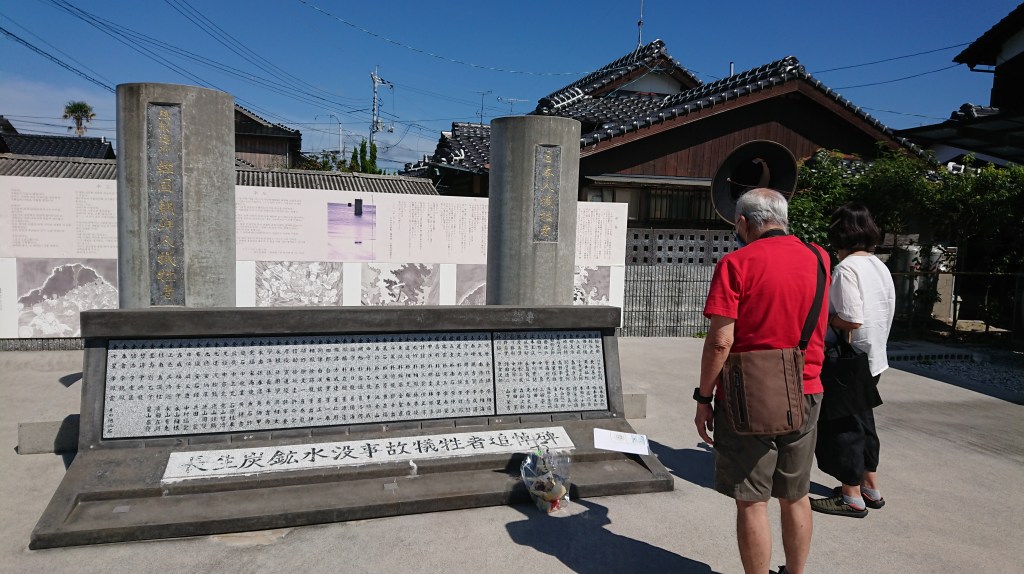
Memorial to VIctims of Chousei Coal Mine Accident (長生炭坑水没慰霊碑) Ube, Yamaguchi-ken

138 Korean Miners Among the Dead (February 3, 1942)

Finally we are fully-vaccinated and wanted to have an overnight trip to the next prefecture. It happened to be our 29th wedding anniversary on July 31st so we made reservations to stay at the Shimonoseki Grand Hotel and have a full course French dinner. It was lucky as the hotel is right next to the Karato Fish Market. (唐戸市場)which Hiroo was eager to visit.

Hiroo told me there was a coal mine in Ube (Yamaguchi-ken) and I found there is a Coal Mining Museum by Tokiwa Park. Luckily , I kept searching online and found a homepage about Chousei Coal Mine and the collapse of the underwater mine that occurred in 1942,

The mine had had previous incidents of flooding or collapsing supports so many Japanese miners were afraid to work there. Of course, during wartime many men were drafted to fight and so the mine needed more workers. Koreans were either recruited or , in many cases, forcibly brought to Japan to work in mines or in the construction of dams. This was very dangerous work and many lost heir lives.
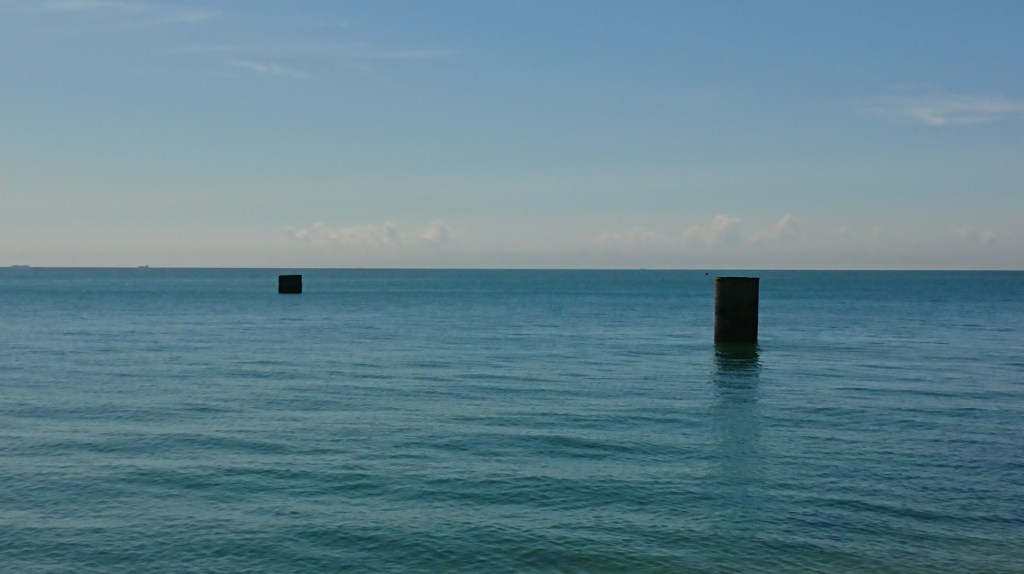
Two Piers are all that remains at Chousei MIne, Ube

The Chousei Mine was under the sea. Now all that is left are two pillars in the ocean referred to as “piers”. Originally there was a long pier and tracks to carry coal to waiting ships. On the morning of February 2, 1942, the mine collapsed letting in billows of sea water and only a few of the miners had time to get out.
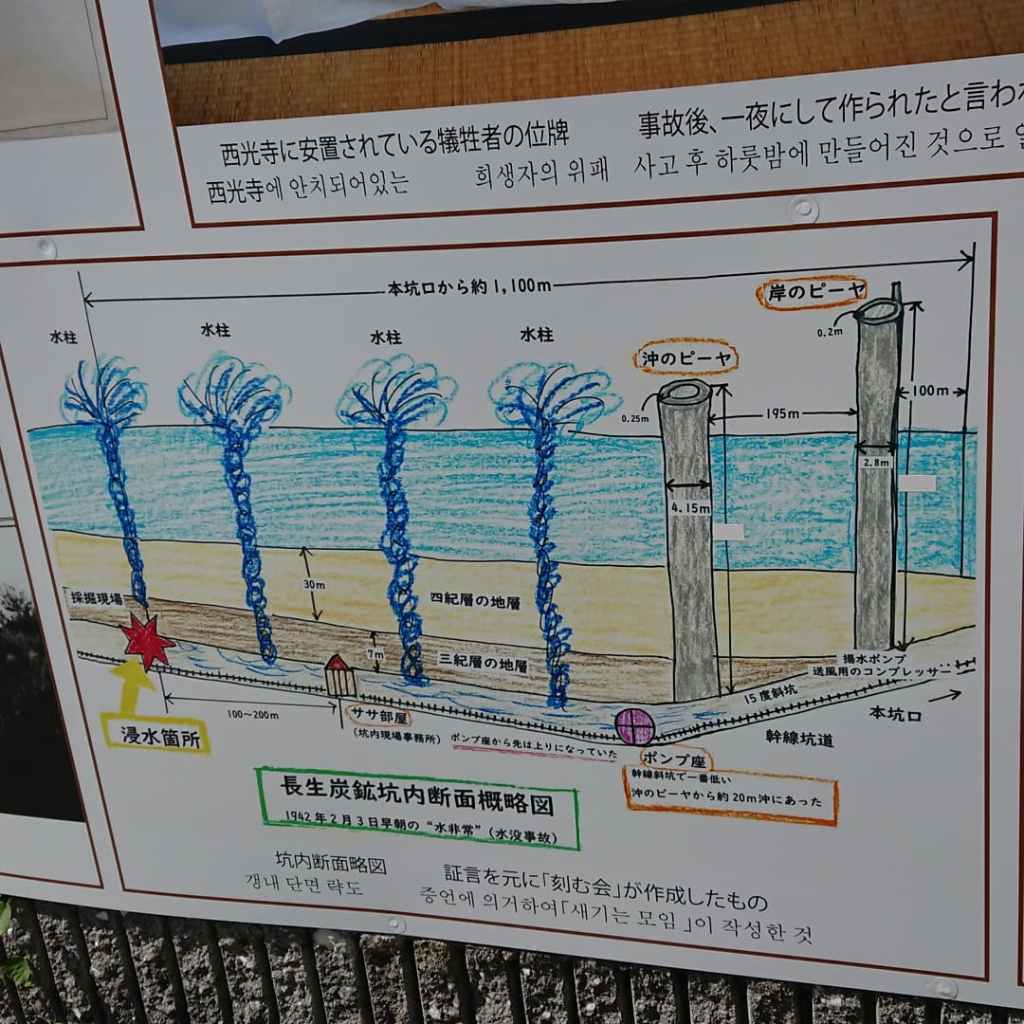
Of the 183 dead , 136 were Korean laborers (forced labor). At the time , these Korean miners were housed in barracks encompassed by a 3.6 meter- high fence and only allowed to walk the short distance to the mine entrance. This accident was not reported or was only mentioned in local newspapers saying “most of the miners managed to escape.”

In 1982, a memorial was erected and only the families of the Japanese miners were contacted to attend the dedication. Though there is a record of all the dead, no names were inscribed on the monument. it was built adjacent to a softball field overlooking the ocean and piers. The reason for constructing it was to appease the spirits of the dead so no harm would come to children playing on the field. (Japanese superstition!)

1982 Mnument to CHousei MIne VIcitms

Through the website I was able to contact the “Keep the History of Chousei Disaster in our Hearts ” (長生炭坑に“水非常”を歴史に刻む会)I promptly received an answer and was contacted by Yoko Inoue who offered to guide us to the new Memorial and explain the history to us.
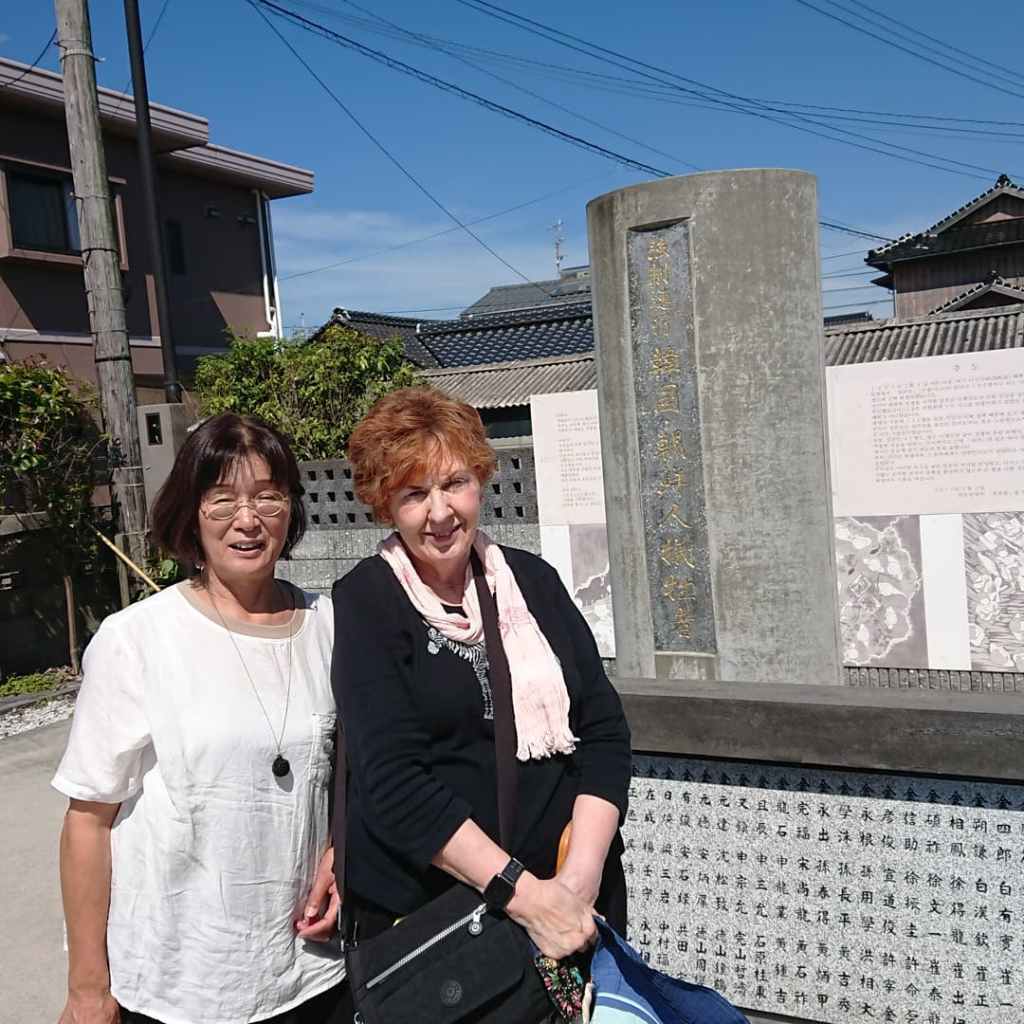
Kizamu Kai member Inoue Yoko

We visited the monument with names of all the victims, Japanese and Korean inscribed there. Two pillars reminiscent of the two piers represent Korean victims separately from Japanese victims. The ” Keep History” group found an old list of workers’ names from 1940 and sent out letters to all the Korean vicitms’ families. The addresses in Korea were old so there was no telling how many relatives would actually receive the letter.
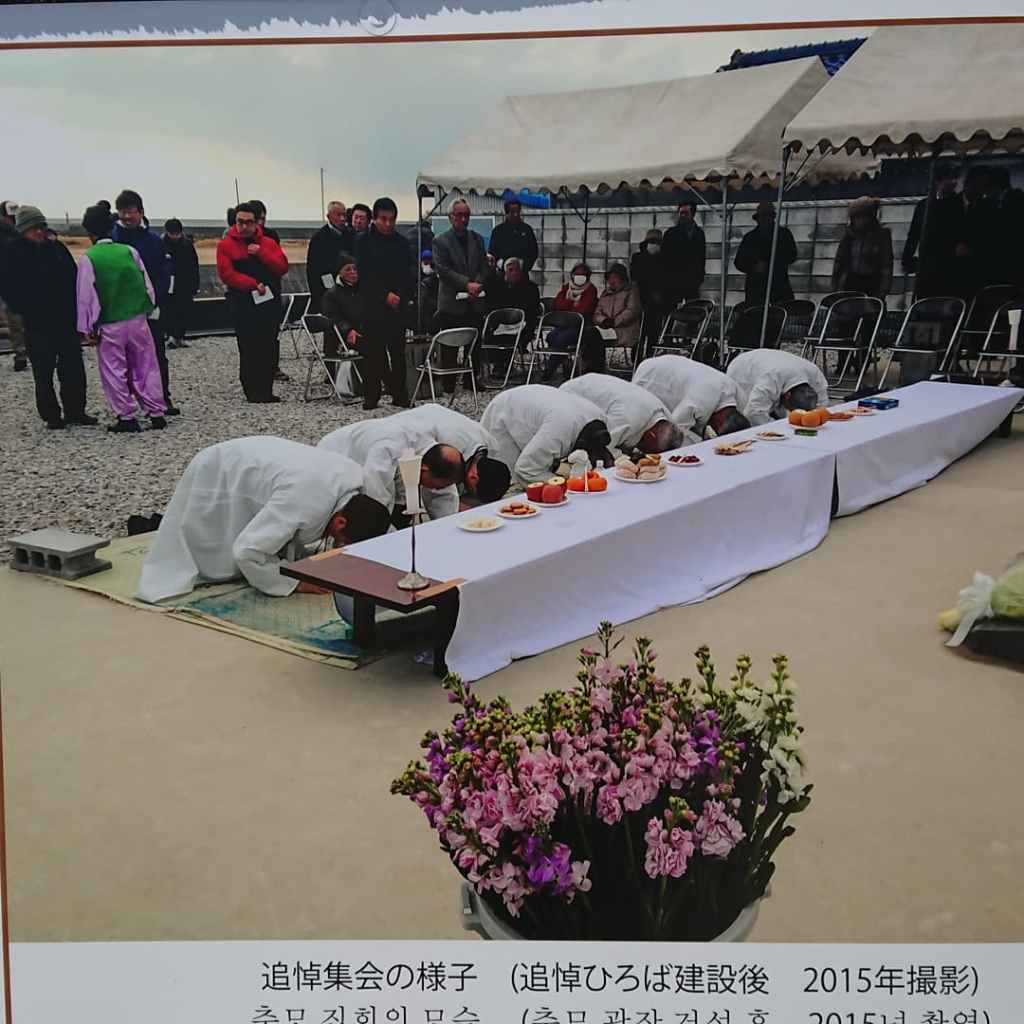
Korean relatives hold Memorial 73years on

I was amazed at the attempt to contact people after over 50 years. Of the 118 letters mailed out, there were 17 replies that first year. The surviving family members were invited to come to the sea to observe a commemorative service for the victims. I was touched to read the translation of one letter where a Korean woman wrote ” My mother was pregnant with me when my father left Korea. He may not have even known. We never heard from him again. We didn’t know how he died. So I am grateful to know how and what day he died. I would love to come to pay respect to him.”
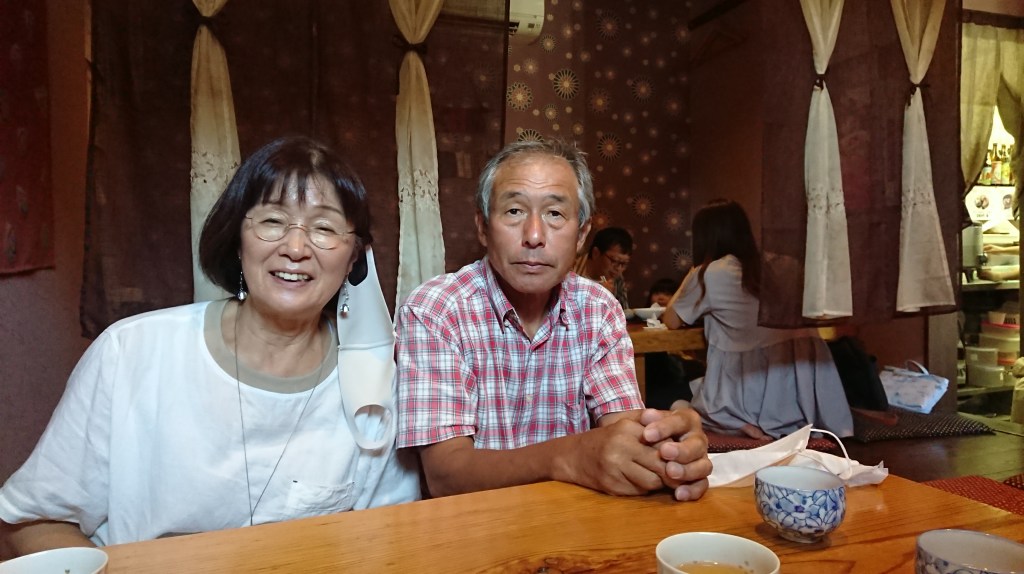
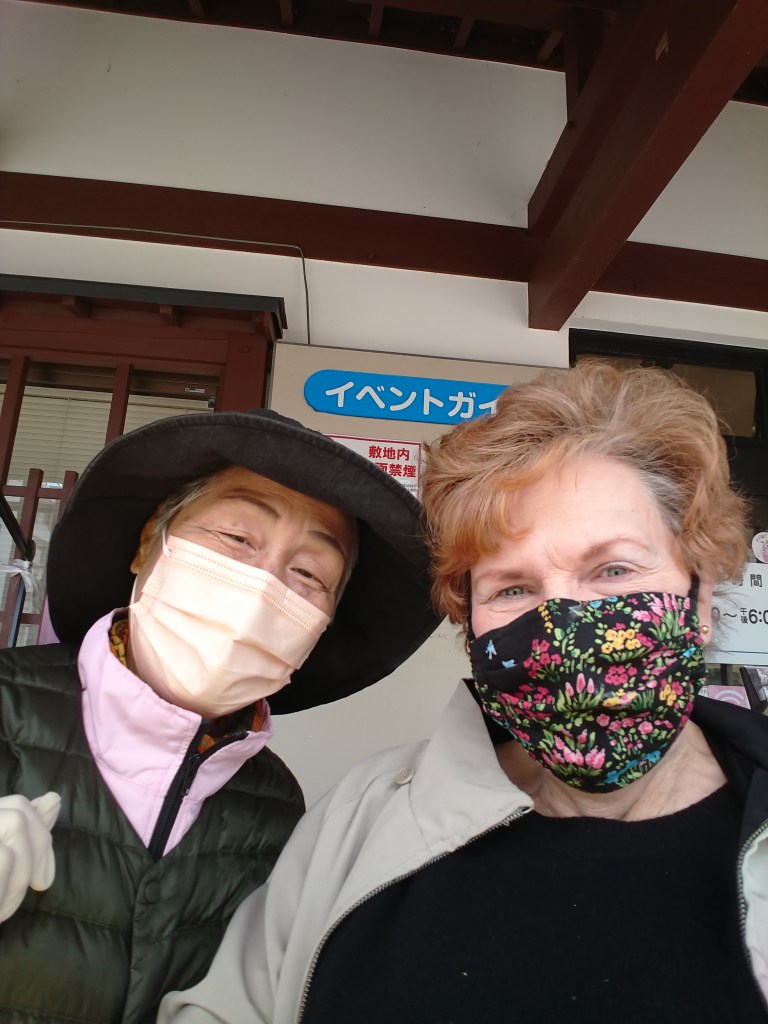
Guides fo r the day, Inoue Yoko and Matsumoto-san

Later the inclusive monument was constructed and victims families come from Korea and Japan to Ube every year on February 3rd for a memorial service. I hope to read all the materials Yoko gave me and to visit there for the 80th Year since disaster Memorial Service in 2022.

From Ube we visited the Tokiwa Mine Museum which had no mention of the diaster or of forced labor in the mines, which is typical for government-funded museums and organizations. They want to deny the fact of forced labor from occupied Korea or Chinese war hostages.
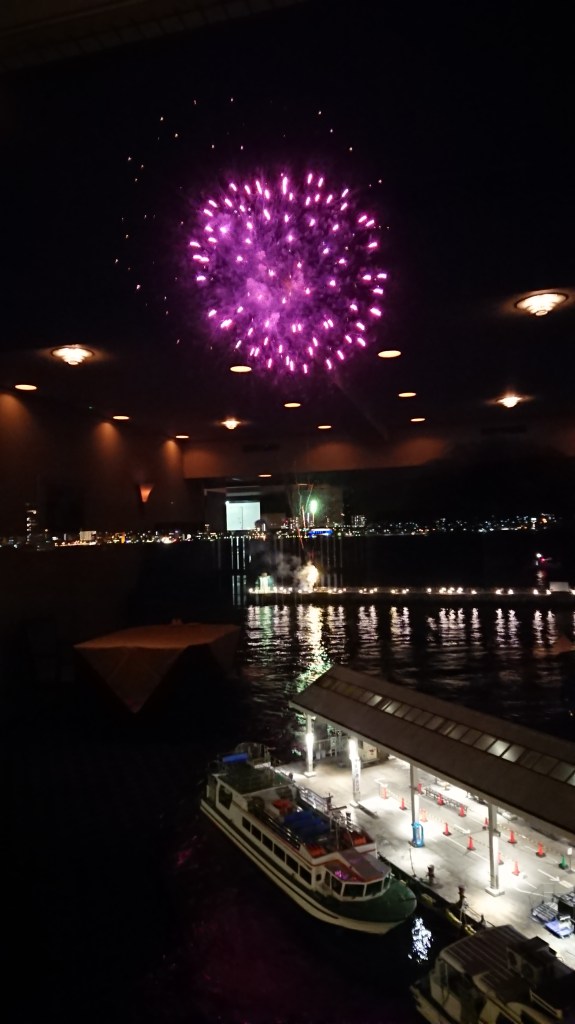
Fireworks from Restaurant View French Food

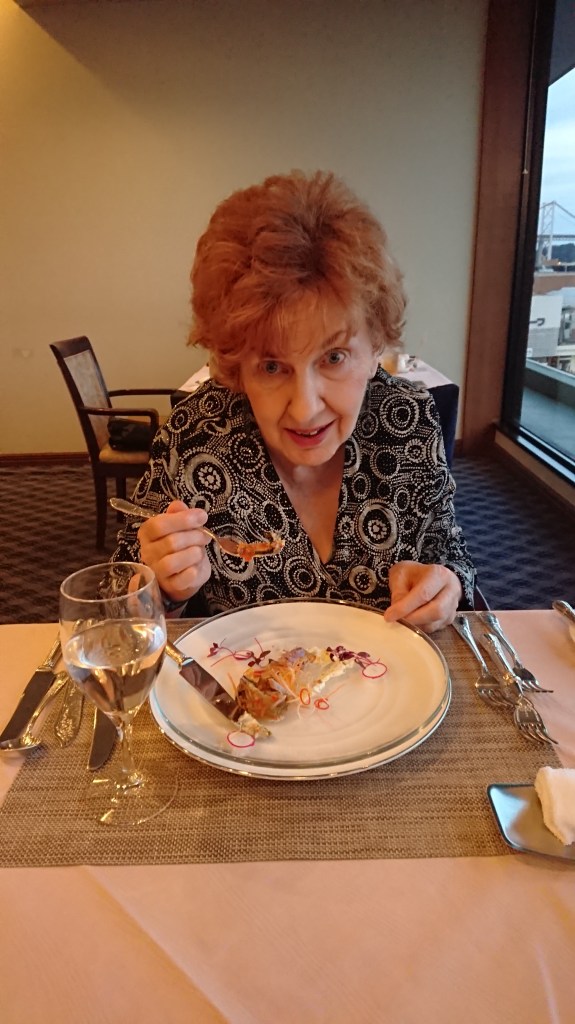
Reaching Shimoseki at about 3:30, we checked in to our hotel . We enjoyed our dinner and were very lucky that there was a fireworks display held that night.
The next day we visited the Karato Fish Market and bought fresh octopus and squid. Then we enjoyed choosing sushi one piece at a time for lunch. It was a very popular spot.
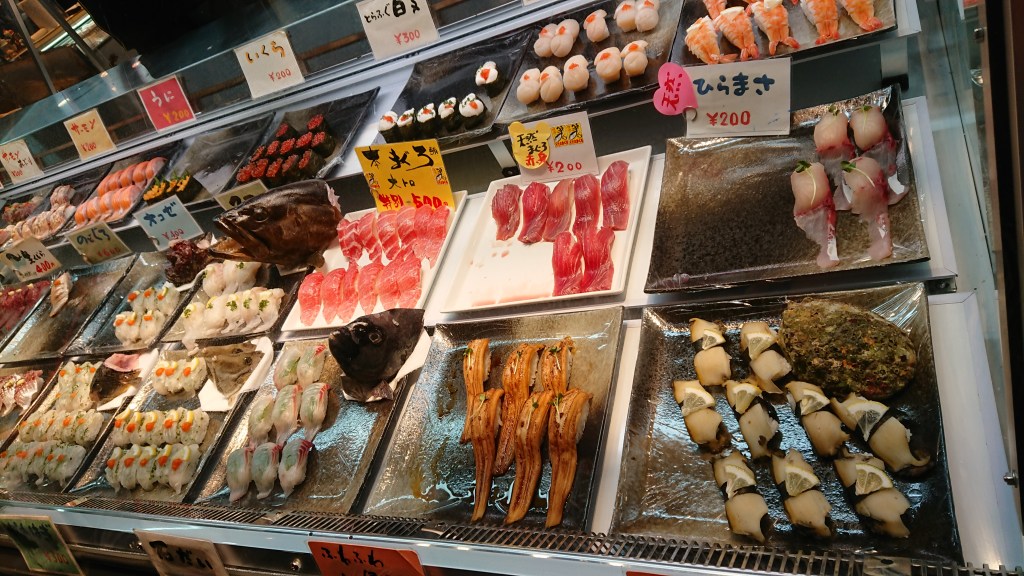
Sushi at Karato Ichiba FIsh Market, Shimonoseki

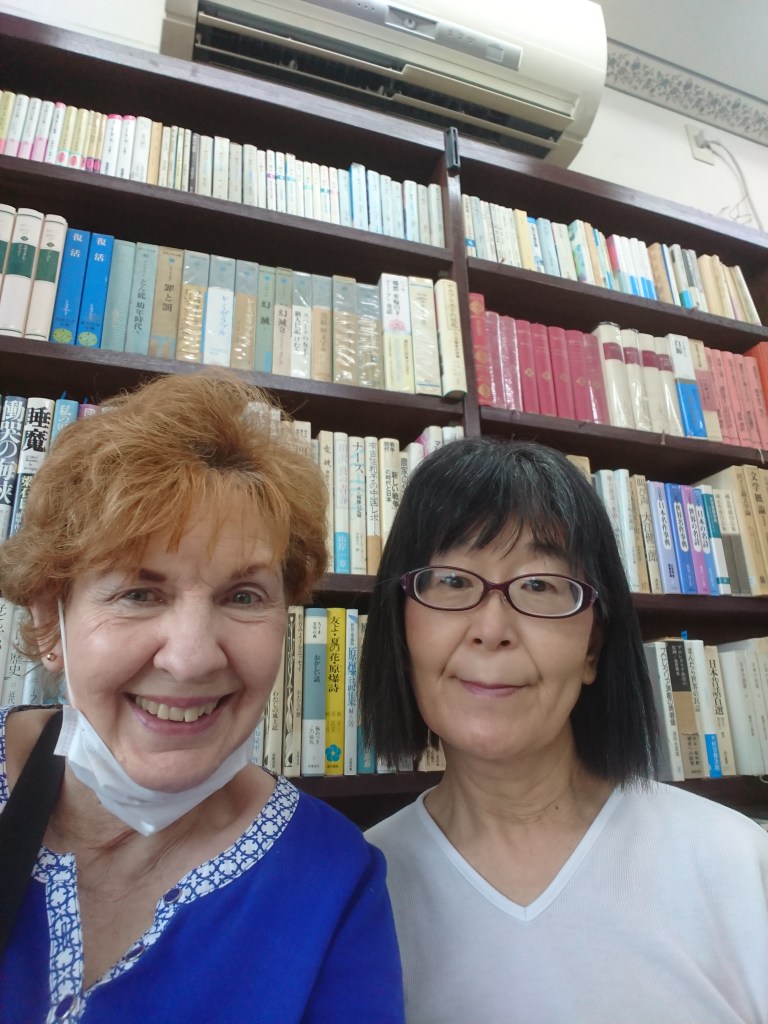
Finally Hiroo took me to one used bookstore , Azusa Books (梓 書店 083-232-4100) He said it was probably just “manga” but we were both pleasantly surprised to find it had so many books on history and social issues. It is a great place to visit. Owner, Tomoko Tsukioka has been in business for 40 years, 10 at this location.
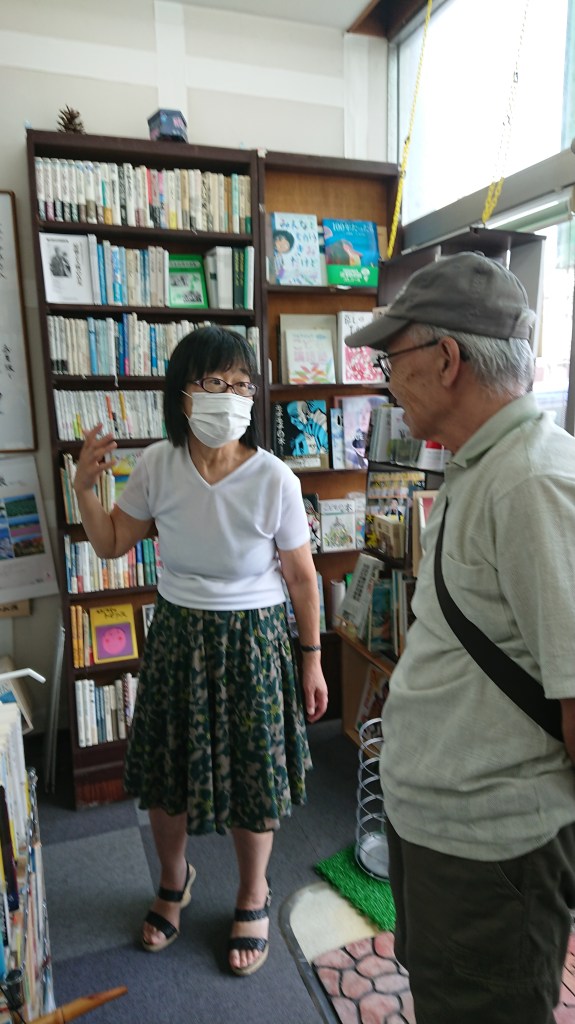
HIroo talks with Tsukioka-san at Azusa Bookstore

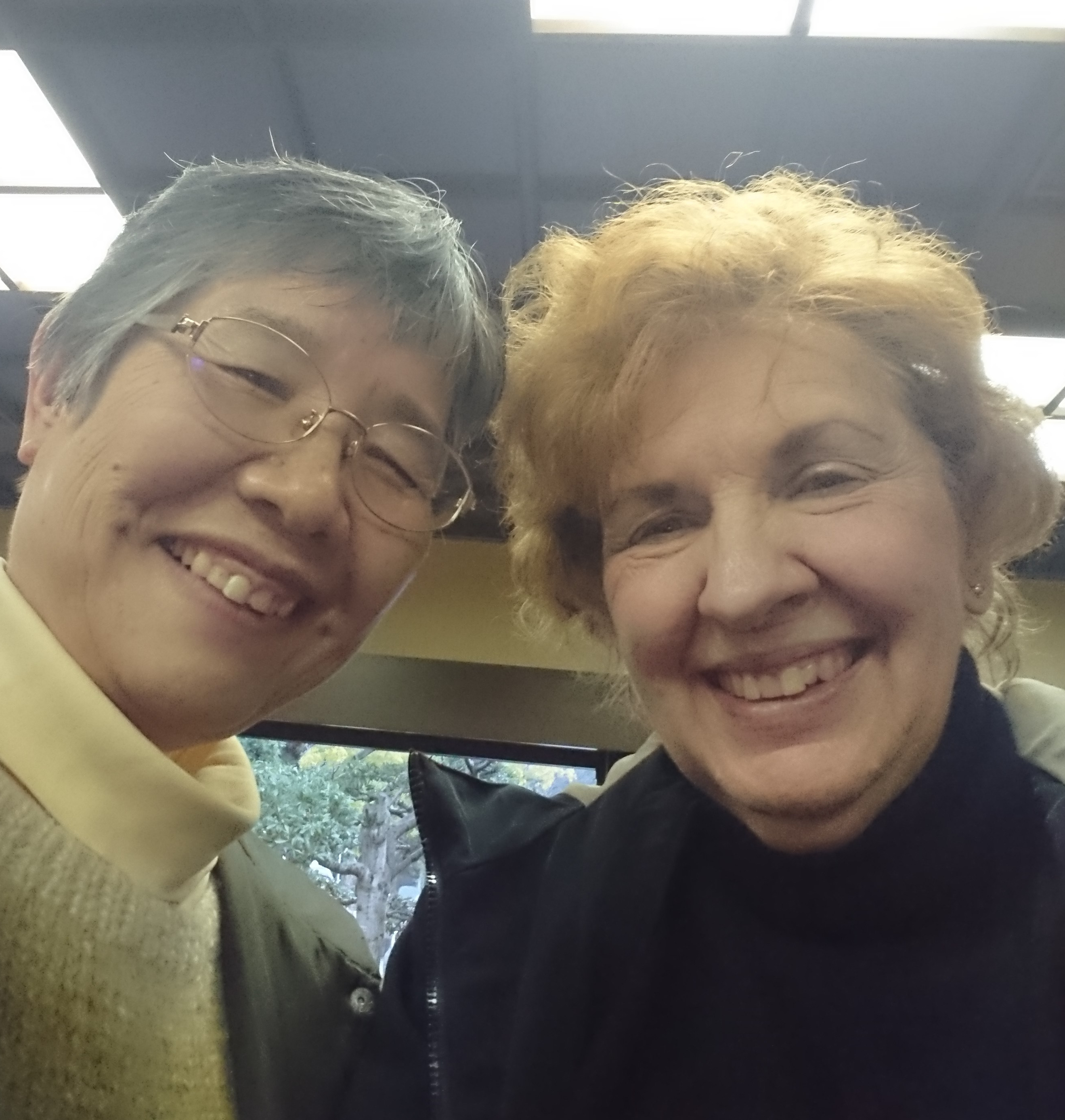
With Tomoko Tsukioka at Azusa Books

We enjoyed talking and she helped me find interesting books. When she heard it was our anniversary , she served us coffee! The most amazing thing was when she handed me one book and said, this is really a good book.
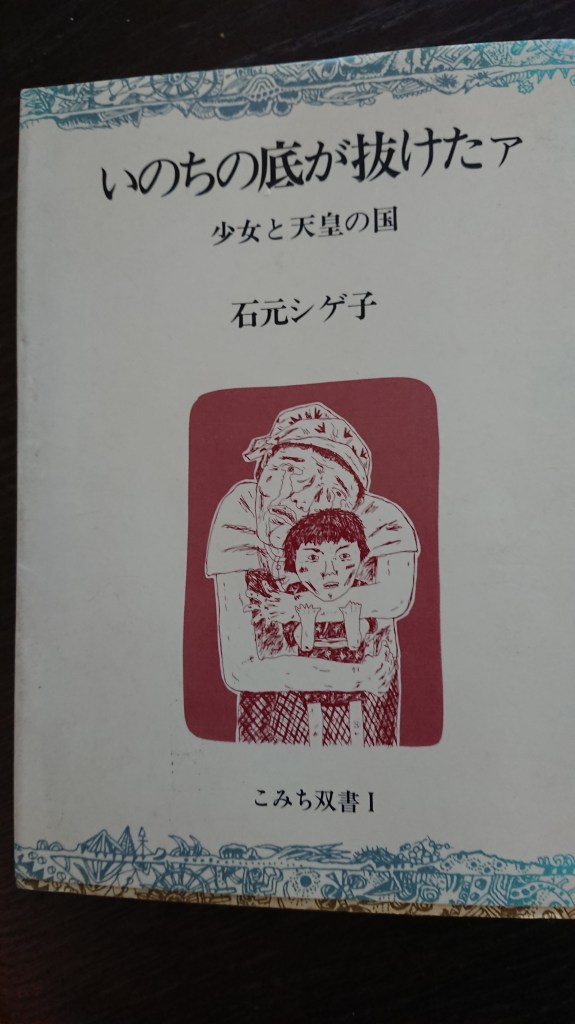
I found it!! (ずっと探していた!)

I was speechless as I had read it 30 years ago and often searched for it but had forgotten the title. This was just amazing and thrilling. She insisted on giving the book to me as a present! I hope to visit this shop with Eri some day.
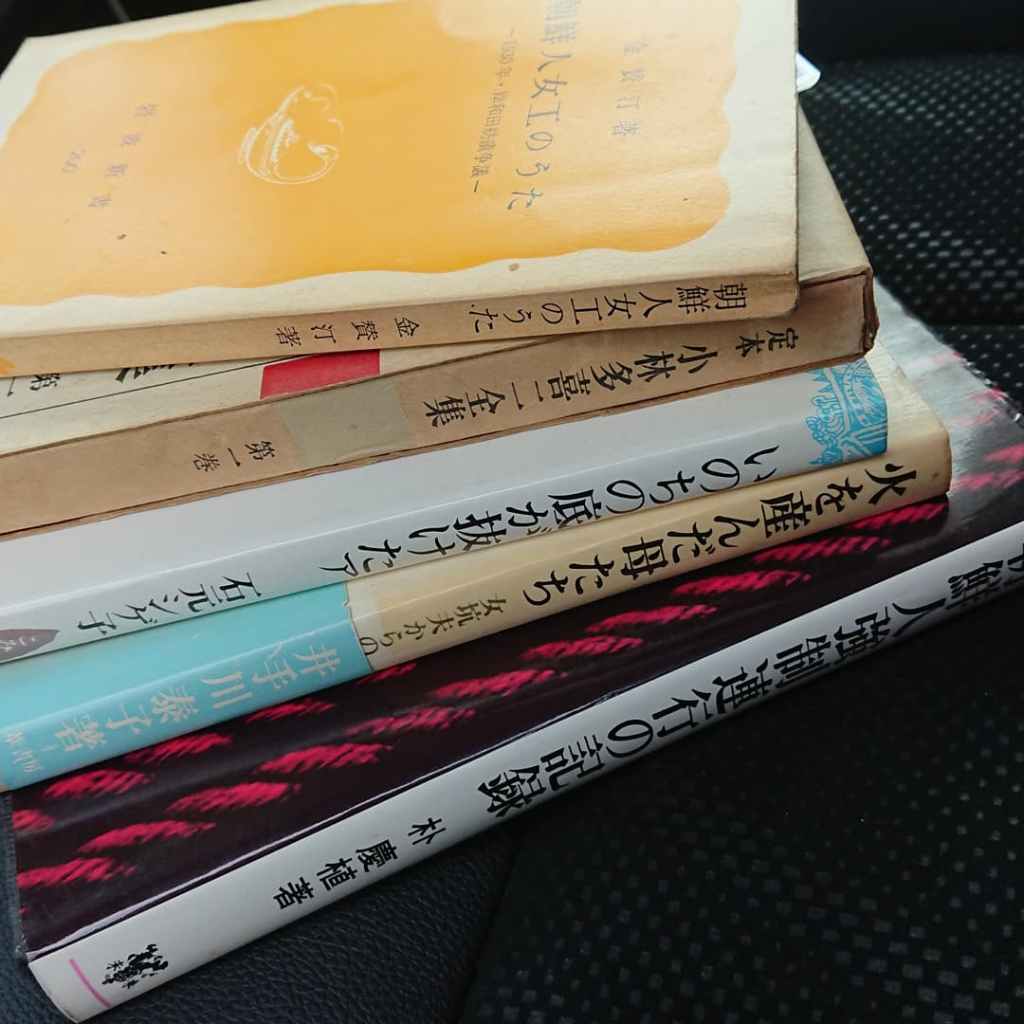
Books I bought

Tomoaru: New Friends

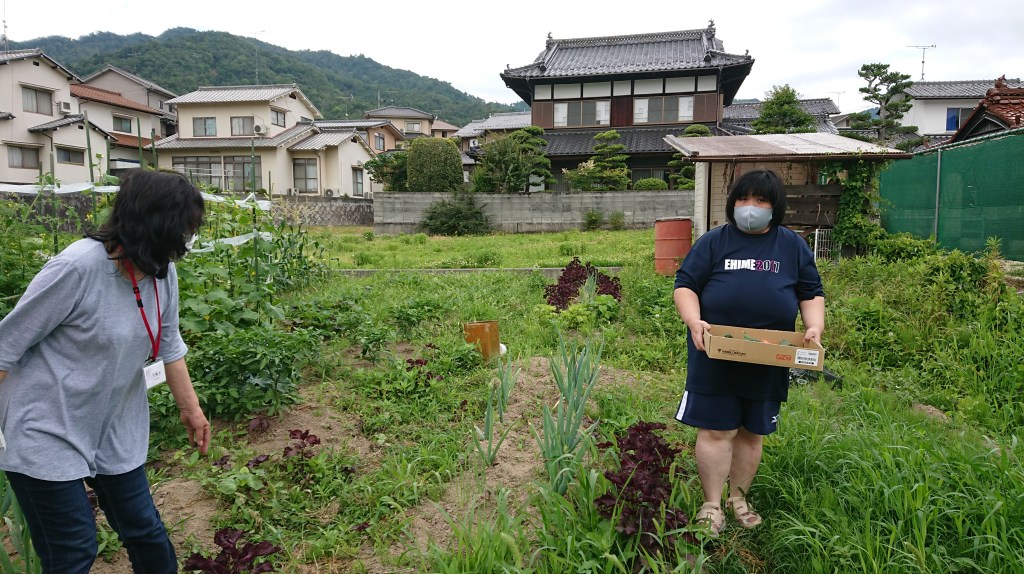
Gathering Vegetables at Tomoaru

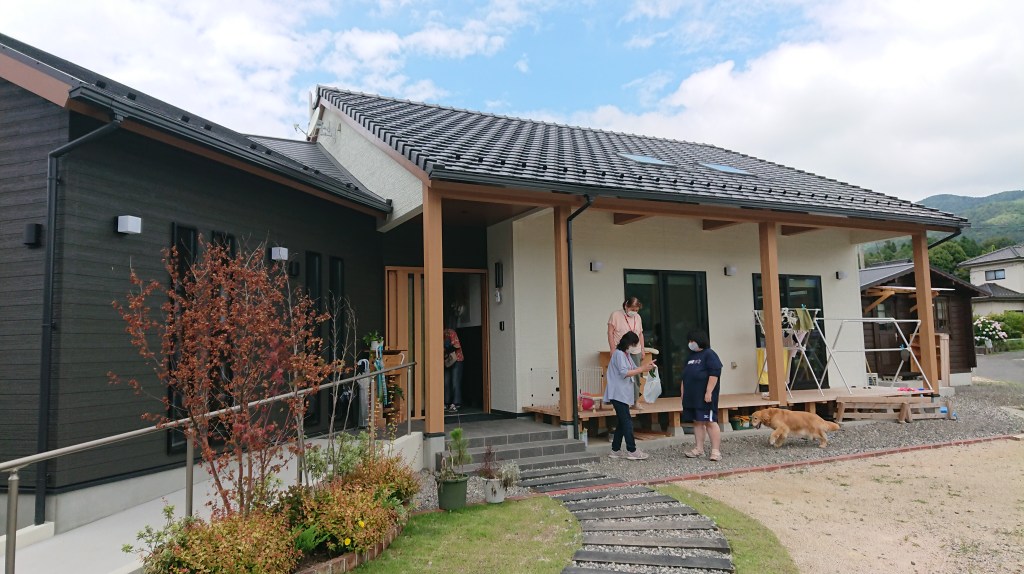
Last week I was invited to visit at a facility in Kumano, Hiroshima where many people with handicaps learn art or make jewelry.

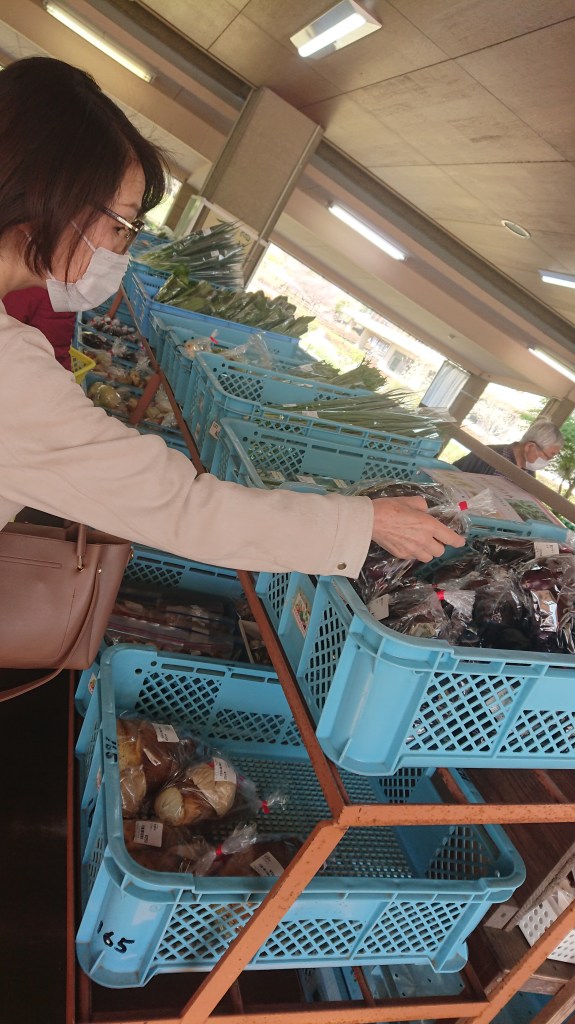
They spend the day there and have lunch there. They also have a big vegetable garden outside. I enjoyed meeting many people there. I talked with Yuko as she made jewelry, and Megumi took me to the garden to gather fresh veggies.

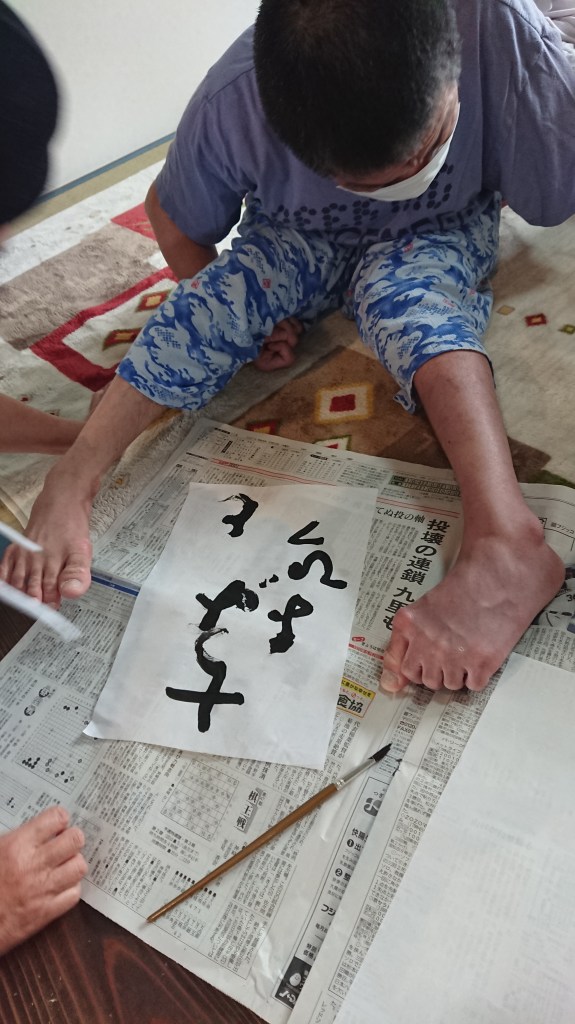
I was amazed to meet this man who does calligraphy with his foot. The word is that he is also a champion at Othello ( a chess-like game).

Calligraphy Artist

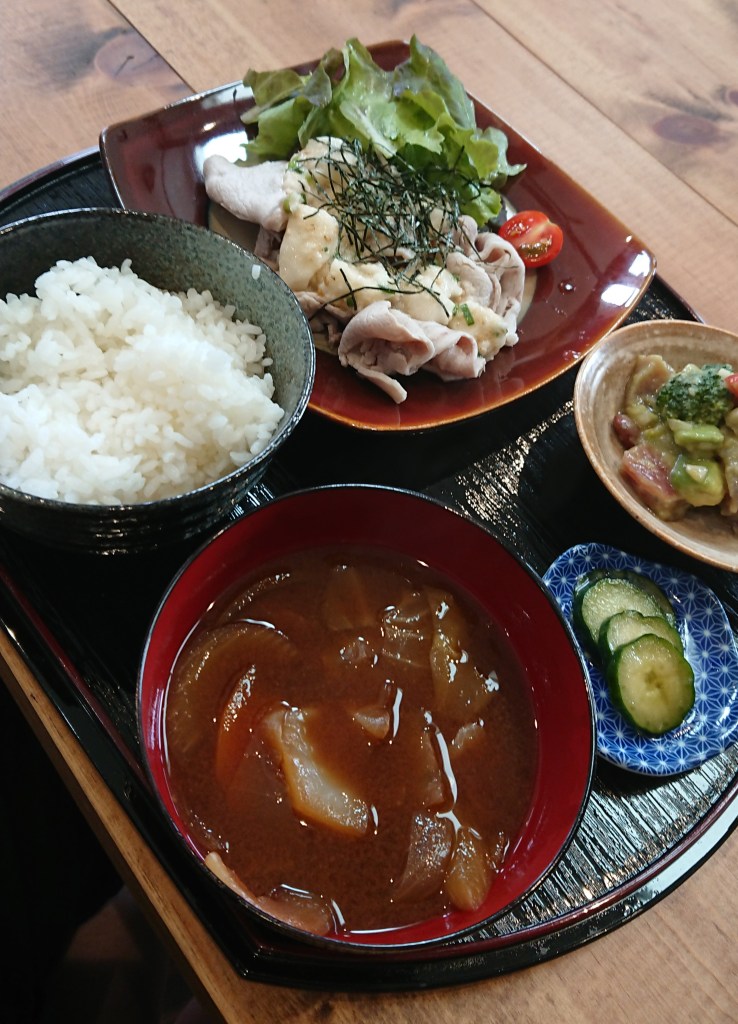
I had lunch there and it was quite filling. The staff and participants are all very friendly. Yuko gave me a beautiful glass magnet she had made. Yukiko gave me a hairpin. They will hold a bazaar on July 30th. I hope they can have some people come in spite of the coronavirus limitations.

Tomoaru Lunch

Thanks for inviting me. I wish I had more to contribute rather than just listening. I know they have lots of exciting things planned. Excursions, BBQs, games and many other events. What can I do??

Tomoaru House, Kumano
Megumi-san picked these for me!

I was so glad to meet you all. One young woman who was there showed me a photo of her three-year-old daughter in kimono. She was so proud. I wondered what barriers she had to overcome to have a child in spite of her handicap. We often think that those with Down’s syndrome or other conditions won’t marry or won’t have kids. In so doing we deny them basic human rights, deny their sexuality.

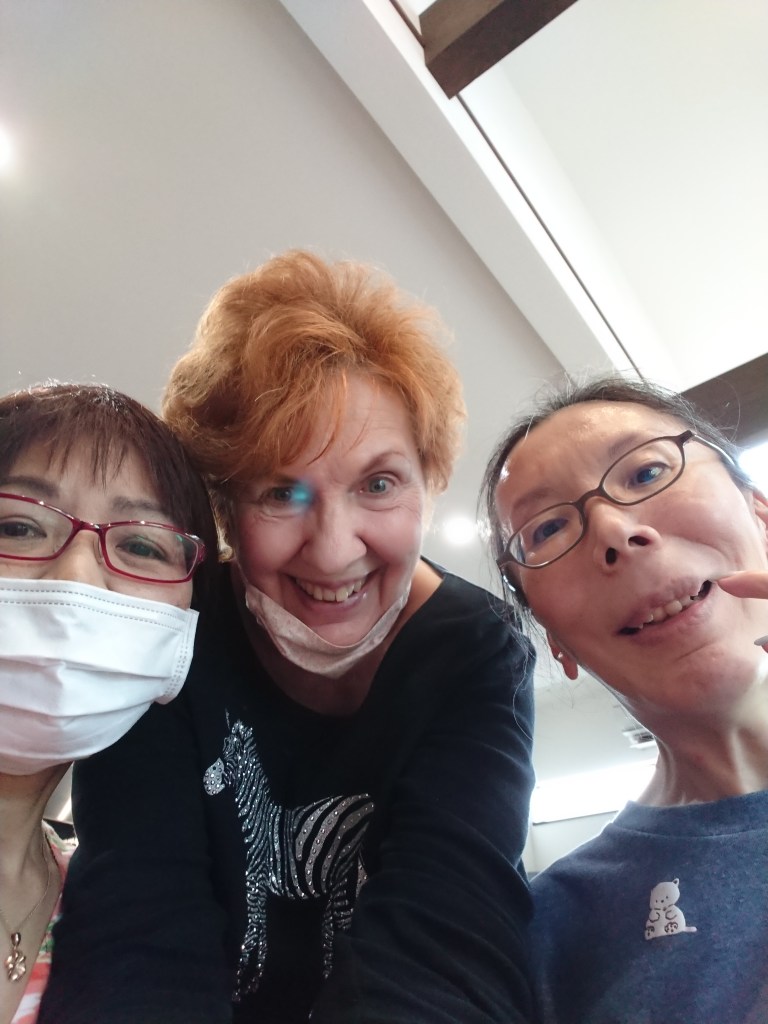
Friends at Tomoaru, Yumi, me and Yuko

A young man with cerebral palsy was being fed his lunch. Each person is unique with unique needs and abilities. The calligraphy artist had a body that seemed to be folded in half and unable to sit up, but he has made great efforts to draw and do other tasks that we take for granted. I was humbled to see him.

I hope to visit again, but I really want to think about what I could contribute, what I can do with everyone.

Thanks again for having me!

“Tomoaru” means I have friends!

Tsuyama Revisited

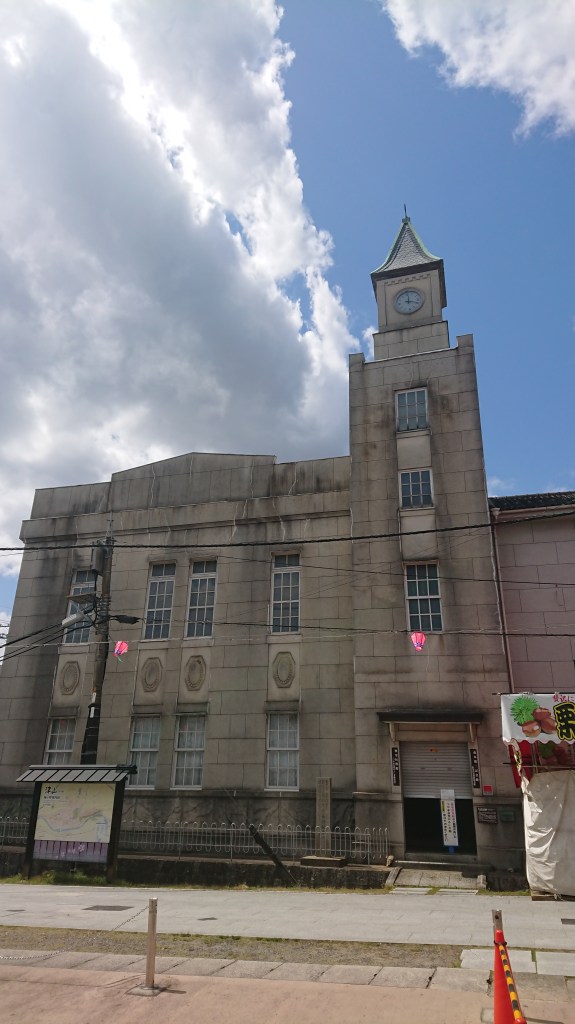
Tsuyama Archives of Western Learning

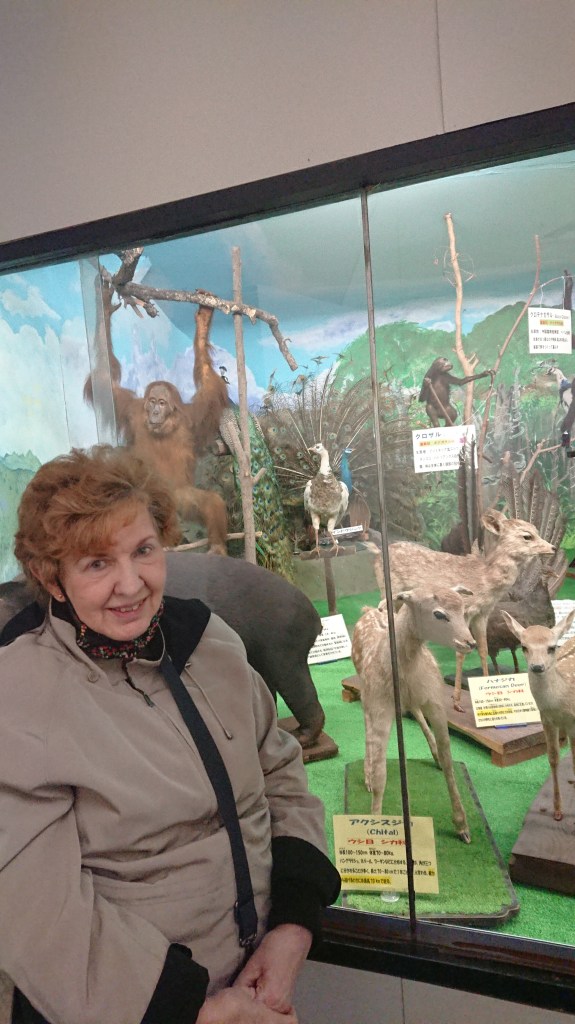
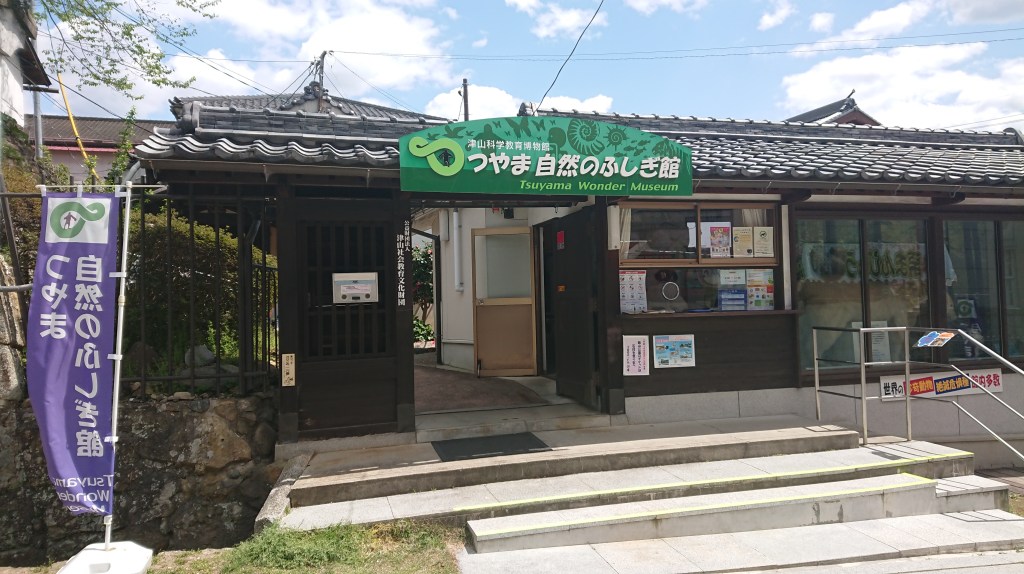
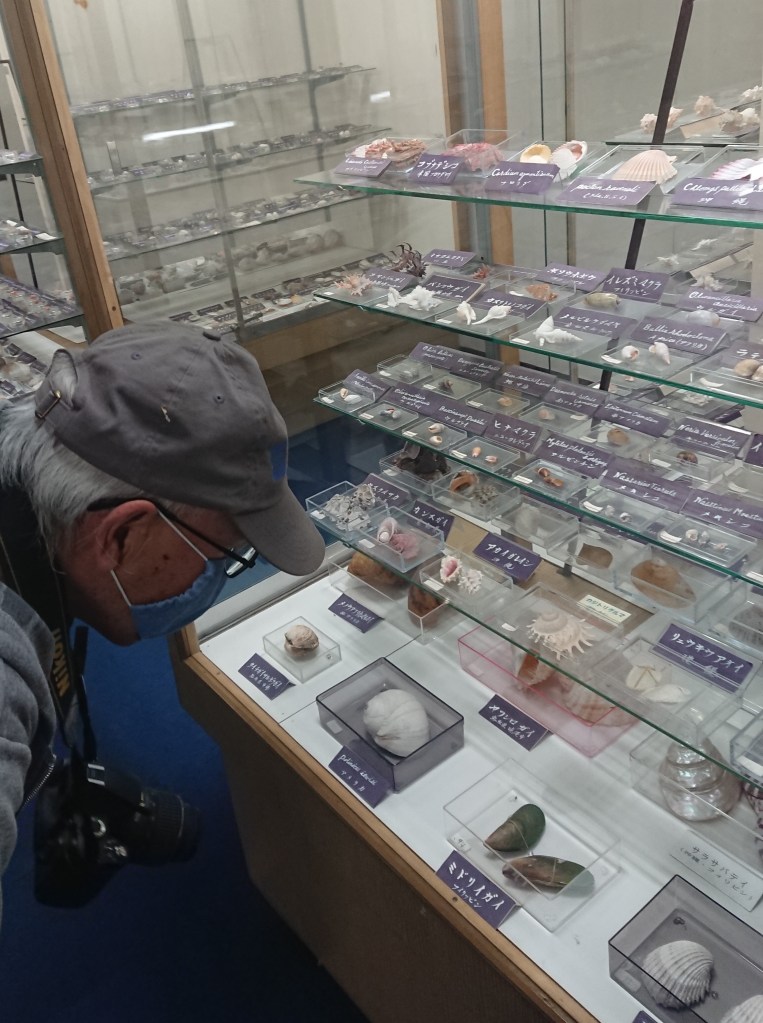
Just before the third wave of the pandemic, we snuck off to a rare spot in Okayama to see two museums in the sleepy little town on Tsuyama. Located in the north of Okayama city along the Chugoku Jukanro expressway, Tsuyama was a castle town ruled by Mori Masatada at the start of the Edo period. The original castle no longer stands, but there is a park and many cherry trees there. Next to the park stands the Tsuyama Fushigi Science Museum, (or Tsuyama Wonder Museum 津山自然のふしぎ館), an amazing collection of birds, animals and insects as well as a roomful of seashells. These animals are stuffed specimens from all over the world.

Among the Animals

The story of the museum itself is exciting as it was built by one man who sold off his family business to create the museum as he wanted to show people how amazing God’s world is. Morimoto Keizo was a Christian and a member of Uchimura Kanzo‘s Mukyokai group ( 無教会派 ). Opened in 1963 in a former school building, this natural science museum houses over 22,000 specimens. The building has aged and the floors slant in places. There are no elevators so you have to climb the stairs.

Tsuyama Shizen no Fushigikan Museum
Seashells Room

This was my second visit but Hiroo had never been there so he enjoyed it thoroughly and spent about an hour looking at the seashells. I was amazed at the size of the “elephant walrus.” I definitely recommend a visit here especailly if you have children who are interested in butterflies, insects and animals.

Kirisuto Toshokan, Tsuyama, Okayama Prefecture

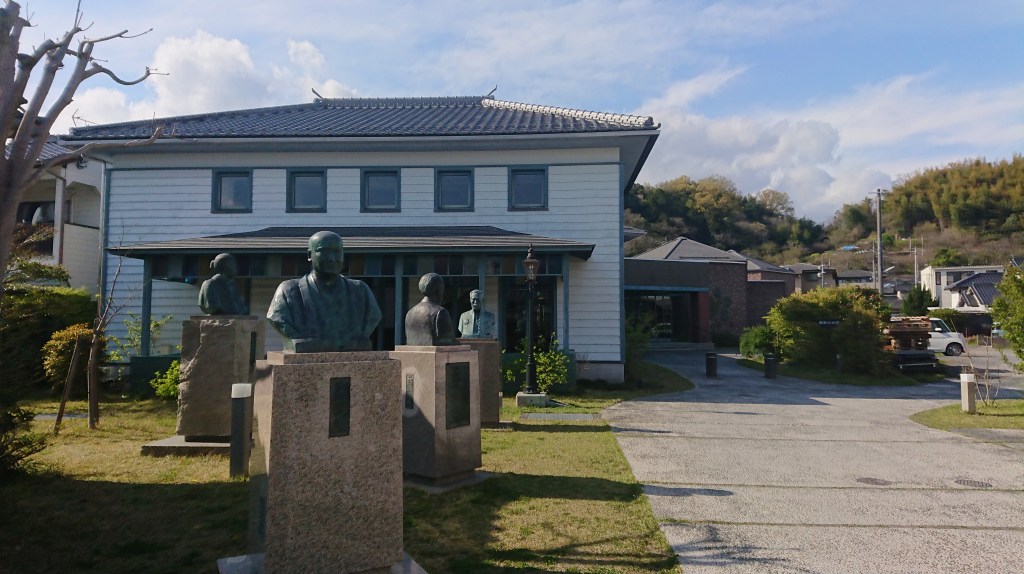
Across the way there is a History Museum which includes much information about Morimoto and “non-

church” Christians. This was originally the Kirisutokyo Toshokan”(Christian Library) and meeting hall. (See above)

After having a brief lunch, we drove to the Tsuyama Archives of Western Learning.

The building was very new but, in this case, no photos allowed inside. I had never known that when Japan was closed to foreigners for 230 years, that it was a group of young scholars from Okayama that got together to learn Dutch ( we only traded with the Dutch and the Chinese during the period of isolation) and that this group of young men from Okayama created the first Dutch-Japanese dictionary.

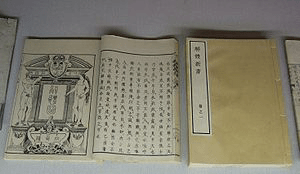
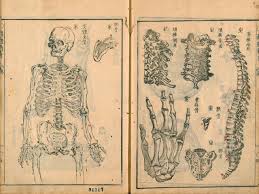
Dutch learning or “Rangaku” was developed in order to learn about advanced science in the West. Sugita Genpaku ( 1733-1817) received a book on anatomy from the Netherlands and was amazed at the detailed information there. Determined to translate it, he gathered this group to study it.

Sugita’s Translation 『解体新書』
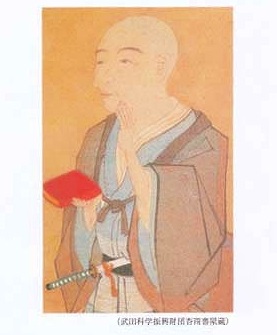
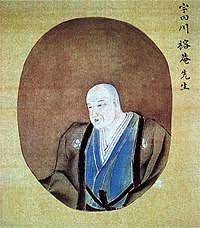
Utagawa Genzui 【1755-1797)

Following in his footsteps, Utagawa Genzui, a doctor in Tsuyama domain, translated and published other medical books, becoming the first to introduce Western medicine to Japan. His adopted son, Utagawa Genshin, went on to publish books on medicine and pharmaceutical topics, increasing the knowledge of Western medicine in Japan.

Japanese Translation of Dutch Anatomy Text
Utagawa Yoan, Coffee Lover

Utagawa Yoan

I was most fascinated by the adopted son of Genshin, Utagawa Yoan, also a doctor. He wrote the first book on botany in Japan. He also wrote a book on Chemistry and then had to invent new “kanji” or characters to express ideas or words not yet known in Japan. For instance, he made the words for cell ( saibou, 細胞) oxygen (sansou, 酸素), and even for coffee (珈琲)

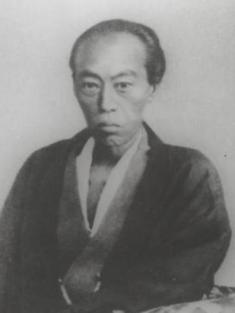
Mitsukuri Genpo

Mitsukuri Genpo was born and raised in Tsuyama. He supported the negotiations between Japan and America by translating the letter from the President of the United States, presented to the government by Commodore Perry and also was present when a Russian delegation came to Nagasaki.

Genpo’s several adopted sons also contributed to Western learning in Japan and studied in Europe or America. They contributed to the knowledge of botany, zoology, medicine, and Western history .

Mitsukuri Genpo

I definitely recommend you visit this very unique museum which not many people know about.

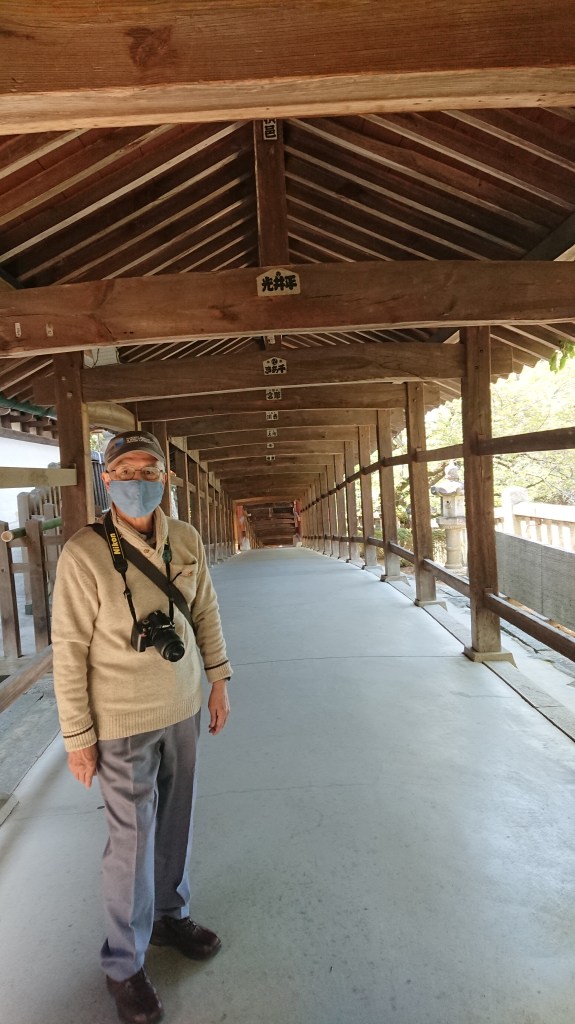
We traveled south to the Kibiji Onsen (Hot Springs) where we stayed and enjoyed a nice dinner. The buffet style breakfast was quite bountiful and tasty. It is only a short drive from there to the famous Kibitsu Shrine (吉備津神社)This is a truly beautiful shrine with an amazing long sloping hallway.

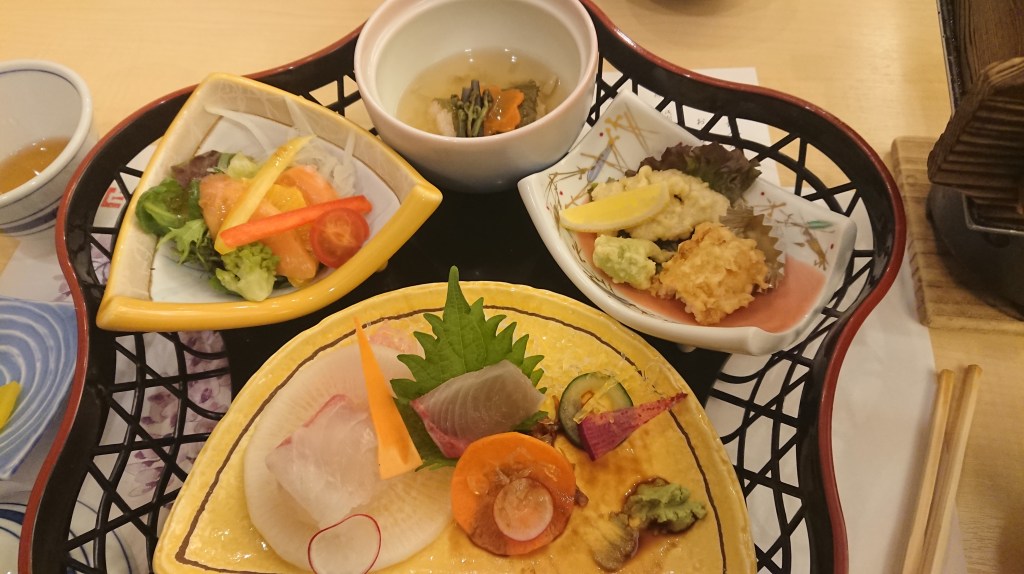
One of the Dishes Served at Sun Road Kibiji (国民宿舎サンロード吉備路)

Amazing Hall at Kibitsu Shrine

If you visit Okayama, I highly recommend Tsuyama. Along with Katsuyama, it is one of my favorite areas.

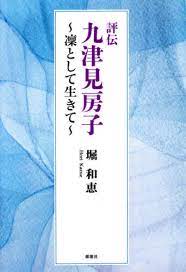
Book Review: Kutsumi Fusako

「九津見房子 凛として生きる」  堀和恵 (2011 郁朋社)

Reading the biographical novels of Yamashiro Tomoe, I run across many interesting people and have to sidetrack to learn more about each of them.

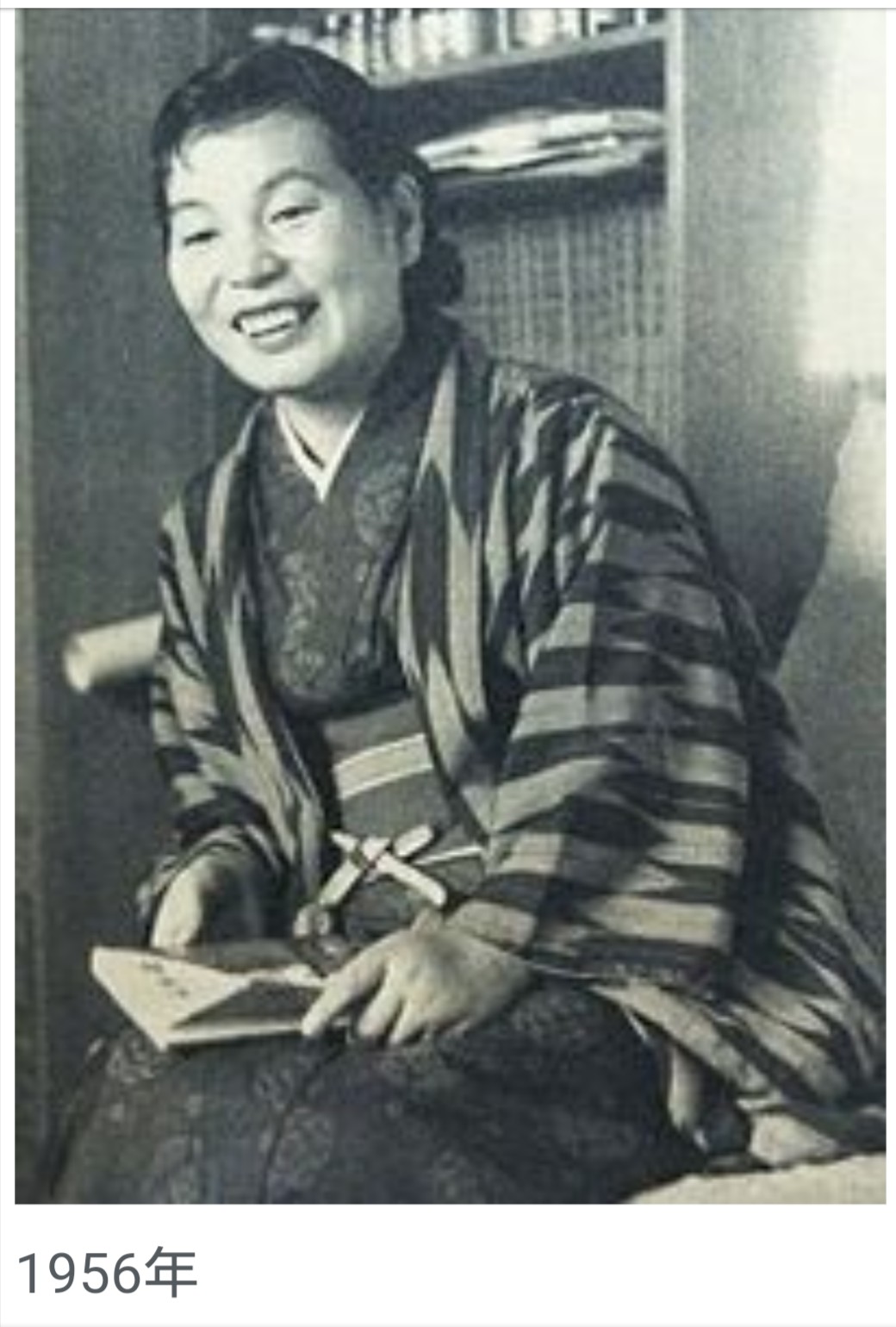
Kutsumi Fusako was an activist and member of the then illegal Communist Party in 1930s Japan. She is known as the first woman to be arrested and imprisoned for violation of the Chian Iji Ho ((Maintenance of the Public Order Act), a law passed in 1925 to suppress dissent under the increasingly militaristic government in Japan.

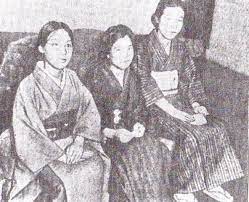
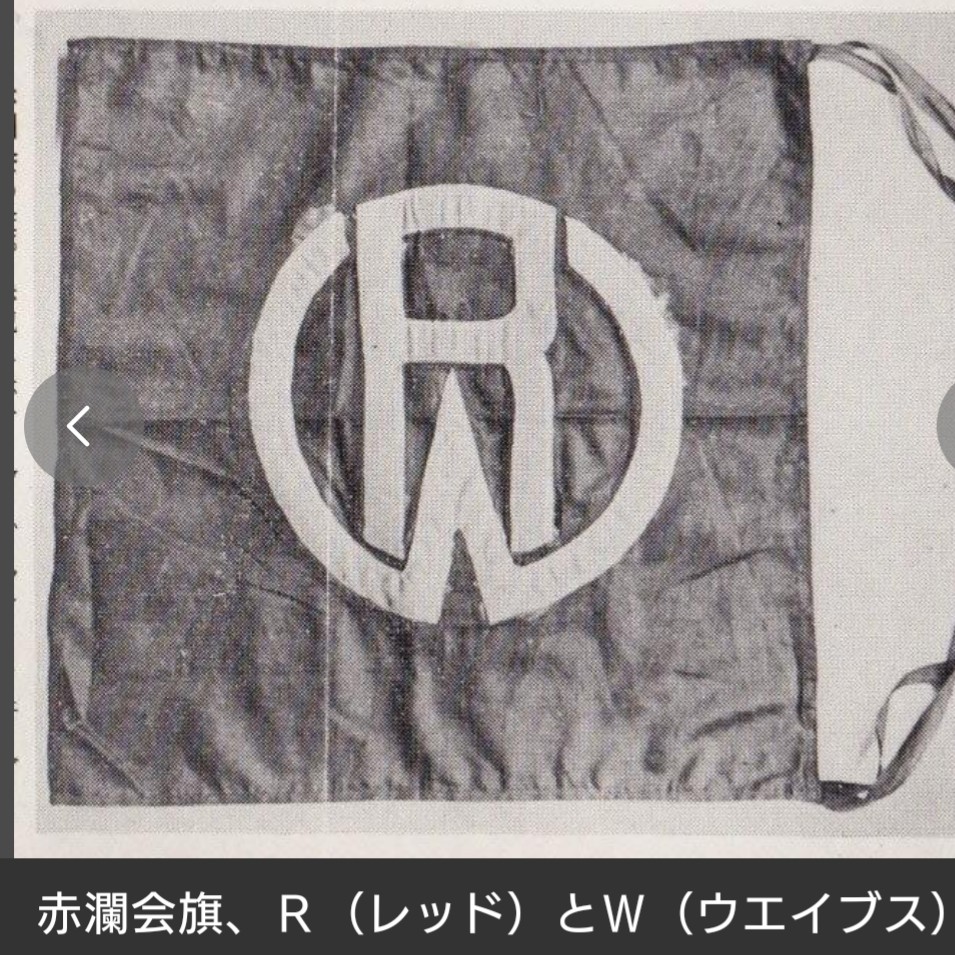
However, I think it is important to remember her as the leader in forming the first women’s socialist group in Japan, the Sekirankai (関蘭会)in 1921 along with Sakai Magara and Itoh Noe. On the Second May Day March held in Japan, these women carried a black flag with the red logo “RW” ( Red Wave) emblazoned on it. All were arrested immediately and made sensational news in the next day’s paper.

May Day Marchers
赤瀾会,左から山川菊栄、伊藤野枝、近藤(堺)真柄

Born in Okayama (岡山市弓之町)in 1890、her maternal grandfather had been a karo (chief retainer) in Katsuyama-han(勝山藩). Her parents divorced when she was 3 and her mother, a licensed midwife, opened an obstetric clinic in Okayama. Fusako attended a Catholic kindergarten nearby. When she was 5, she contracted dysentery, an often fatal illness. The priest from the school forced his way into the quarantined house insisting that Fusako be baptized so she could go to heaven if she died. This enraged her mother, a dedicated Buddhist, and she thereafter put Fusako into the local school. Nevertheless, the Christian ideals she had learned at an early age influenced her and encouraged her throughout her life.
Fusako later entered a girl’s high school in Okayama. A medical student who boarded at her home lent Fusako a copy of Edward Bellamy’s “Looking Backward 2000-1887” (100年後の新社会)and she began to be interested in social issues. This medical student was doing volunteer work in the minority burakumin community in Okayama and Fusako assisted him.

One day, on her way to school she noticed a poster for a lecture held in the Shokakuji temple (正覚寺)。She decided to attend and was the only woman there. Afterwards she met the speaker Yamakawa Hitoshi (山川 均.)She was 16 years old and she soon decided to leave home and go to Tokyo, staying with the widowed socialist and activist Fukuda Hideko. (福田英子)While there she helped with housework or printing of “Seikai Fujin” ([世界夫人」) While living there she often met people involved in Socialist causes like Uchimura Kanzo, Kanno Sugako, Sakai Toshihiko, Kotoku Shussui and Arahata Kanson.

Returning to Okayama only for her father’s funeral, she stayed and lived with her mother until 1911. Then she was alone and had no qualifications to support herself. Uchimura Kanzo introduced her to an evangelist in Osaka, Takada Shuzo. Takada was preaching a brand of Christianity mixed with Buddhist principles so his wife had left him. Kutsumi went there to assist him in his work but ended up marrying him as his common law wife in 1913. They had two daughters but Takada refused to work or support them. He believed that “God will provide all our needs,” and so it’s not necessary to work. The family was now living in Tokyo and Kutsumi worked in a kimono tailoring shop to support them. She divorced Takada in 1920.

She was asked to help with the printing of an illegal version of the “Communist Manifesto” and this provided the impetus for her to join the Socialist movement again. She met Mitamura Shiro (三田村四郎)and eventually married him. Relocating in Hokkaido, the couple continued to recruit people to the worker’s cause. This drew the attention of authorities as the government was cracking down on socialism on the eve of the invasion of China. Not only Kutsumi but her 14-year-old daughter, Itoko, were arrested and held. Stripped and beaten by the Special Political Police (特高警察), Kutsumi nevertheless refused to give up any information, only saying ” I don’t know” or “I forgot.”

Kutsumi was sentenced to 5 years and 4 months in prison for violation of the Maintenance of the Public Order Act. This roundup of Communist sympathizers is known as 3・15, having taken place on March 15, 1928. Her daughters were taken in by friends and later by their father.

After release, Kutsumi lived quietly with her daughter. In 1936, she was asked by someone she formerly knew to help with the work of a young American Communist named Miyagi Yotoku. She met to discuss it with Miyagi and Takakura Hikaru several times. They were being followed by the police, she was arrested in 1941 for collusion with the Russian spy Sorge (whom she had never met), and sent to Wakayama Women’s Prison with an 8 year sentence. There she met Yamashiro Tomoe. Kutsumi was released from prison by the GHQ in 1945 after serving 4 years. She spent more time in prison than any other female activist in Japan.

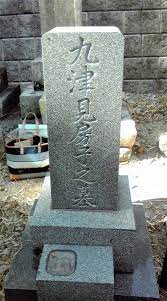
Kutsumi Fusako’s grave in Katsuyama. Okayama-ken

Kutsumi spent her latter years living with her daughter’s family in Kagurazaka. Her home is now a cafe called Kissa Tonboro (喫茶トンボロ)She didn’t participate in politics but was strongly anti-war and kept reading “Akahata Shinbun“. Of her motives in life she said

“The basis for my 80 year beliefs was Christ’s teachings. …..The idea of loving others was the biggest influence on me.” (p. 174) I thought again how that many of the social activists of the Taisho and early Showa eras were, at least at one time, Christians and that it certainly influenced their work in reforming factories and social conditions.

While this book did not give new insight into the life of Kutusmi, it was very readable and told the story of her life and her experiences in a way I could comprehend and enjoy. I highly recommend it.


Search for Yamashiro Tomoe

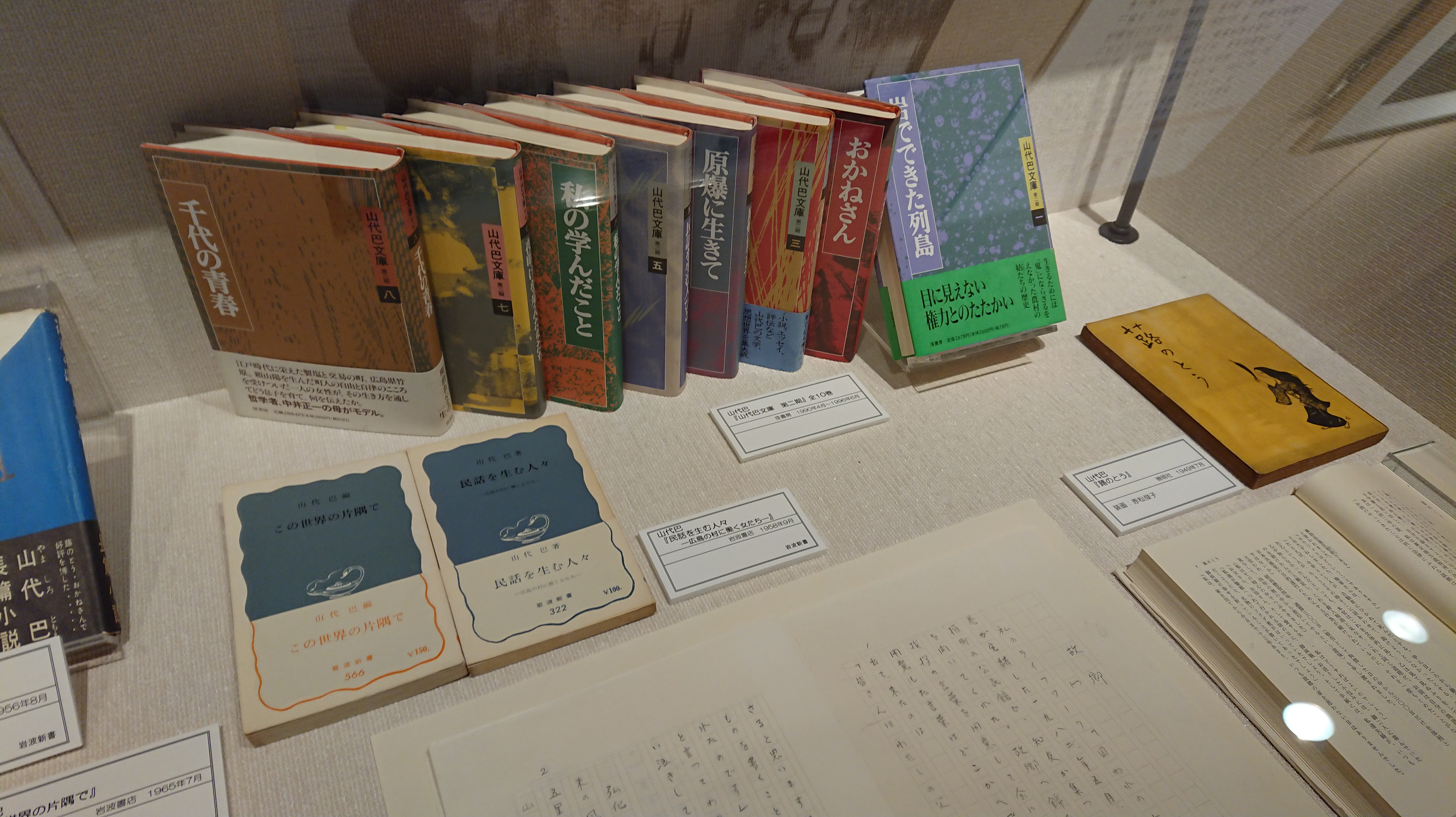
My favorite writer and activist is Yamashiro Tomoe who passed away in 2004. I discovered her when Hiroo recommended I read a novel by her entitled Okanesan. It is about a young woman who leaves her own village to go to another farming village as a second wife to a widowed man with a small daughter. She arrives to find the house in disarray, an idle husband and mean neighbors who do small unkind things to her for no reason.

_20200217_225116

In depicting life for women in rural areas of mid-twentieth century Japan, Yamashiro raised questions about the status of all women but especially in rural and agricultural areas.

2020-02-16 12.09.53

I later discovered that she had been in a women’s prison for her political beliefs from 1940-1944. I am now reading the 10 volume biographical novel she wrote about those years and the women she encountered.( 囚われの女たち)

slide_B3433F42-AA8C-4A31-8451-9E1A55546E7D

2020-02-16 14.54.14
WIth Yamashiro Scholar, Chiara Comastri

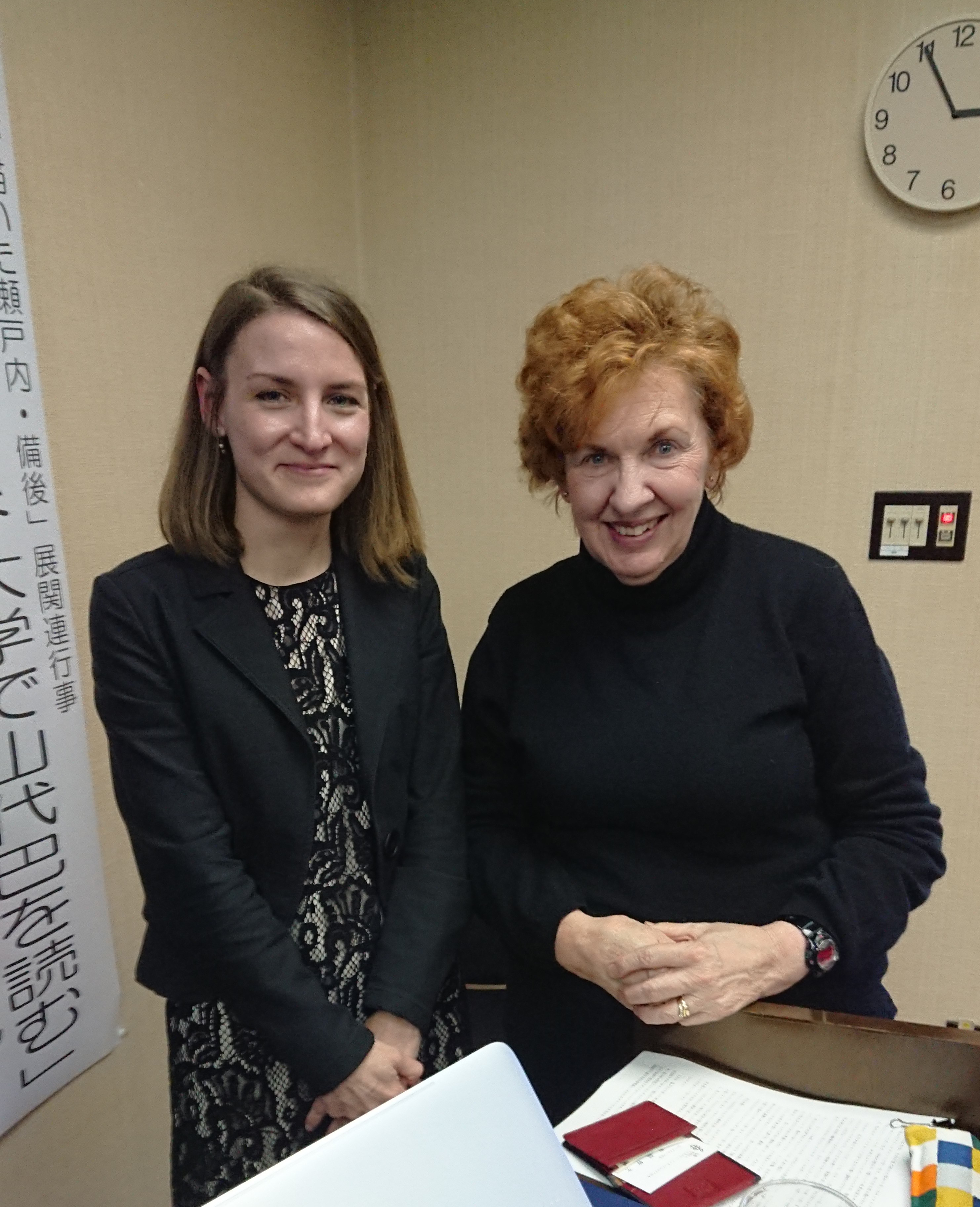
Yesterday we went to Fukuyama City to hear a lecture on Yamashiro by Chiara Comastri, a scholar from Oxford University. I was amazed by her command of Japanese which put mine to shame!

She focused on Yamashiro’s postwar activities with women in the farming communities. The stories these women told her of the suffering and difficulties they had undergone became part of Tomoe’s fiction. But her main purpose was to raise the awareness of the women and have a positive impact on their lives.

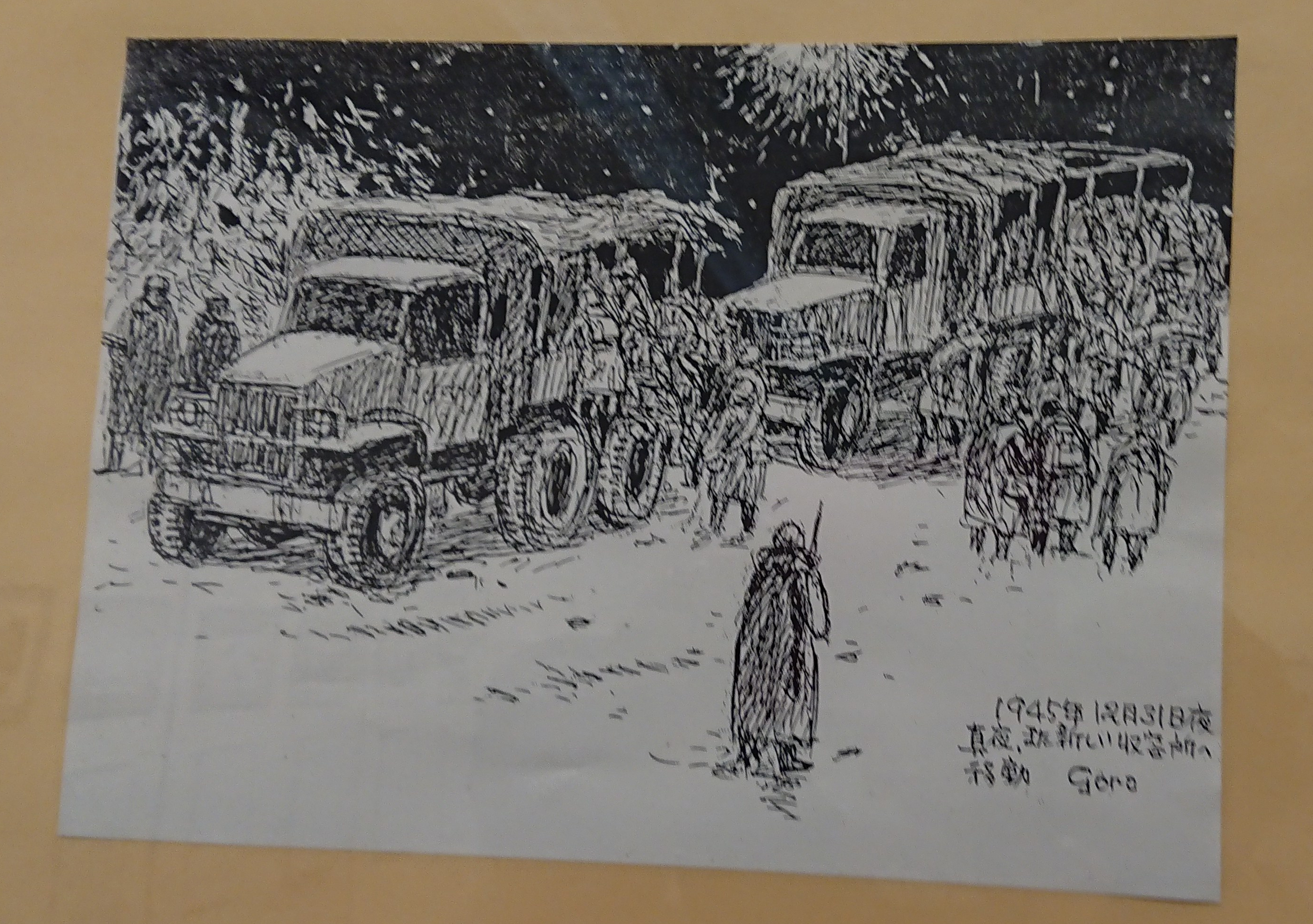
We first visited the Center for Human Rights and Peace which is located next to the Literary Hall. We saw an exhibition of drawings and paintings done by a man from the Fuchu area of Fukuyama while he was in a Siberian labor camp. His name is Shikoku Goro, (四國五郎)

2020-02-16 10.47.02
Sketch by Shikoku

The staff member on duty, Haruko Ichikawa, gave us a lot of information. We were happy to meet her and she mentioned that she’ll have an exhibition of her paintings next month. She is a very accomplished artist!

We attended the lecture and met the wife of Yamashiro’s biographer Makihara Norio. (牧原憲夫) I hope to keep on reading Tomoe’s work. I learn so much from it. It may take me years to get through this 10 volume set, not to mention her other books!

DSC_0282
Makihara Norio’s wife, Makise Akiko

2020-02-15 19.00.33
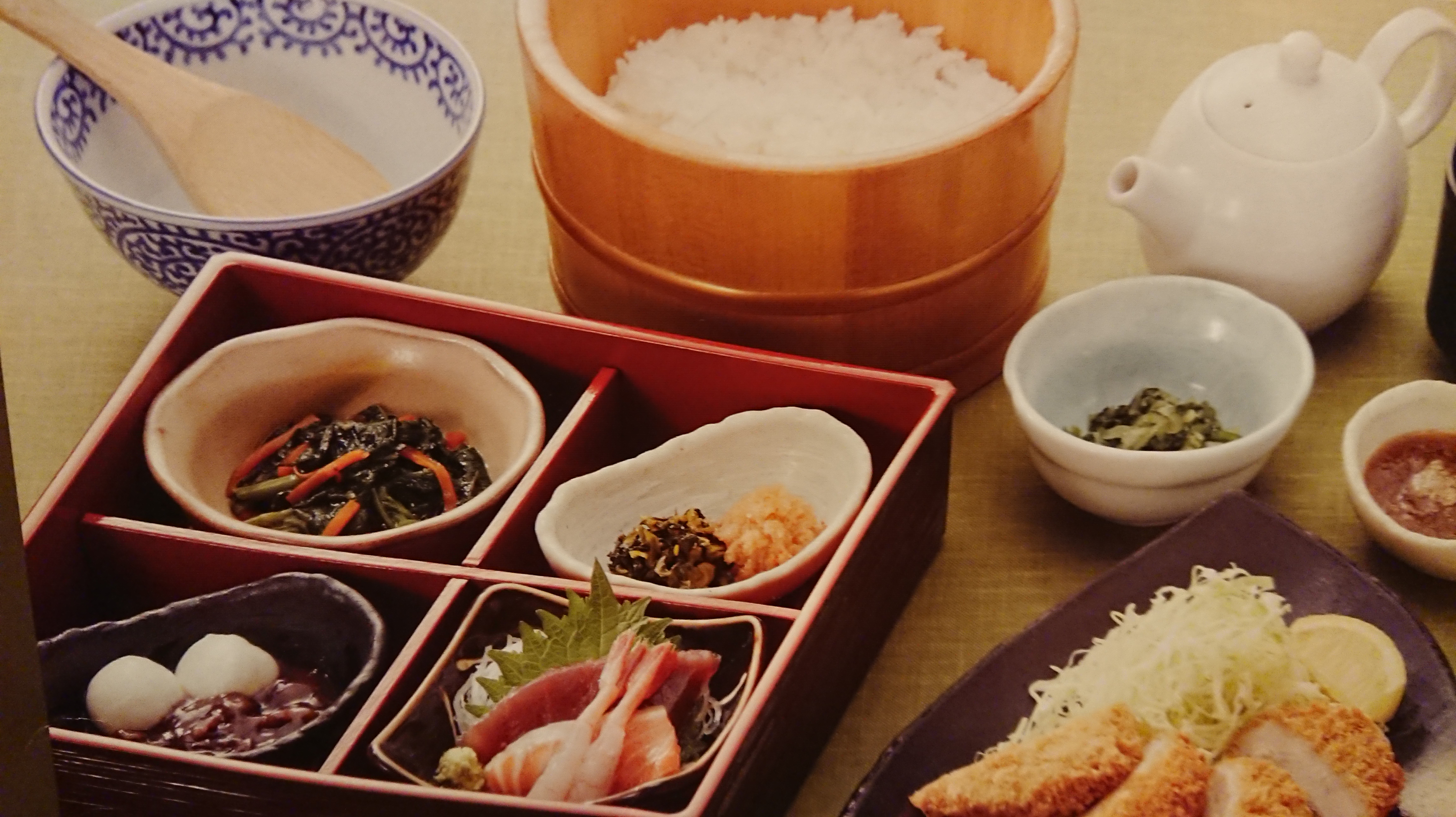
Tonkatsu Pork Cutlet at Hitsuya

We stayed over night at the Vessel Inn near Fukuyama Castle. The train station is literally a stone’s throw away and we ate dinner there at a great restaurant called Hitsuya because they serve all the rice dishes in wooden o-hitsu.

We also visited the History Museum next to the Castle. There is a very good recreation of a early Edo village、Kusado Sengen-cho, ( 草戸千軒町)  that was excavated in the middle of the river nearby. It was destroyed by a flood in 1647 and only uncovered in 1930. Referred to as the Asian Pompeii, excavation began in 1961.

IMG_20200216_202235_121

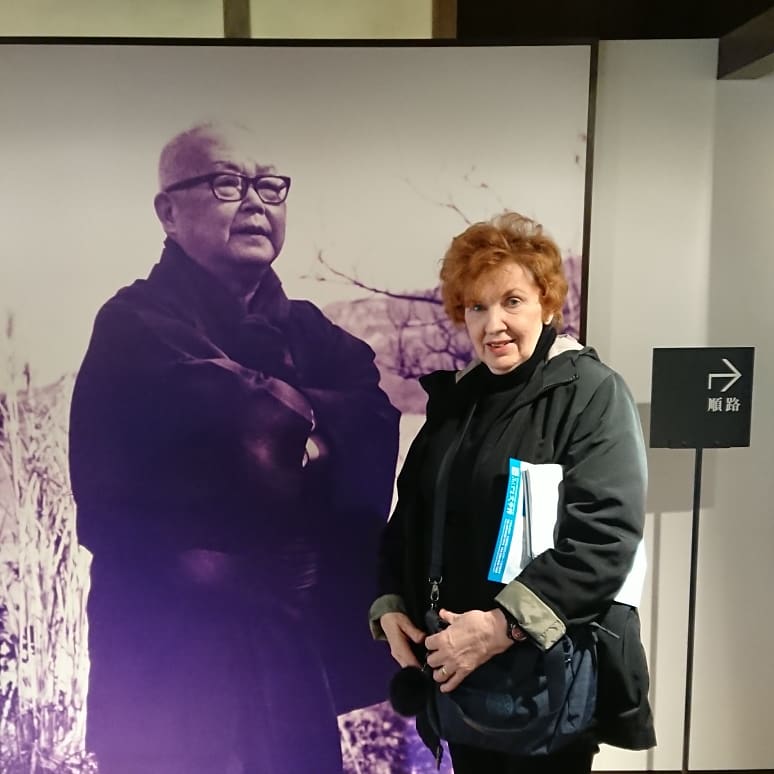
There are many interesting things to see in Fukuyama. The Literary Hall (福山文学館) includes a fine exhibition on Ibuse Masuji(pictured above). He is known for his book about the Atomic bomb in Hiroshima, “Black Rain”.「黒い雨」 The museum is very well organized and I recommend you visit there。

Stationery Store in Kakei

I have been suffering from headaches for over 2 weeks. We had to cancel our trip to Shikoku. So Hiroo took me for a drive to cheer me up.

DSC_2383.JPG

We drove through Yuki Onsen ( hot springs) and turned off onto a narrow road to Tsutsuga  Mura. There is a Icho-no-Ki tree there that is over 1,100 years. The trunk is 7 meters in circumference. It is located in front of Oo-Otoshi Shrine.

As always, we had packed a lunch and we drove up towards Ryuzu no Taki Falls to eat. The road was closed below the falls, so we ate our lunch near there.

After that, I wanted to go a little further and visit a place I haven’t been before.

DSC_2387defaultdefault

We entered the country town of Kakei-cho, and found the old shopping district. I took a few pictures of older shops, but what caught my eye was  a somewhat newer stationery store. I went inside.

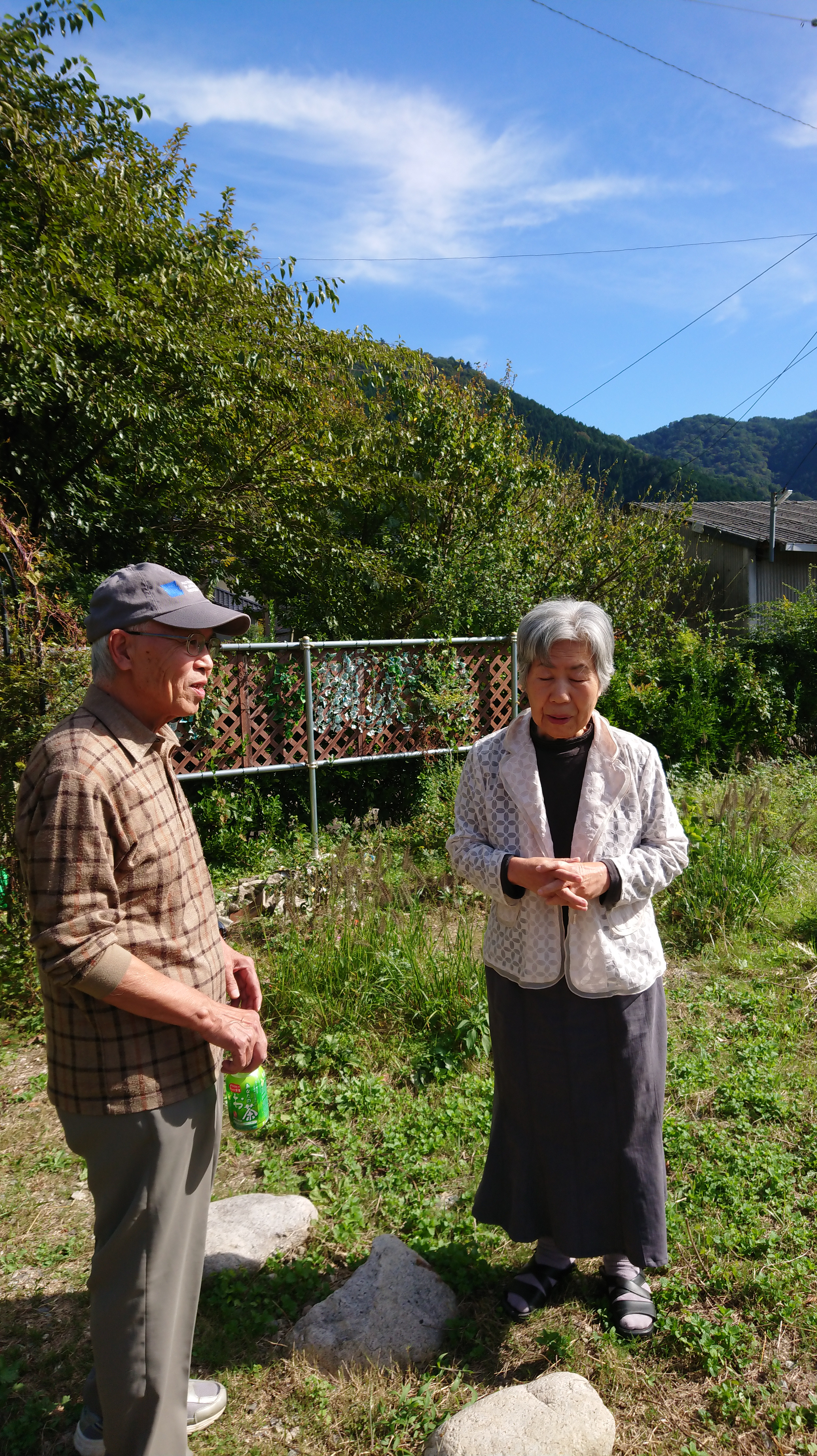
There I met the owner, Kazuko Kono. She is the third generation to run the shop which was rebuilt 30 some years ago. She enjoys writing haiku poems, and growing medicinal herbs.

DSC_2411

DSC_0001_BURST20191016133632354.JPG

default

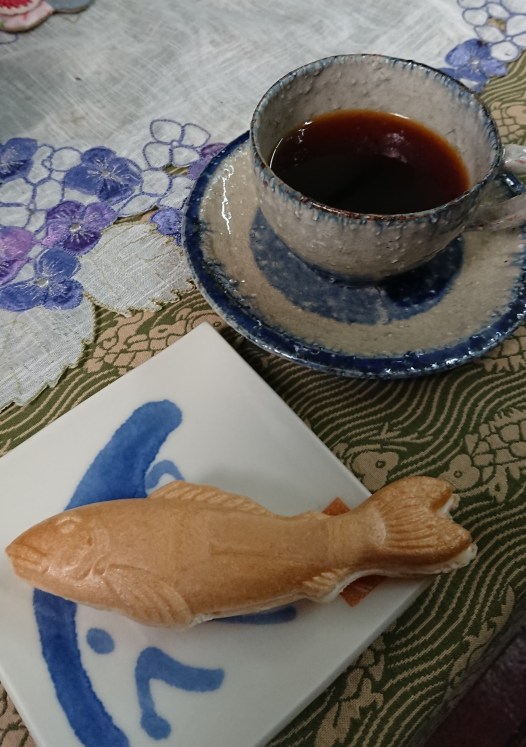
She showed us her field and served us very specially-blended coffee!

The shop is unique in that it is half bookstore and half stationery store. Some of the books have been on the shelves for so many years that they are collectible or out-of-print.

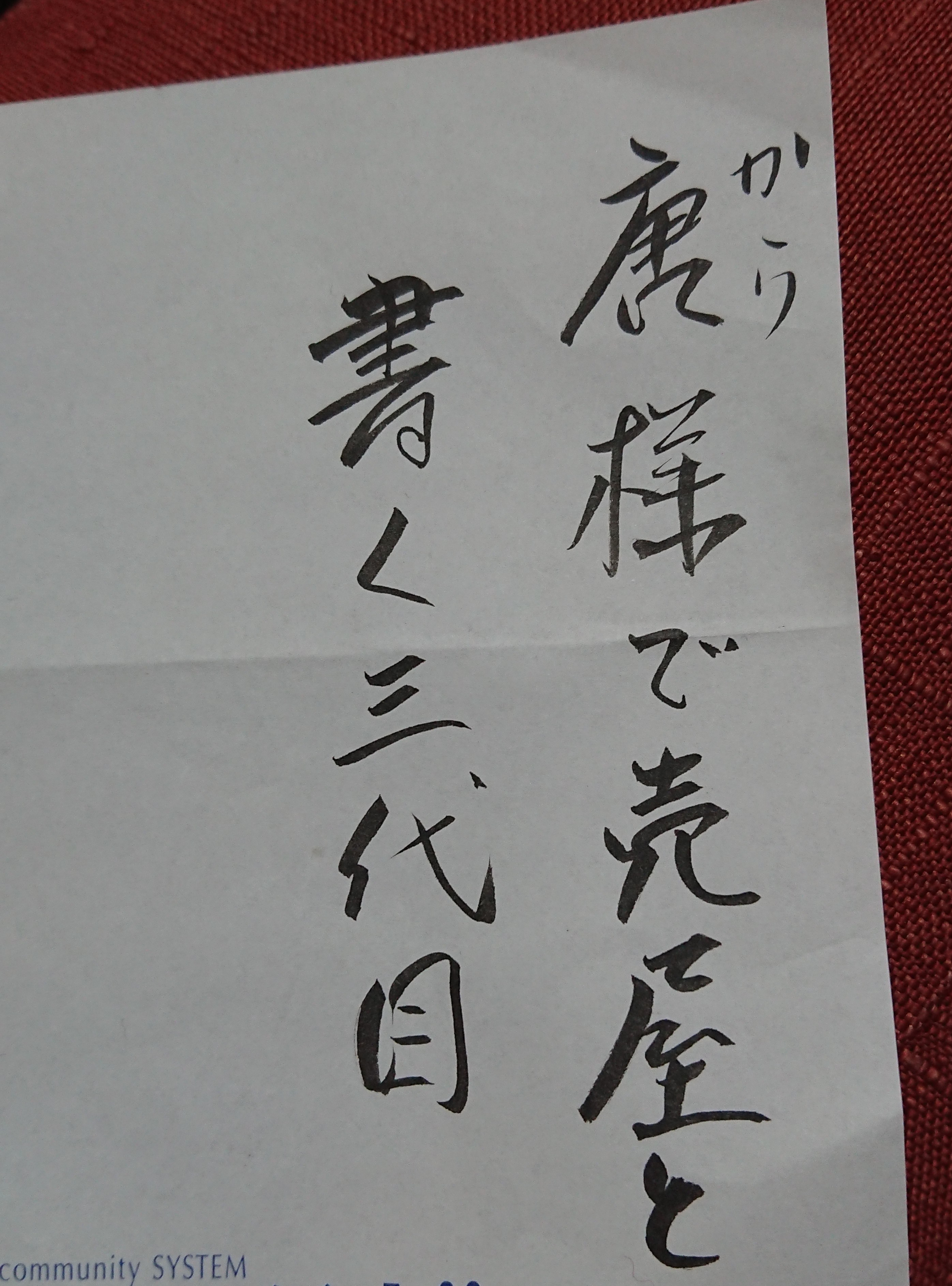
The memorable thing she said was explaining with irony that the first generation who opens a business works hard to build it up. The son who grew up watching that also works hard. The 3rd generation however, grows up in an affluent home, squanders the assets and goes out of business.

She wrote these words down for me.

DSC_2423default

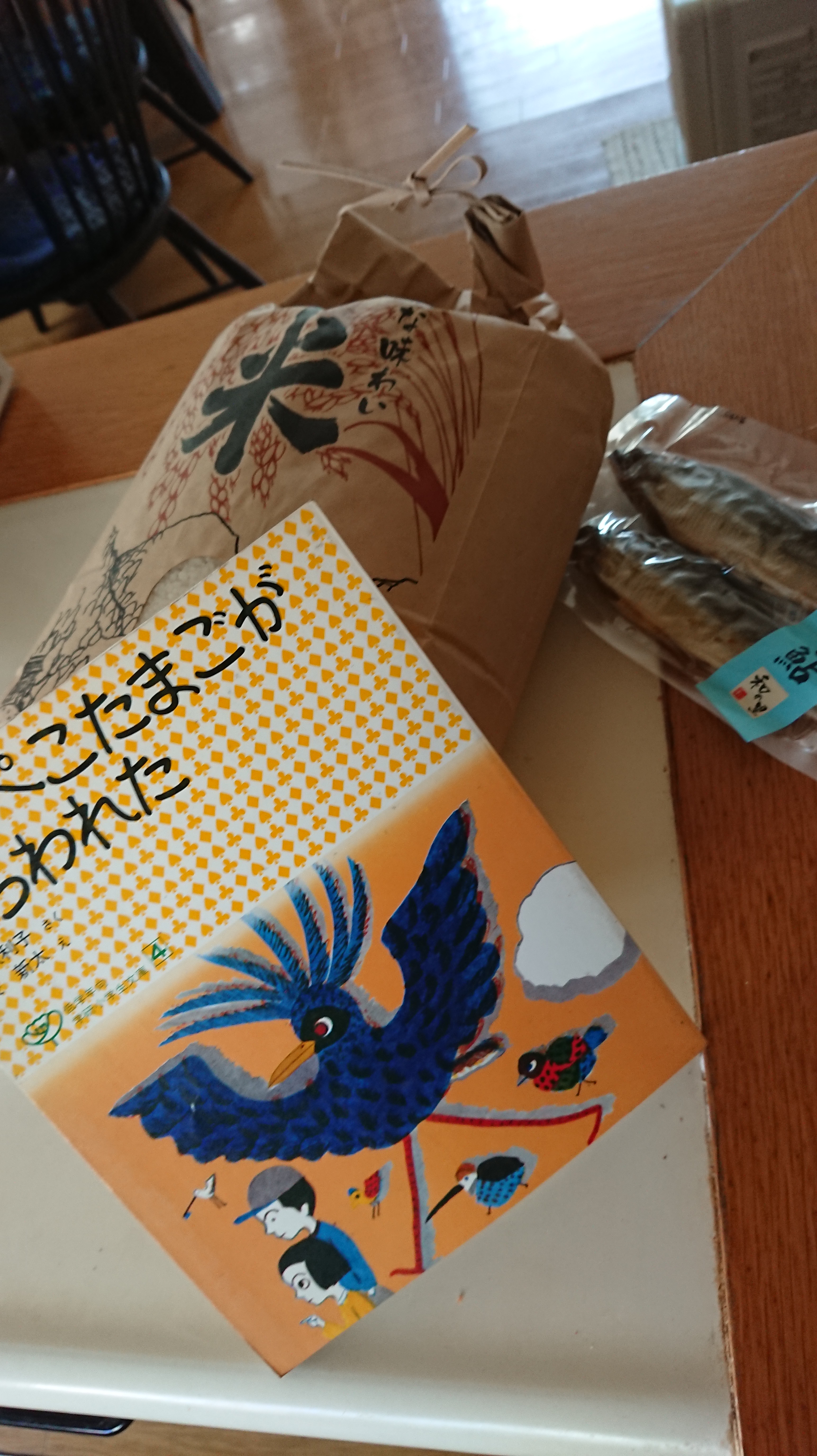
Kono-san likes organic foods so we sent her some homemade miso. She sent us a whole box of goodies in return!

DSC_2415.JPG

I hope we meet again. There are lots of other shops there I’d like to see!