
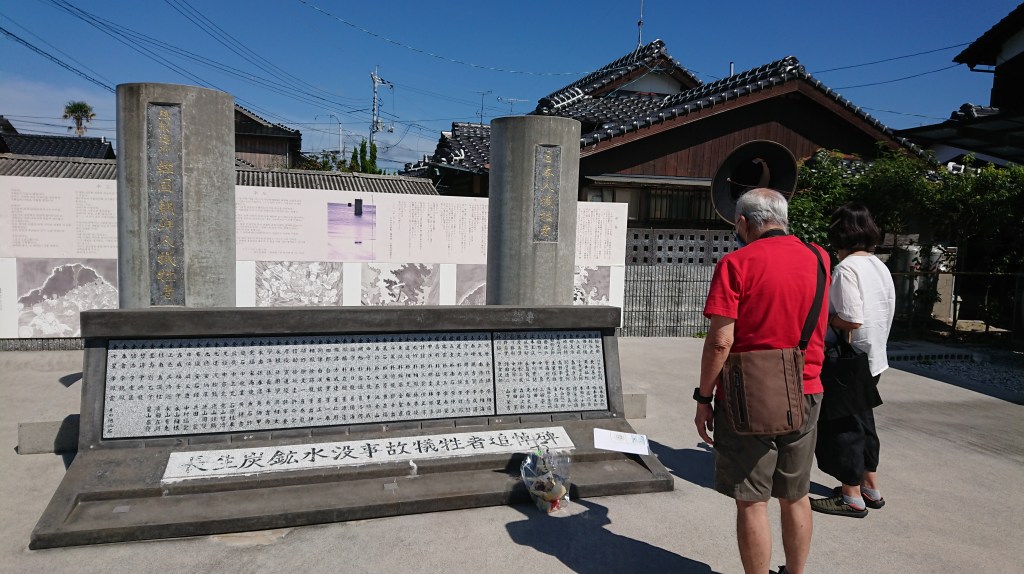
138 Korean Miners Among the Dead (February 3, 1942)
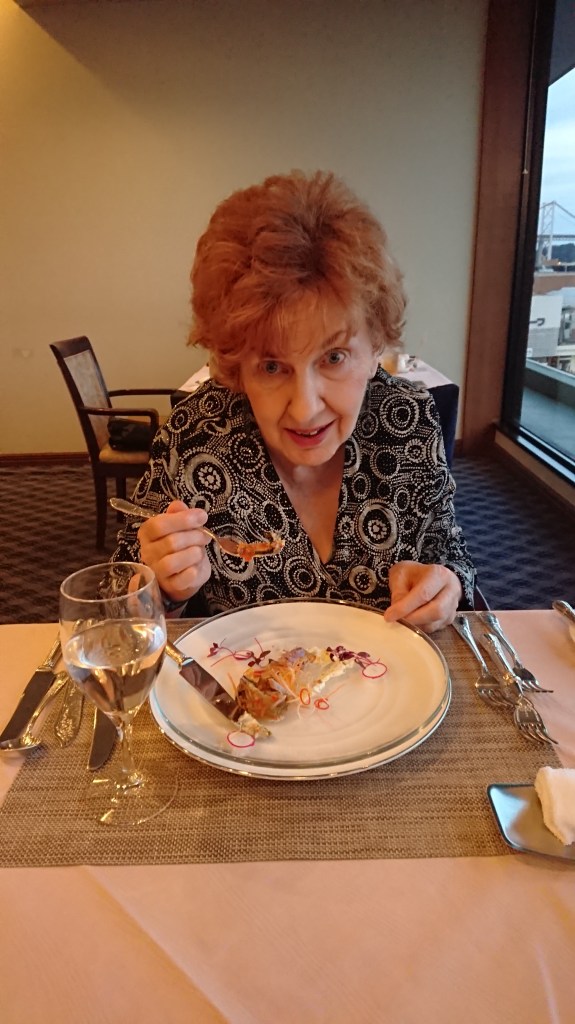
Finally we are fully-vaccinated and wanted to have an overnight trip to the next prefecture. It happened to be our 29th wedding anniversary on July 31st so we made reservations to stay at the Shimonoseki Grand Hotel and have a full course French dinner. It was lucky as the hotel is right next to the Karato Fish Market. (唐戸市場)which Hiroo was eager to visit.
Hiroo told me there was a coal mine in Ube (Yamaguchi-ken) and I found there is a Coal Mining Museum by Tokiwa Park. Luckily , I kept searching online and found a homepage about Chousei Coal Mine and the collapse of the underwater mine that occurred in 1942,
The mine had had previous incidents of flooding or collapsing supports so many Japanese miners were afraid to work there. Of course, during wartime many men were drafted to fight and so the mine needed more workers. Koreans were either recruited or , in many cases, forcibly brought to Japan to work in mines or in the construction of dams. This was very dangerous work and many lost heir lives.
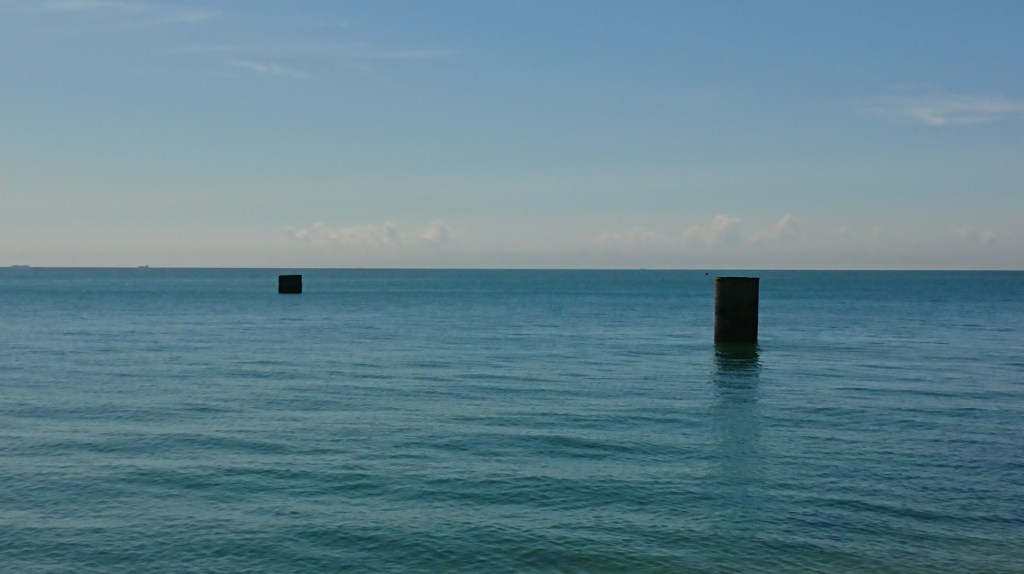
The Chousei Mine was under the sea. Now all that is left are two pillars in the ocean referred to as “piers”. Originally there was a long pier and tracks to carry coal to waiting ships. On the morning of February 2, 1942, the mine collapsed letting in billows of sea water and only a few of the miners had time to get out.
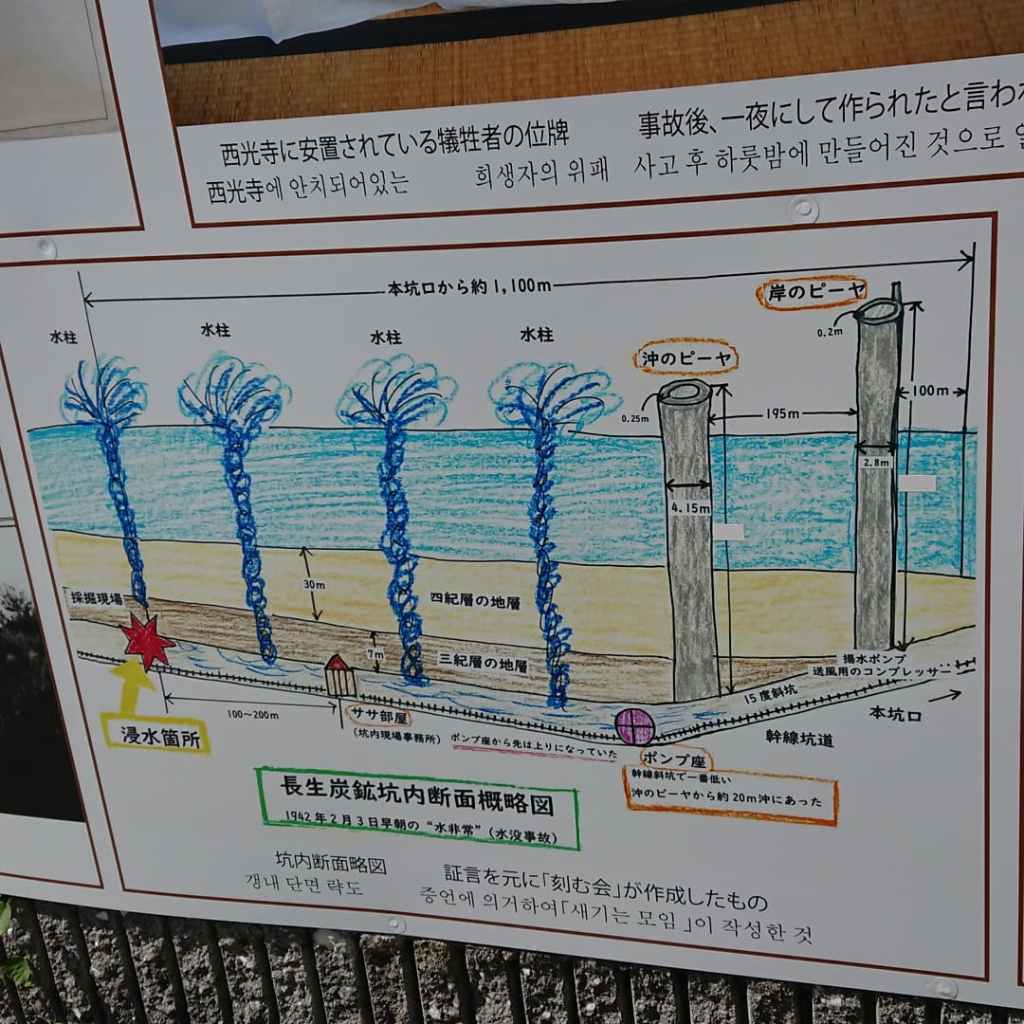
Of the 183 dead , 136 were Korean laborers (forced labor). At the time , these Korean miners were housed in barracks encompassed by a 3.6 meter- high fence and only allowed to walk the short distance to the mine entrance. This accident was not reported or was only mentioned in local newspapers saying “most of the miners managed to escape.”
In 1982, a memorial was erected and only the families of the Japanese miners were contacted to attend the dedication. Though there is a record of all the dead, no names were inscribed on the monument. it was built adjacent to a softball field overlooking the ocean and piers. The reason for constructing it was to appease the spirits of the dead so no harm would come to children playing on the field. (Japanese superstition!)

Through the website I was able to contact the “Keep the History of Chousei Disaster in our Hearts ” (長生炭坑に“水非常”を歴史に刻む会)I promptly received an answer and was contacted by Yoko Inoue who offered to guide us to the new Memorial and explain the history to us.
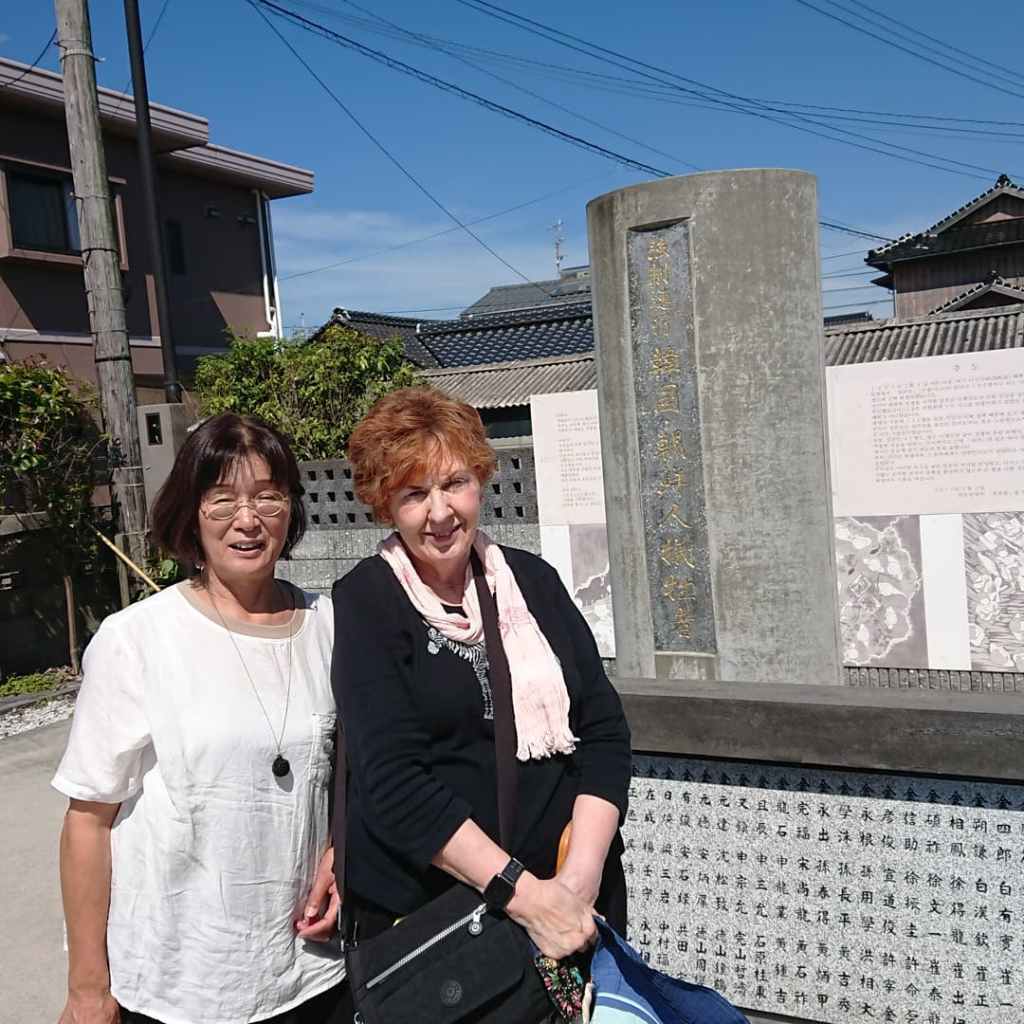
We visited the monument with names of all the victims, Japanese and Korean inscribed there. Two pillars reminiscent of the two piers represent Korean victims separately from Japanese victims. The ” Keep History” group found an old list of workers’ names from 1940 and sent out letters to all the Korean vicitms’ families. The addresses in Korea were old so there was no telling how many relatives would actually receive the letter.
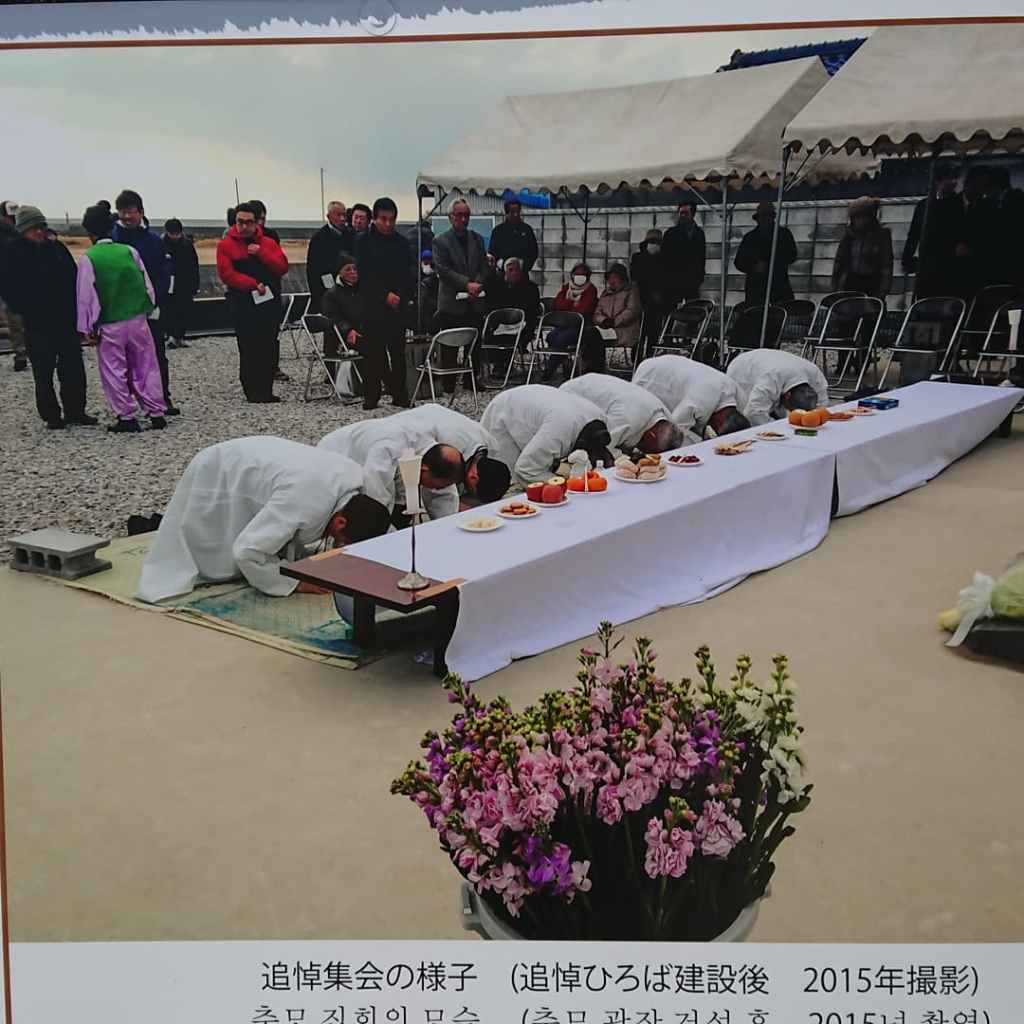
I was amazed at the attempt to contact people after over 50 years. Of the 118 letters mailed out, there were 17 replies that first year. The surviving family members were invited to come to the sea to observe a commemorative service for the victims. I was touched to read the translation of one letter where a Korean woman wrote ” My mother was pregnant with me when my father left Korea. He may not have even known. We never heard from him again. We didn’t know how he died. So I am grateful to know how and what day he died. I would love to come to pay respect to him.”
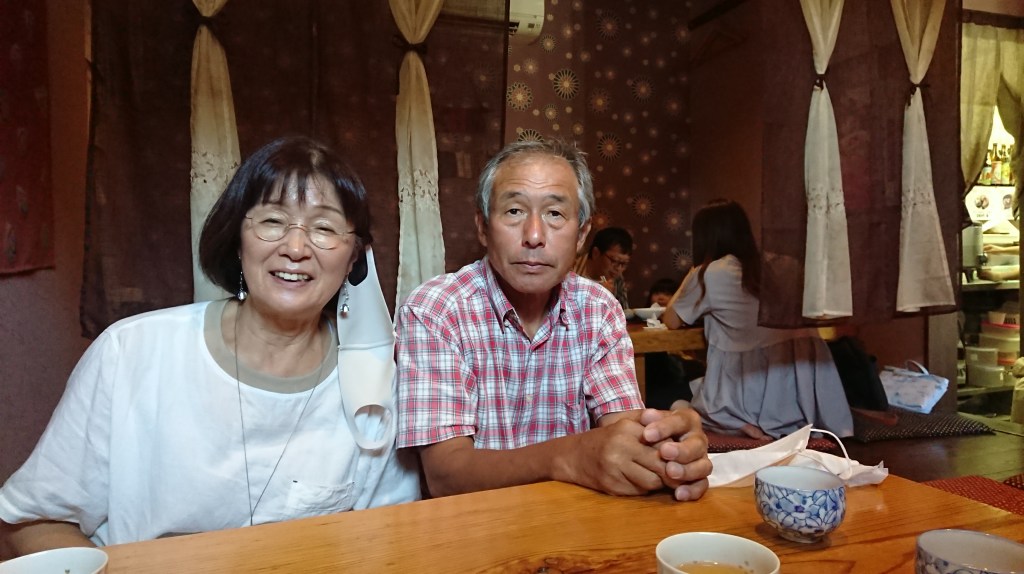
Later the inclusive monument was constructed and victims families come from Korea and Japan to Ube every year on February 3rd for a memorial service. I hope to read all the materials Yoko gave me and to visit there for the 80th Year since disaster Memorial Service in 2022.
From Ube we visited the Tokiwa Mine Museum which had no mention of the diaster or of forced labor in the mines, which is typical for government-funded museums and organizations. They want to deny the fact of forced labor from occupied Korea or Chinese war hostages.
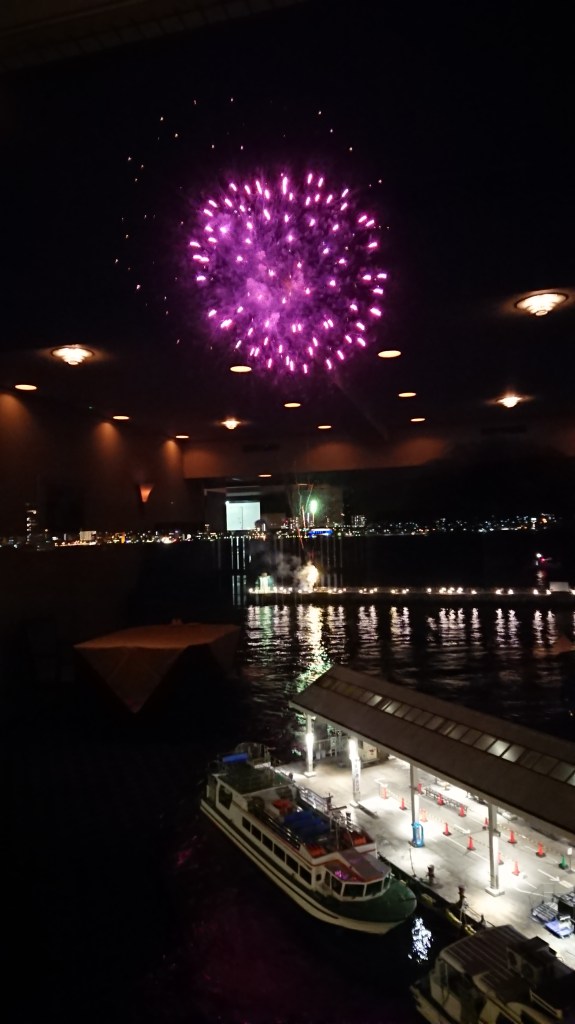
Reaching Shimoseki at about 3:30, we checked in to our hotel . We enjoyed our dinner and were very lucky that there was a fireworks display held that night.
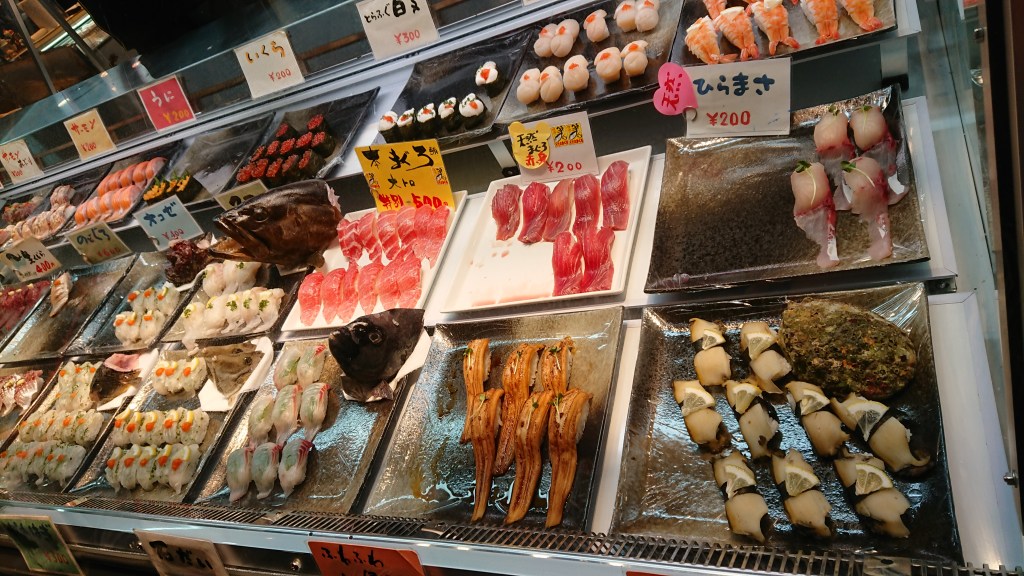
The next day we visited the Karato Fish Market and bought fresh octopus and squid. Then we enjoyed choosing sushi one piece at a time for lunch. It was a very popular spot.
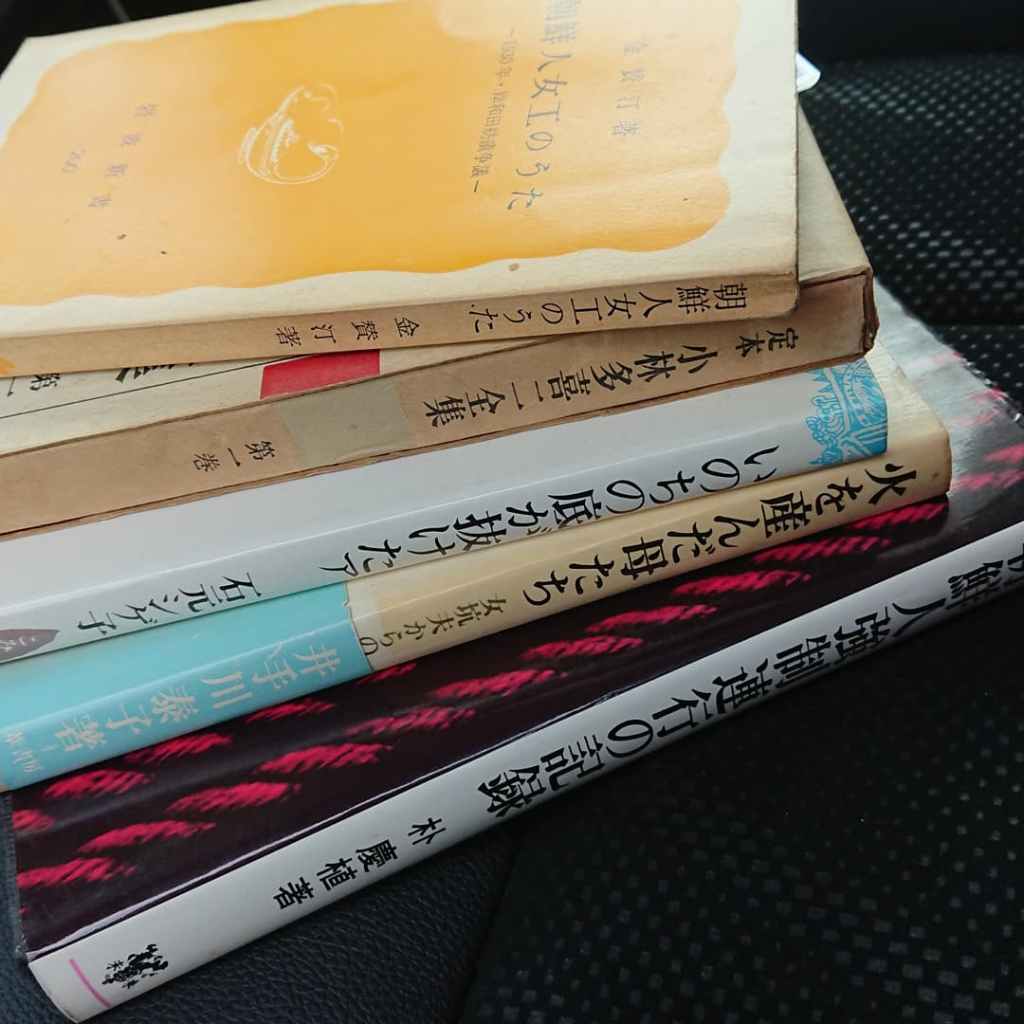
Finally Hiroo took me to one used bookstore , Azusa Books (梓 書店 083-232-4100) He said it was probably just “manga” but we were both pleasantly surprised to find it had so many books on history and social issues. It is a great place to visit. Owner, Tomoko Tsukioka has been in business for 40 years, 10 at this location.
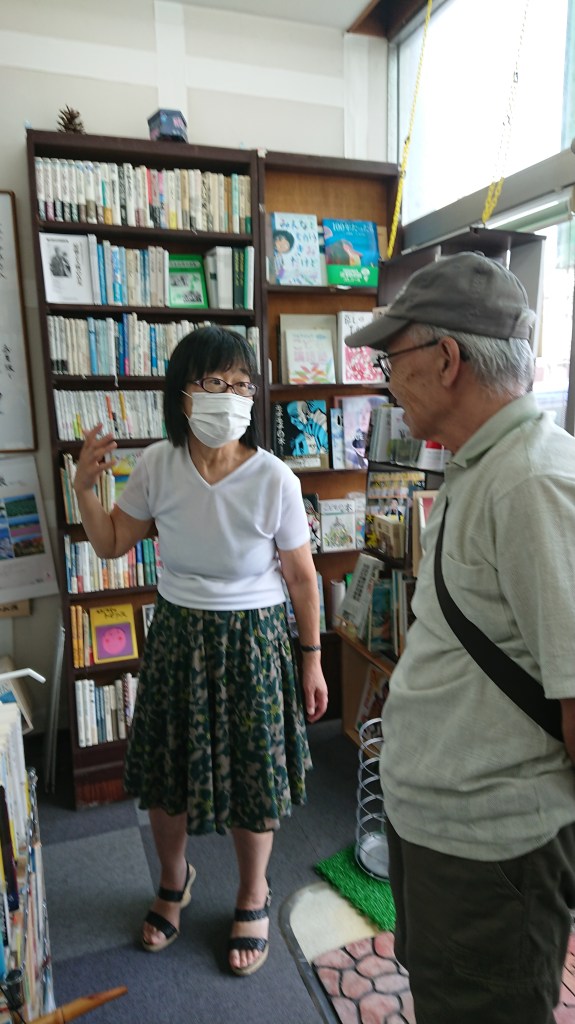
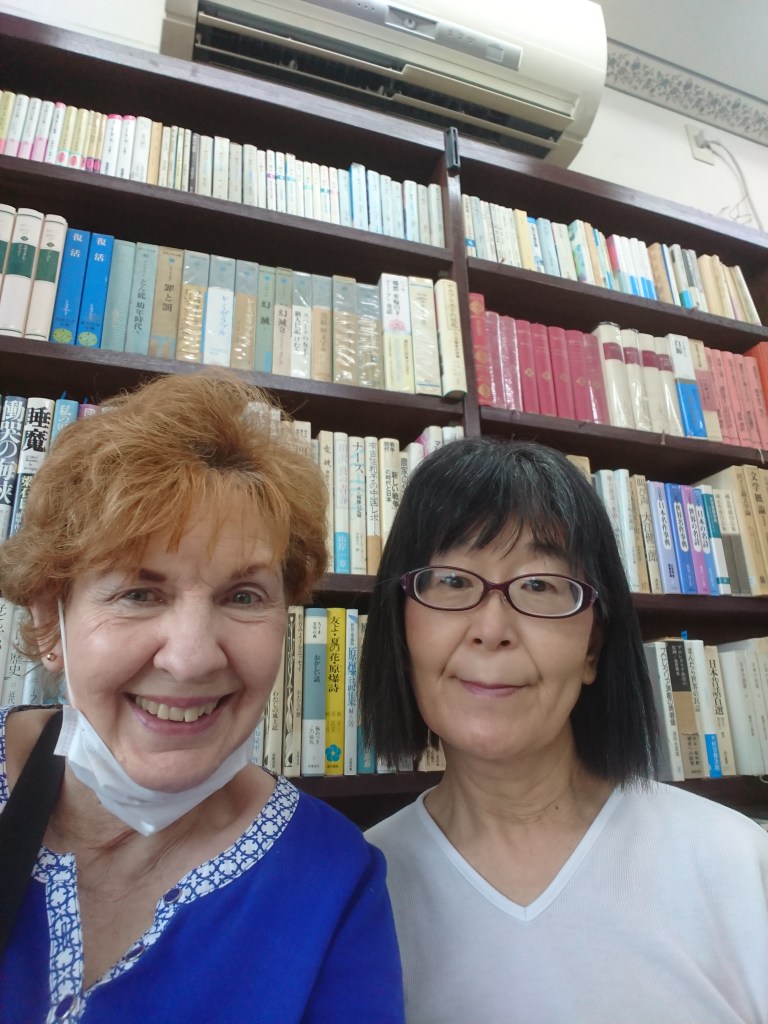
We enjoyed talking and she helped me find interesting books. When she heard it was our anniversary , she served us coffee! The most amazing thing was when she handed me one book and said, this is really a good book.
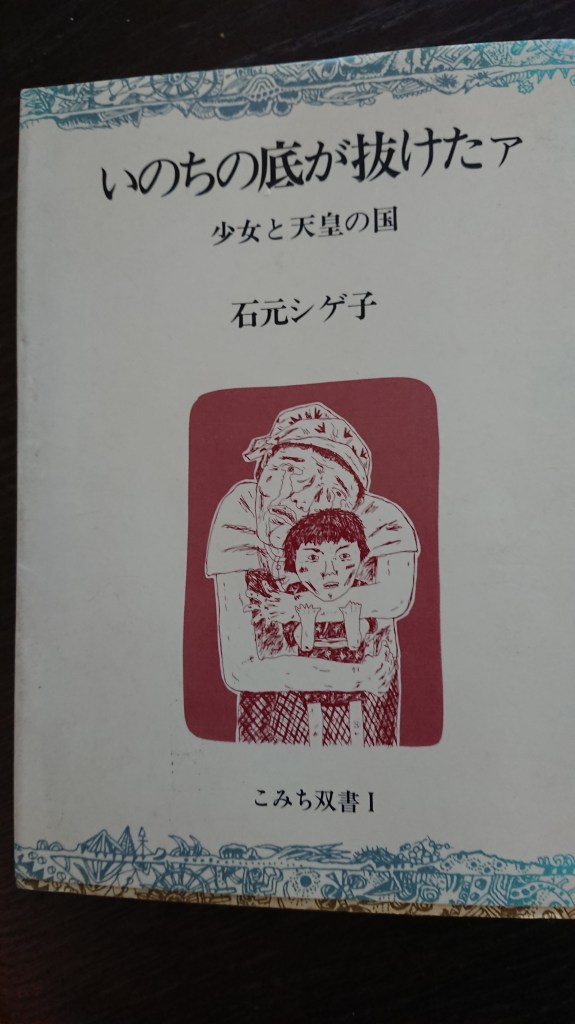
I was speechless as I had read it 30 years ago and often searched for it but had forgotten the title. This was just amazing and thrilling. She insisted on giving the book to me as a present! I hope to visit this shop with Eri some day.
 Baba's Kitchen